
By Bruno S.
September 25, 2026 — 13 min read
In the high-stakes world of entrepreneurship, enthusiasm is often mistaken for market demand. According to data from the U.S. Bureau of Labor Statistics, roughly 20% of new businesses fail within their first year, while nearly half do not survive to their fifth anniversary. While many factors contribute to these early exits, industry experts argue that a primary culprit is building a product before confirming whether anyone actually wants it, let alone is willing to pay for it.
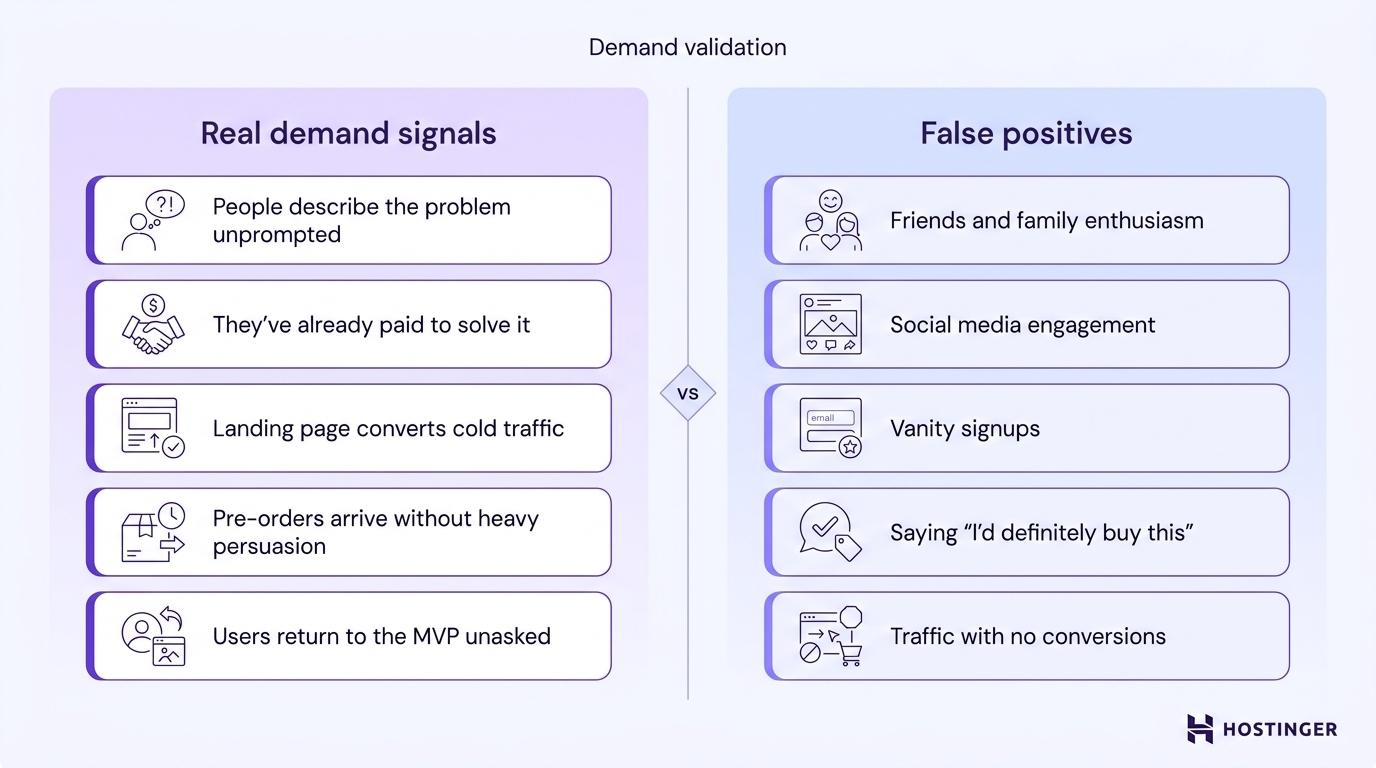
To combat this trend, startup strategists are emphasizing rigorous business idea validation—a process designed to gather concrete evidence of consumer demand before committing precious time, engineering hours, and capital. True validation relies on independent, measurable behavior from strangers rather than polite encouragement from friends, family, or social media followers, who risk nothing by offering praise.
Shifting from Praise to Proof
The cornerstone of effective validation lies in distinguishing between friendly support and genuine market signals. When aspiring founders pitch an idea to their immediate circles, positive feedback is easy to come by because agreeing carries zero cost. However, real-world validation requires friction-free, independent action: strangers describing a painful problem unprompted, interacting with a prototype landing page, or committing hard-earned cash to an unbuilt product via pre-sales and crowdfunding campaigns.
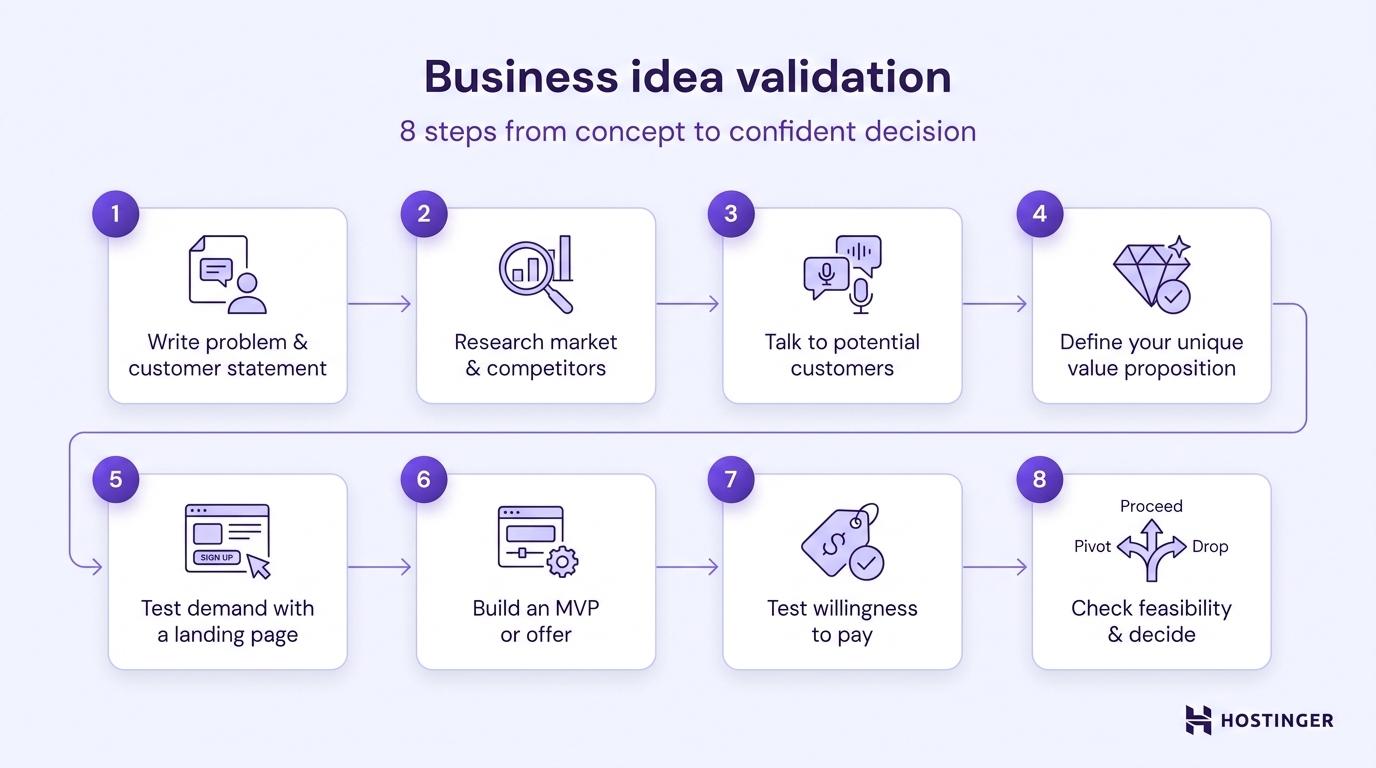
Achieving this does not require a massive venture capital backing. Entire validation frameworks can be executed at little to no cost, leveraging free online communities, direct outreach channels, and the free tiers of essential digital tools. The ultimate objective is to compile hard evidence of demand, cross-reference it against production costs and pricing strategies, and make an objective executive decision: proceed with development, pivot the concept entirely, or drop the idea before it drains personal resources.
Articulating the Problem-and-Customer Statement
The validation journey typically begins with a rigorous formulation of the core concept. Rather than relying on vague notions—such as building "an app for dog owners"—founders are urged to write precise problem-and-customer statements that explicitly define who faces the challenge, what the issue is, and how those affected currently cope with it.
For instance, identifying a target market as "dog owners who travel frequently and struggle to find last-minute, trustworthy pet sitters, forcing them to cancel trips or rely on unvetted strangers from generic platforms" transforms a loose thought into a testable hypothesis. This level of clarity acts as an immediate filter. If a problem is merely a mild inconvenience and consumers have no existing workarounds or urgency, it serves as an early warning sign rather than a blank check for future marketing miracles.
Deep-Dive Market Research and Competitor Analysis
Once a problem statement is locked in, comprehensive market research helps determine if the issue exists at scale. Founders typically examine search volume trends, explore niche online communities like Reddit and specialized forums, analyze marketplace reviews, and study competitor pricing pages.
Evaluating keyword search volume through tools like Google Keyword Planner provides an estimate of how frequently users look up related terms, though high volume alone does not guarantee purchasing intent. Conversely, low search volume is not necessarily a dealbreaker, as many localized or offline problems lack traditional digital phrasing. Examining Google Trends helps identify whether public interest is growing, seasonal, or facing a terminal decline.
Meanwhile, diving into niche forums allows researchers to observe potential customers describing their frustrations in their own natural language—vocabulary that later proves invaluable for copywriting and outreach. By reviewing existing marketplace listings and competitor pricing pages, entrepreneurs can spot recurring customer complaints, identify overlooked feature gaps, and establish realistic pricing benchmarks for future financial modeling.
Direct Customer Interviews and Value Proposition Refinement
Market research confirms whether a problem exists broadly, but direct conversations reveal whether it matters to the specific demographic a founder plans to target. Conducting ten to fifteen structured interviews with individuals matching the problem profile helps uncover recurring behavioral patterns. The most reliable indicator of a genuine problem is when interviewees independently cite the exact same frustration, workaround, or consequence without any prompting from the interviewer.
To keep these sessions objective, founders must steer clear of leading questions that fish for compliments. Asking whether someone would buy a proposed product yields polite, hypothetical answers; asking how they handled the problem the last time it occurred reveals actual behavior.
These insights directly inform the unique value proposition—a concise statement clarifying who the product serves, what problem it solves, and how it differentiates itself from existing alternatives. This represents a critical test of problem-solution fit, ensuring the proposed offering maps directly to real-world pain points rather than founder assumptions.
Testing Demand and Willingness to Pay
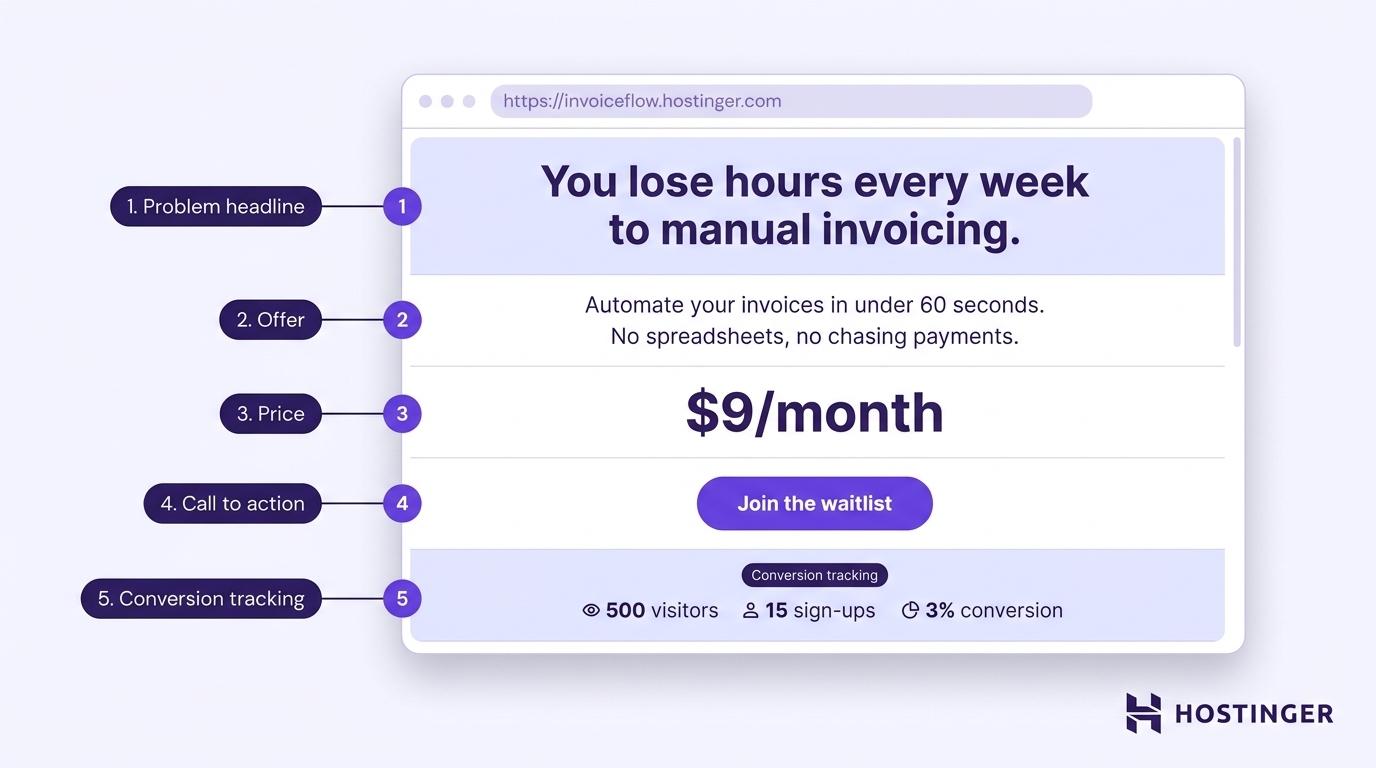
With a refined value proposition in hand, the next phase involves exposing the concept to cold traffic through landing page tests and minimum viable products (MVPs). A standalone landing page built around a single offer and a clear call-to-action allows creators to measure conversion rates among strangers who have no personal connection to the project.
However, sign-ups and email subscriptions only prove interest; they do not guarantee revenue. To truly test willingness to pay, entrepreneurs frequently deploy pre-sale offers, crowdfunding campaigns, or small-scale paid advertising tests. Securing actual financial commitments—whether through paid pre-orders or financial pledges—transforms passive interest into undeniable proof of market demand.
Feasibility, Financial Modeling, and the Final Decision
The validation process culminates in a thorough feasibility check, forcing founders to analyze four vital financial metrics: unit cost, realistic pricing structures, the break-even point required to cover fixed monthly overhead, and the projected timeline to reach profitability.
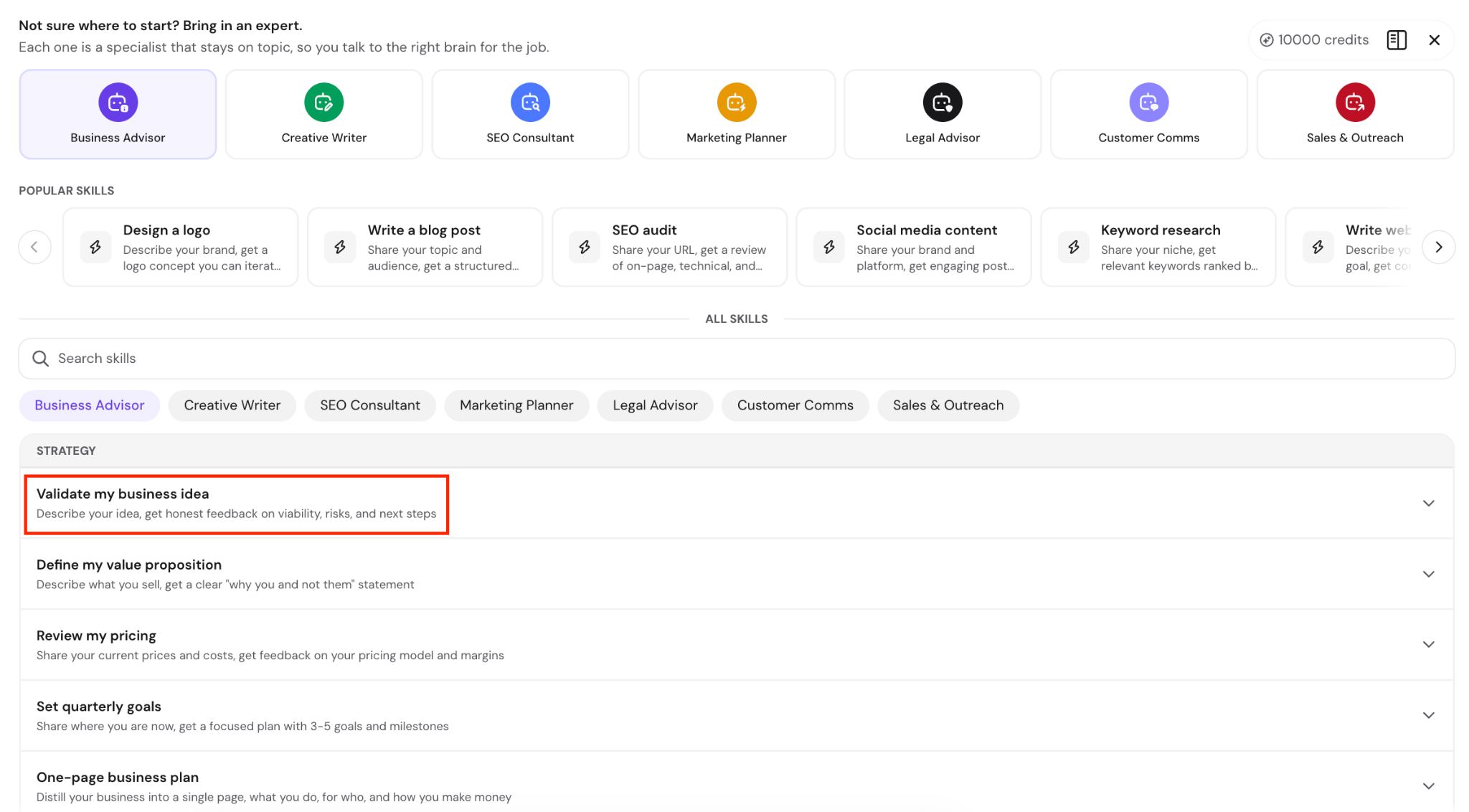
Armed with this data, entrepreneurs face a definitive three-way choice: proceed with full-scale development, pivot the concept to address a more acute market need, or drop the idea to preserve capital. For mixed results, targeted follow-up inquiries help clarify remaining uncertainties, ensuring that every subsequent step is backed by empirical evidence rather than wishful thinking.
Leave a Reply