

MUMBAI — In a landmark development for the region’s digital ecosystem, the Asia-Pacific Network Information Centre (APNIC) and the National Internet Exchange of India (NIXI) have officially signed a Memorandum of Understanding (MoU). The agreement cements a shared, long-term commitment to enhancing the security, technical resilience, and overall development of India’s rapidly expanding Internet infrastructure.
The official signing ceremony took place on Tuesday, September 8, 2026, during the APNIC 62 conference held in Mumbai. APNIC Director General Jia Rong Low and NIXI Chief Executive Officer Dr. Devesh Tyagi put pen to paper in front of a distinguished audience. The event was witnessed by key representatives from India’s Ministry of Electronics and Information Technology (MeitY), the Department of Telecommunications (DoT), the Internet Service Providers Association of India (ISPAI), and members of the APNIC Executive Council, highlighting the national and regional significance of the collaboration.
Under the terms of the newly established MoU, both organizations will work hand-in-hand to accelerate the deployment and adoption of essential next-generation Internet technologies—specifically Internet Protocol version 6 (IPv6) and Resource Public Key Infrastructure (RPKI)—among enterprise networks and telecommunication operators across the country. To achieve these goals, the partnership outlines comprehensive initiatives encompassing technical capacity building, the establishment of robust local training infrastructure, and continuous knowledge-sharing mechanisms designed to foster sustainable, locally driven growth in technical expertise.
Addressing the audience at the conference, APNIC Director General Jia Rong Low underscored India’s trailblazing position in the global digital landscape.
"India is the global leader in IPv6 adoption, with the largest IPv6-enabled user populations in the world," stated Mr. Low. "This achievement reflects the commitment of India’s Internet community, industry, and government to building future-ready digital infrastructure. Through this partnership with NIXI, we look forward to supporting the next stage of India’s Internet journey, working towards further IPv6 adoption and strengthening routing security to support the long-term development of India’s Internet infrastructure."
Strengthening Routing Security
While IPv6 adoption has laid a formidable foundation for scale, the modern digital economy requires rigorous defense mechanisms against increasingly sophisticated cyber threats. Consequently, a primary focus of the newly minted collaboration is driving the widespread deployment and adoption of Resource Public Key Infrastructure (RPKI) across the Indian subcontinent.
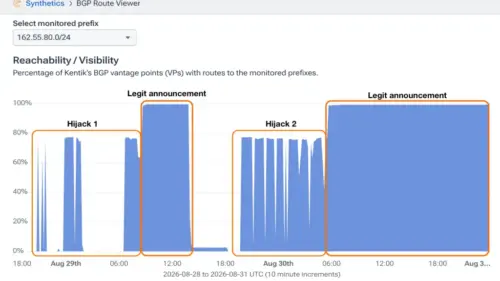
Building upon the already growing coverage of Route Origin Authorizations (ROAs) throughout the country, APNIC and NIXI are set to collaborate closely with network operators and enterprise networks to facilitate the deployment of Route Origin Validation (ROV), another critical pillar of RPKI technology. ROV empowers local networks to autonomously identify, filter, and reject invalid route announcements, thereby offering a robust shield against accidental routing incidents, malicious route leaks, and potential BGP (Border Gateway Protocol) hijacks.
As part of this comprehensive push for routing security, the agreement mandates that NIXI collaborate directly with APNIC to deploy an RPKI repository mirror right inside India. This high-profile pilot project will carefully evaluate whether hosting a local repository mirror can significantly improve local access speed to critical RPKI data while simultaneously bolstering the overall resilience of the repository architecture. Furthermore, both organizations have committed to actively championing routing security best practices across the entire spectrum of network operators.

Expanding Technical Skills and Training Frameworks
Technology deployment is only as effective as the human capital managing it. Recognizing this imperative, the MoU establishes a formalized framework dedicated to expanding advanced technical training programs centered tightly on IPv6 and RPKI implementation.
To ensure long-term sustainability and self-reliance, APNIC and NIXI will co-develop local training facilities and specialized laboratory infrastructure. Crucially, the initiative will launch a dedicated Train-the-Trainer (TTT) program aimed at cultivating a deep pool of domestic technical experts who can independently guide the next generation of engineers. Stakeholders across the nation—including participants in NIXI peering exchanges, affiliates of the Indian Registry for Internet Names and Numbers (IRINN), and broader enterprise operators—can anticipate a blend of targeted online modules and intensive face-to-face training sessions.
Looking Ahead to a Secure Digital Future
Reflecting on the broader implications of the agreement, Dr. Devesh Tyagi emphasized that the partnership marks a pivotal milestone in NIXI’s ongoing mission to construct a secure, self-reliant, and future-proof Internet backbone for the nation.
"India’s Internet ecosystem is entering a new phase of scale and responsibility, and our infrastructure must lead from a position of strength—secure, resilient, and built for what comes next," Dr. Tyagi remarked.
He further highlighted the strategic advantage India already holds in specific areas of routing security, noting that the country’s proactive stance provides an ideal launchpad for the new initiatives outlined in the agreement.
"On routing security, India is doing very well in terms of RPKI ROA, and this partnership with APNIC allows us to build directly on that momentum—extending our focus to ROV," Dr. Tyagi explained. "India is committed to routing security and we are a frontrunner in Autonomous System Provider Authorization (ASPA) adoption."
Dr. Tyagi also pointed out the structural efficiency inherent in India’s telecommunications landscape, noting that because a relatively small cohort of large network operators carries the overwhelming majority of the nation’s total Internet traffic, targeted adoption by these key players can yield disproportionate security benefits.
"Because a small number of large network operators carry the majority of India’s Internet traffic, ROV adoption by these key networks alone can meaningfully secure the routing landscape for the economy as a whole," he observed. "This partnership will help us work closely with these networks, along with the wider operator and enterprise community, to build the technical expertise and infrastructure needed to safeguard the integrity of Internet routing across the region."

Leave a Reply