
Getting people to try a first product is a formidable challenge for any startup, but changing a product that billions of people already rely on every single day requires an entirely different playbook. While the core ambition among tech entrepreneurs often remains focused on moving fast, testing new ideas, and building something better, the reality of global scale introduces high-stakes consequences. When every minor update or interface tweak impacts billions of global users, the instincts that helped a company get started may ultimately need an update of their own.
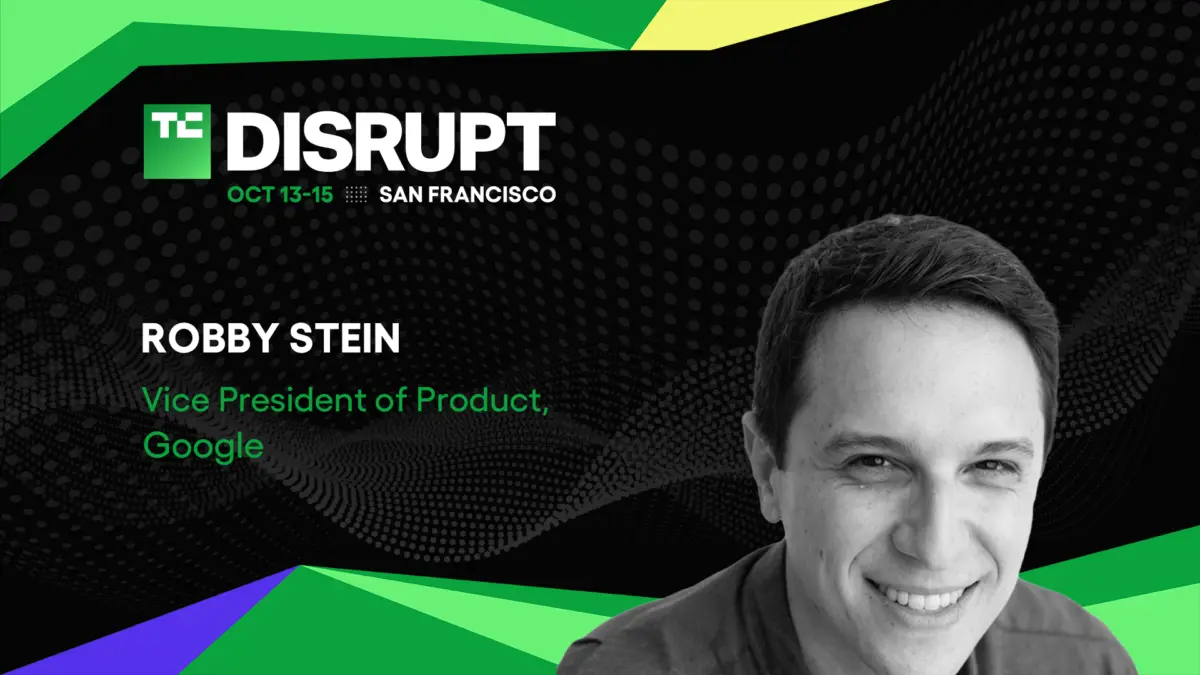
That fundamental tension is set to take center stage at the upcoming TechCrunch Disrupt 2026 conference. Robby Stein, vice president of product for Google Search, will lead a prominent Builders Stage session titled "From MVP to Billions of Users: How Product Decisions Must Change at Scale." The fireside chat will explore the complex ways product teams attempt to balance speed with user trust, and rapid innovation with unyielding reliability, when their daily decisions carry massive global weight.
TechCrunch Disrupt is scheduled to return to Moscone West in San Francisco from October 13 to 15, bringing together more than 10,000 startups, venture capital investors, and technology decision-makers. Attendees looking to hear how product decision-making evolves as the stakes grow higher can register for tickets before prices increase on September 25 at 11:59 p.m. PT to save up to $200. Additional group discounts of up to 30% are available for teams of four or more.
When your product outgrows your original playbook
For early-stage founders and product managers alike, navigating growth brings up a series of difficult questions. How can a team keep experimenting when users increasingly expect a product to work flawlessly every single time? How do you introduce something fundamentally new without inadvertently undermining the core value that people already depend upon? Furthermore, which early-stage instincts should a growing company fiercely hold onto, and which ones must be discarded as the organization scales?
Stein’s upcoming session will tackle the massive operational and philosophical shift from building an initial minimum viable product (MVP) to making strategic decisions inside one of the largest technology organizations on the planet. The conversation will focus heavily on what changes when momentum must be maintained alongside the preservation of absolute user trust and a consistently reliable experience.

For founders attending the conference, the primary value lies not in blindly copying Google’s massive corporate processes, but rather in closely examining the decision-making frameworks behind them. Attendees can expect to learn where speed creates a competitive advantage, where heightened care and caution become non-negotiable, and how leadership can recognize when their building methodologies need to evolve in lockstep with the product itself.
These valuable insights from Stein will be part of a broader event featuring more than 250 speakers across over 200 sessions. Early registration provides significant savings before the upcoming deadline at the end of September.
A product leader who has built on both sides of the scale divide
Stein brings a unique background to the discussion, having built and scaled products across vastly different environments throughout his career. His experience is not limited to working exclusively inside technology giants. Early in his career, he co-founded and led Stamped, a social recommendations startup that was eventually acquired by Yahoo. Following that venture, he spent five years leading consumer products at Instagram.
During his tenure at Instagram, Stein helped build and scale the core products and teams behind widely adopted features including Stories, Feed, Direct Messaging, and Reels. Before returning to Google in 2024, he served as the head of product at Artifact, an AI-powered newsfeed application developed by the co-founders of Instagram.
This professional trajectory bridges the gap between the scrappy mindset of a startup founder and the massive operational scale required to manage globally ubiquitous consumer products. For anyone currently working through the delicate transition from an early-stage product to a sprawling platform, Stein’s perspective offers a rare window into environments on both sides of the scale divide.
In his current role at Google, Stein works on generative artificial intelligence products and experiences integrated directly into Google Search. This position places him squarely at the intersection of introducing revolutionary new technology and evolving the fundamental ways humanity discovers and consumes information.

The scale of these deployments is substantial. In May, Google reported that its AI-driven features had surpassed 1 billion monthly users just a year after their initial debut. Earlier in the year, Stein also outlined significant updates allowing users to seamlessly transition from an AI Overview into a deeper follow-up conversation using AI Mode, illustrating a modern search experience designed to accommodate both rapid answers and extensive exploration.
That ongoing work provides a timely backdrop to the central theme of his Disrupt session: how to aggressively push a product forward without losing the baseline reliability that makes billions of people depend on it every day. For founders looking to integrate artificial intelligence into their own applications, the discussion serves as a practical framework for looking beyond raw technological capabilities to consider how human users will genuinely experience the final product.
Learn how to build for the users you haven’t reached yet, only at Disrupt 2026
Ultimately, an entrepreneur does not need a billion active users for these scaling questions to matter. Whether a team is currently refining their very first product, expanding a regional platform, or fundamentally rethinking an established software experience, reaching the next stage of growth provides a necessary reason to reevaluate the foundational decisions that drove early success.
Attendees at TechCrunch Disrupt 2026 will have the opportunity to join this conversation and continue the dialogue with fellow founders, investors, and industry operators across six dedicated industry stages, roundtables, breakout rooms, the expansive Expo Hall, the Startup Battlefield competition, and numerous networking events.
As digital products continue to evolve rapidly across the technology ecosystem, leaders must ensure their approach to building scales right along with them. Registration for TechCrunch Disrupt 2026 remains open, with discounted passes available for those who secure their spots before the September deadline.


Leave a Reply