
The landscape of artificial intelligence is shifting rapidly from simple text generation to autonomous execution. As organizations and developers deploy systems capable of handling complex, multi-step workflows, the mechanism for instructing these technologies has also evolved. Central to this evolution is the AI agent prompt—a sophisticated class of instruction set designed to guide autonomous systems through intricate operational landscapes.
Published on September 18, 2026, industry insights compiled by AI content editor Alma F. shed light on the mechanics, structure, and strategic importance of AI agent prompts. Unlike traditional prompts that ask a language model to produce a single response, agent prompts are engineered to navigate tasks requiring ongoing decision-making, tool utilization, and adaptive behavioral loops.
What Are AI Agent Prompts?
At their core, AI agent prompts are comprehensive instructions that direct an autonomous system toward a specific outcome. They go far beyond standard text-generation queries by defining the primary goal, establishing the relevant context, setting operational boundaries, identifying available tools and resources, and outlining the criteria for successful completion.
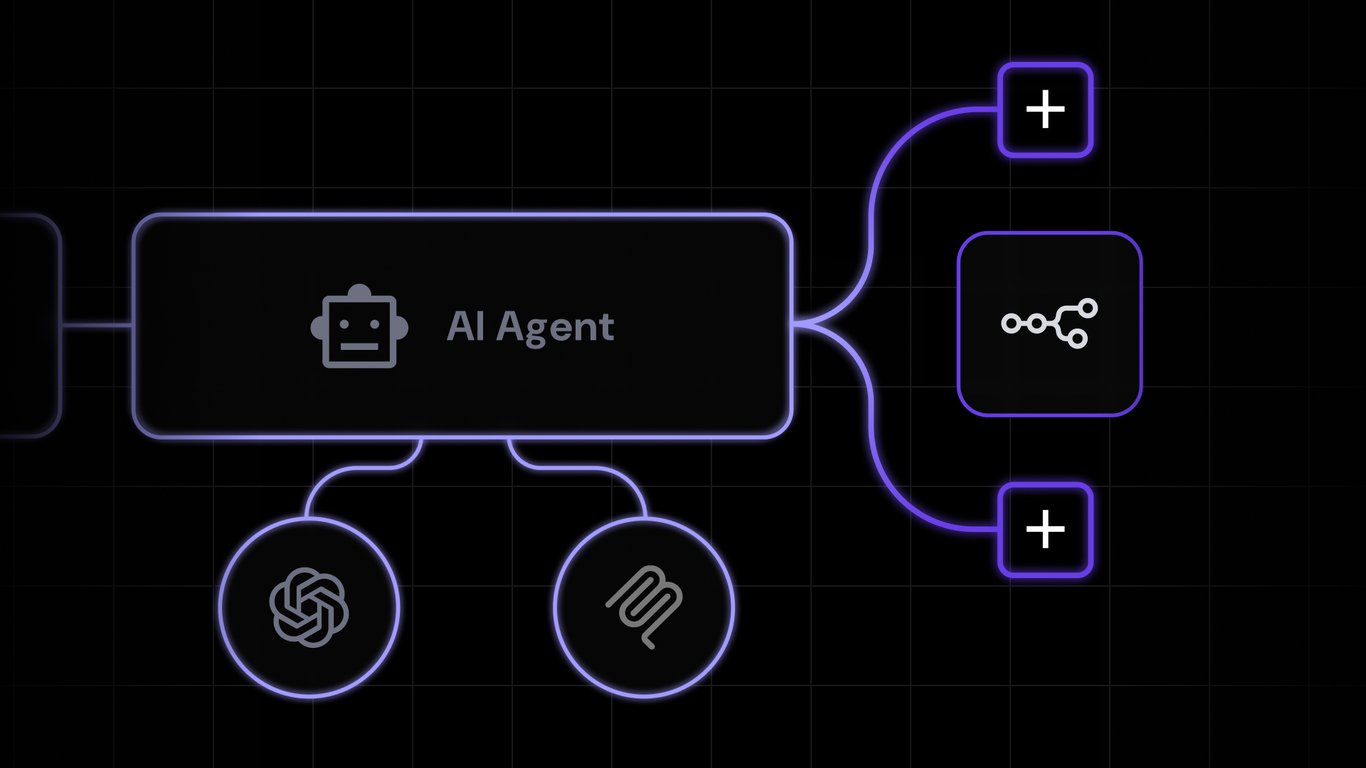
While a traditional prompt might ask a model to summarize a document and then terminate its process, an agent prompt guides the technology through a continuous cycle of planning, executing, observing, and evaluating. This capability is what enables support agents to navigate customer account systems, research agents to parse through external data sources, and marketing planners to orchestrate multi-channel campaigns.
The fundamental difference lies in autonomy and scope. Traditional prompts shape a single conversational turn. Agent prompts govern an entire operational run, allowing the system to interface with connected applications, evaluate intermediate results, and determine when a task is successfully completed or requires human intervention.
The Mechanics of Agentic Workflows
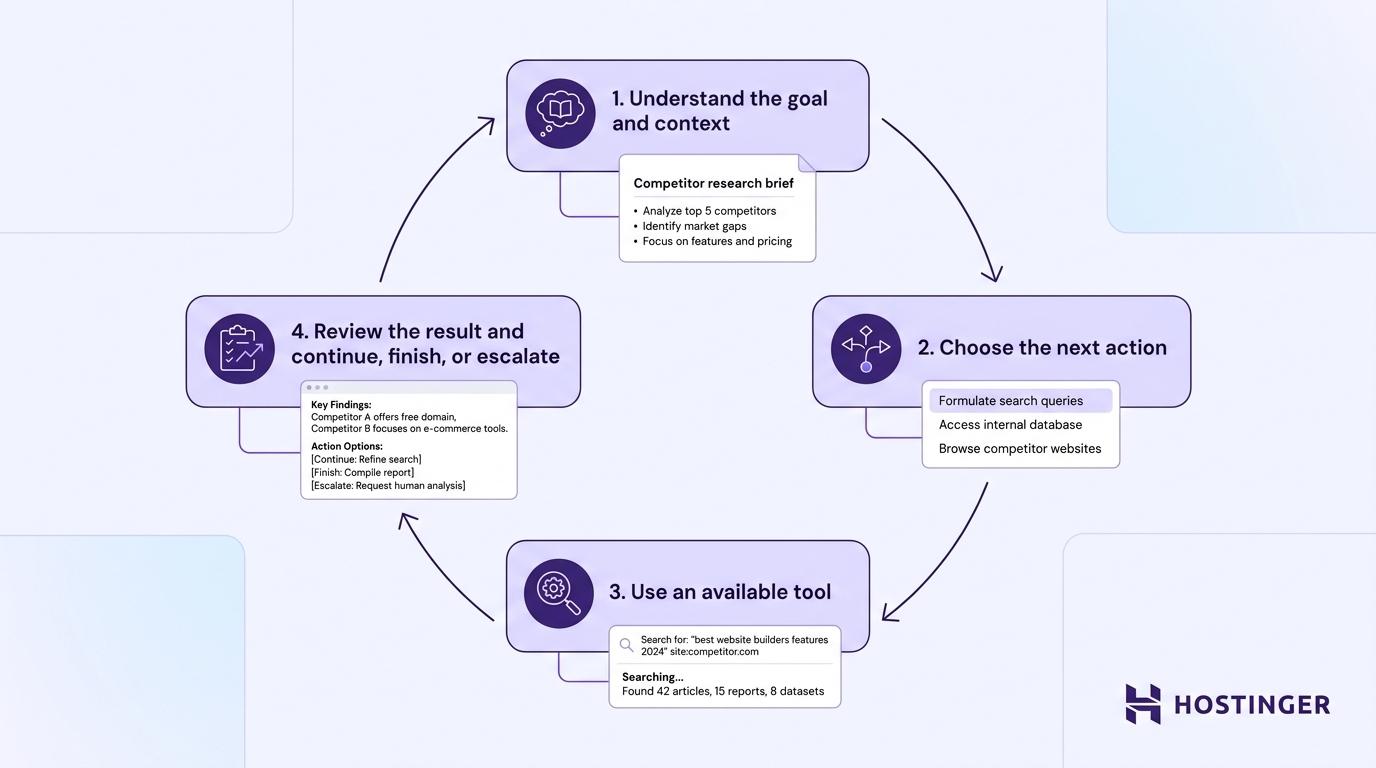
When an AI agent operates under a well-crafted prompt, it engages in a repeating process often referred to as an agentic workflow. The agent evaluates the task, selects an appropriate action, reviews the resulting outcome, and decides on the next step.
For example, a competitor-research agent tasked with compiling an industry brief does not merely guess at market trends. Following the structure of its prompt, it searches for current data, compares the findings against its objective, identifies informational gaps, executes secondary searches, and compiles a verified summary.
However, experts emphasize a critical limitation in prompt engineering: instructions cannot enforce system-level permissions. While a prompt may explicitly direct an agent to request approval before issuing a financial refund, the underlying application architecture must physically block unapproved transactions if the agent attempts to bypass the rule. Access controls, approval gates, and safety checks must reside within the supporting agent system rather than relying solely on the text instructions.
Key Components of an Effective Agent Prompt
Constructing a reliable agent prompt requires meticulous attention to several distinct structural elements. Without these components, autonomous systems risk drifting off-task, making erroneous assumptions, or failing to recognize operational boundaries.
The primary requirement is a clearly defined goal. Vague directives such as "research competitors" leave too much room for interpretation. A successful prompt specifies the exact deliverables, such as producing a source-backed brief covering pricing, target audience, and key features for five named competitors.
Context forms the second pillar, supplying the agent with the necessary business data, definitions, and operational background. Whether it is brand guidelines for a marketing task or product policies for a support ticket, context prevents the agent from guessing. However, excessive or unfiltered data dumps can clutter the context window and obscure the primary objective.
Defining the role and scope clarifies the agent’s responsibilities and limitations. By establishing what the agent owns and what it must avoid, developers can safely delegate tasks. Furthermore, precise instructions and constraints provide concrete behavioral boundaries, utilizing direct verbs and conditional logic to dictate how the agent should handle missing information or unexpected obstacles.
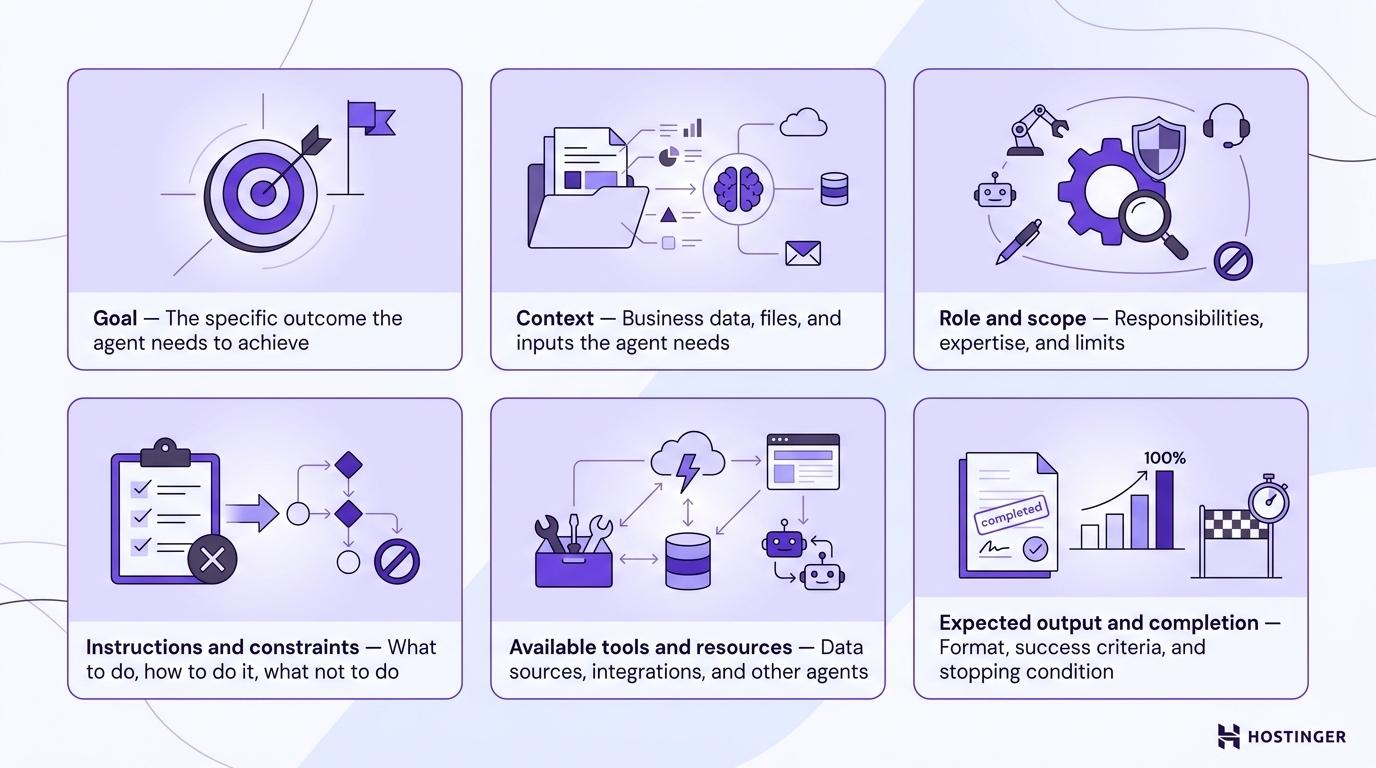
Finally, prompts must outline available tools and define expected output criteria. Because a polite final message does not guarantee that a database update actually occurred, instructions must specify how the agent verifies its actions through connected software integrations before declaring a task finished.
Testing, Refinement, and Scaling
Deploying an autonomous agent requires rigorous testing across varied operational conditions. Industry professionals recommend evaluating prompts not just under normal circumstances, but also during incomplete data scenarios, system failures, and high-risk edge cases.
Because a single successful test run does not guarantee reliability across diverse real-world environments, developers must iteratively refine their prompts based on observed deviations. If an agent routinely guesses missing account numbers instead of requesting them, the underlying instruction must be updated with an explicit conditional rule.
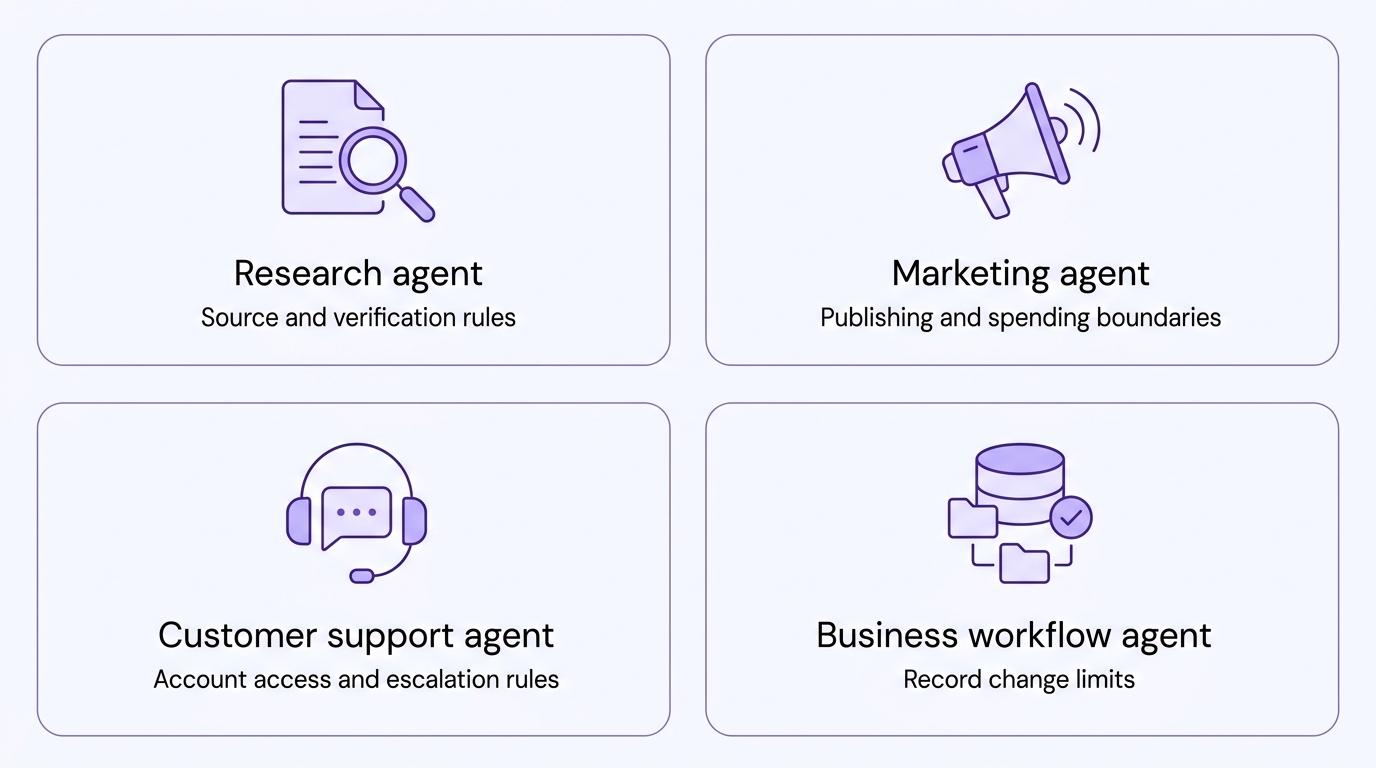
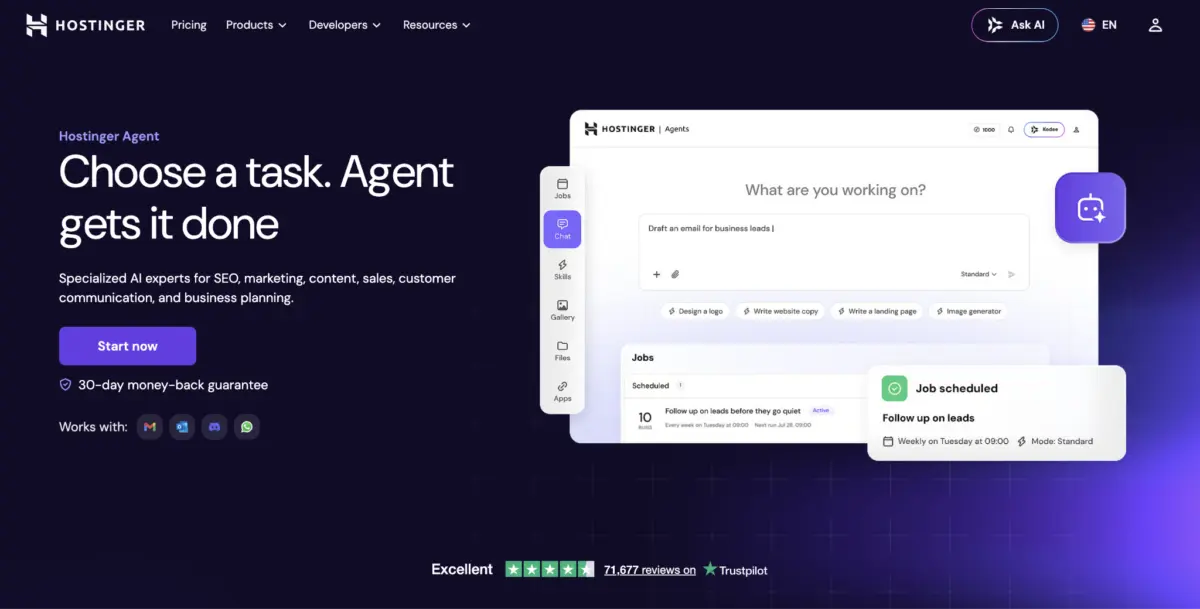
As organizations scale their use of autonomous systems, many are moving beyond custom-built prompts by adopting specialized platforms and reusable skills. Frameworks and ready-made solutions, such as Hostinger Agent, provide pre-configured AI agents tailored for specific business functions like SEO, sales, and customer communications. By separating dynamic inputs—such as campaign specifics—from stable, repeatable processes packaged as agent skills, organizations can maintain consistency while deploying AI across increasingly complex workflows.


Leave a Reply