
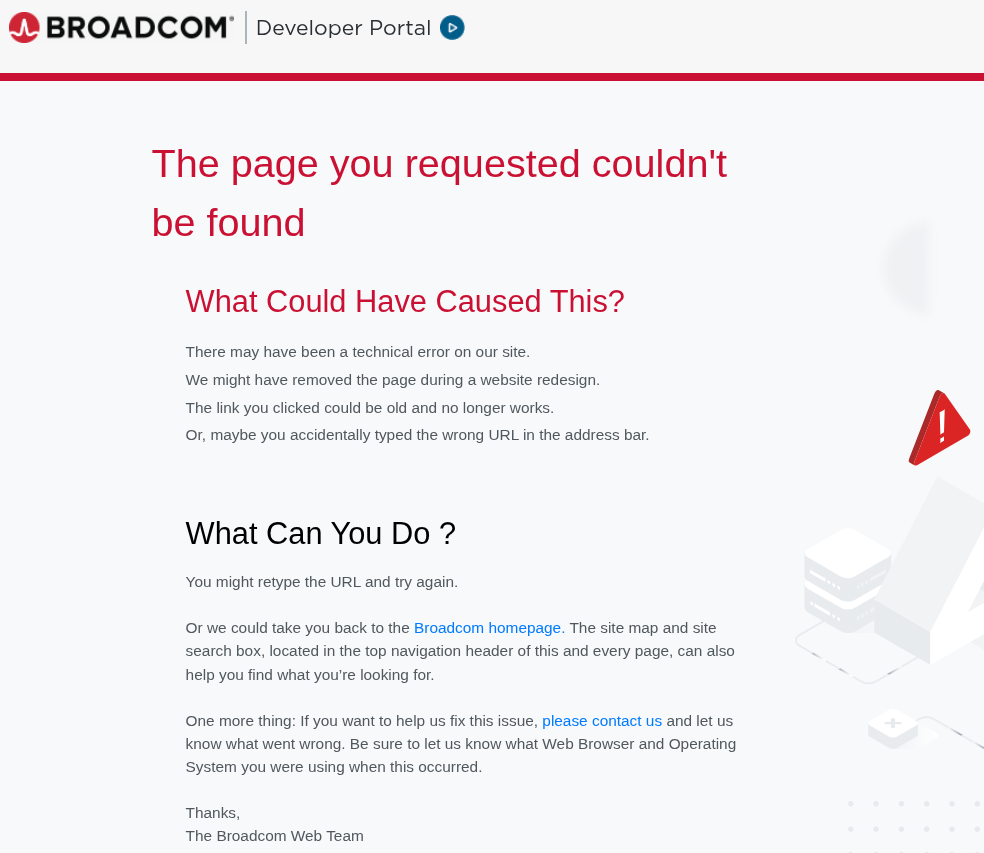
Broadcom has taken down the public download pages for the VMware Virtual Disk Development Kit (VDDK), quietly removing access to critical developer resources without issuing any formal announcement. The landing pages for VDDK versions 8 and 9, along with the main developer portal entry point, now return generic error messages, leaving system administrators and third-party vendors scrambling to find alternative solutions.
The removal occurred quietly sometime last month, coming to light in mid-August when system administrators and IT professionals began reporting broken links and missing files across Reddit and specialized vendor forums. ShapeBlue, an Apache CloudStack services firm, formally documented the change on August 25, highlighting the sudden unavailability of the software development kit. Red Hat followed days later, publishing an updated support note for its Migration Toolkit for Virtualization to address the sudden disappearance of the public assets.
While existing local copies of the VDDK remain functional—meaning that current implementations and ongoing operations utilizing the toolkit will continue to work normally—organizations and developers seeking fresh copies are entirely out of luck. Because of the proprietary nature of the software, finding alternative download sources is virtually impossible, placing many enterprise migration and backup projects in a difficult position.
What’s the Fuss About?
The VMware Virtual Disk Development Kit is a specialized library designed to allow third-party backup, recovery, and migration tools to read VMware virtual disks from outside the hypervisor. First launched by VMware in 2008 as an accessible software development kit for customers building disk utilities, the library quickly established itself as the fundamental backbone for image-level backups and agentless virtual machine migrations across the enterprise IT landscape.
However, the core utility of the VDDK has always been complicated by its restrictive licensing terms. The library cannot be redistributed freely, meaning that mainstream Linux distributions are legally barred from packaging it, and no open-source project can bundle it for end-users. Consequently, everyone relying on the tool has had to point directly to Broadcom’s centralized download pages. With those pages now completely offline, Broadcom has successfully cut off public access to a vital instrument that many companies relied on to migrate workloads away from the VMware platform.
The sudden lack of access has created immediate operational friction for major enterprise cloud and virtualization ecosystems. Microsoft’s Azure Migrate documentation serves as a prime example of the resulting administrative disarray. The official deployment instructions advise system administrators to download VDDK 8.0 or 9.0 directly from the Broadcom developer portal to facilitate agentless migration. Today, however, the embedded links direct users straight to inaccessible error pages. The documentation currently suggests falling back to traditional agent-based migration methods if the VDDK remains entirely unreachable.

Red Hat finds itself facing a nearly identical dilemma. Its updated support advisory highlights that customers are hitting "not found" and "access denied" errors when attempting to access the essential public download links. Furthermore, Red Hat’s advisory notes that the company cannot legally host or redistribute the kit. As a temporary measure, Red Hat is directing its affected customers to contact Broadcom support directly while its engineering teams investigate alternative, long-term pathways around the roadblock.
The corporate stance of Broadcom regarding the restriction became strikingly clear when system administrators contacted customer support for clarification. A response shared widely on online communities like Reddit by user bobdrakken outlined Broadcom’s official position. Customer care informed inquiring users that to ensure the highest standards of security, reliability, and product features, the Virtual Disk Development Kit is no longer available for public use or download. The response emphasized that Broadcom maintains various APIs and SDKs exclusively for authorized technology alliance partners to build validated and certified backup and recovery software. Customers were formally advised to rely entirely on solutions provided by Broadcom’s authorized partners, and support cases regarding the missing downloads were systematically archived with no pending action from the company.
A Pattern Unfolds
This quiet takedown fits neatly into a broader pattern of aggressive restructuring that has unfolded since Broadcom finalized its massive $69 billion acquisition of VMware in November 2023. Within weeks of the takeover, Broadcom initiated a sweeping subscription-only overhaul that effectively terminated perpetual software licenses and folded standalone products into massive, bundled offerings.
In the months that followed, European corporate customers reported steep increases in software renewal pricing, pressures that eventually spurred formal antitrust complaints from industry bodies such as CISPE. Yet, the corporate strategy has not been entirely one-sided. Broadcom has occasionally introduced customer-friendly gestures, such as making VMware Workstation Pro and Fusion Pro free for everyone in November 2024, and restoring a limited free build of VMware ESXi in 2025.
Viewed in isolation, each individual corporate maneuver—whether it is a licensing overhaul, a price adjustment, or the tightening of developer download access—can be defended through standard business logic. However, when taken together as a cohesive strategy, these developments paint a very clear picture for the enterprise market. While VMware’s core infrastructure products continue to operate smoothly under Broadcom’s stewardship, organizations attempting to chart an independent course and move workloads away from the platform now find themselves facing significantly higher hurdles.

Leave a Reply