
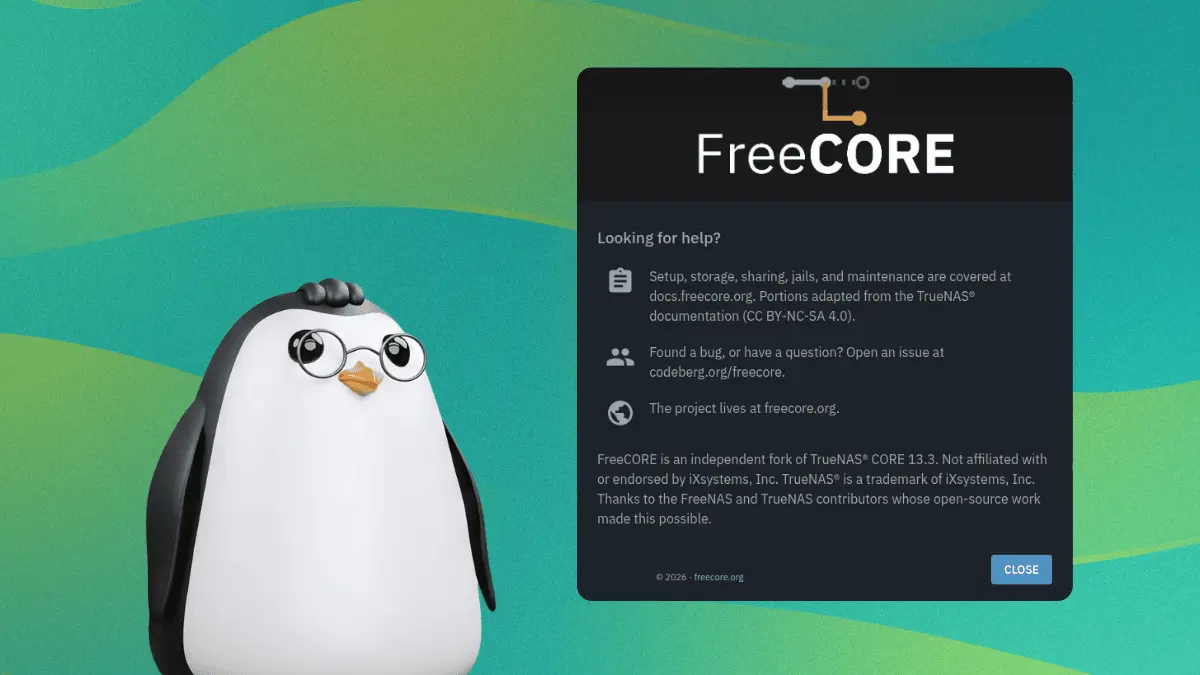
The landscape of open-source network-attached storage operating systems has experienced a significant shift following the decision by iXsystems to transition its legacy TrueNAS CORE platform into a sustaining engineering phase. For years, TrueNAS CORE—and its historical predecessor, FreeNAS—served as the gold standard for homelab enthusiasts, enterprise administrators, and tinkerers who preferred a robust storage ecosystem rooted in FreeBSD and OpenZFS. However, as iXsystems steadily shifted its primary development focus toward its Linux-based SCALE branch—which has since been renamed TrueNAS Community Edition—users committed to the FreeBSD architecture faced an uncertain future regarding active feature development and long-term operating system modernization.
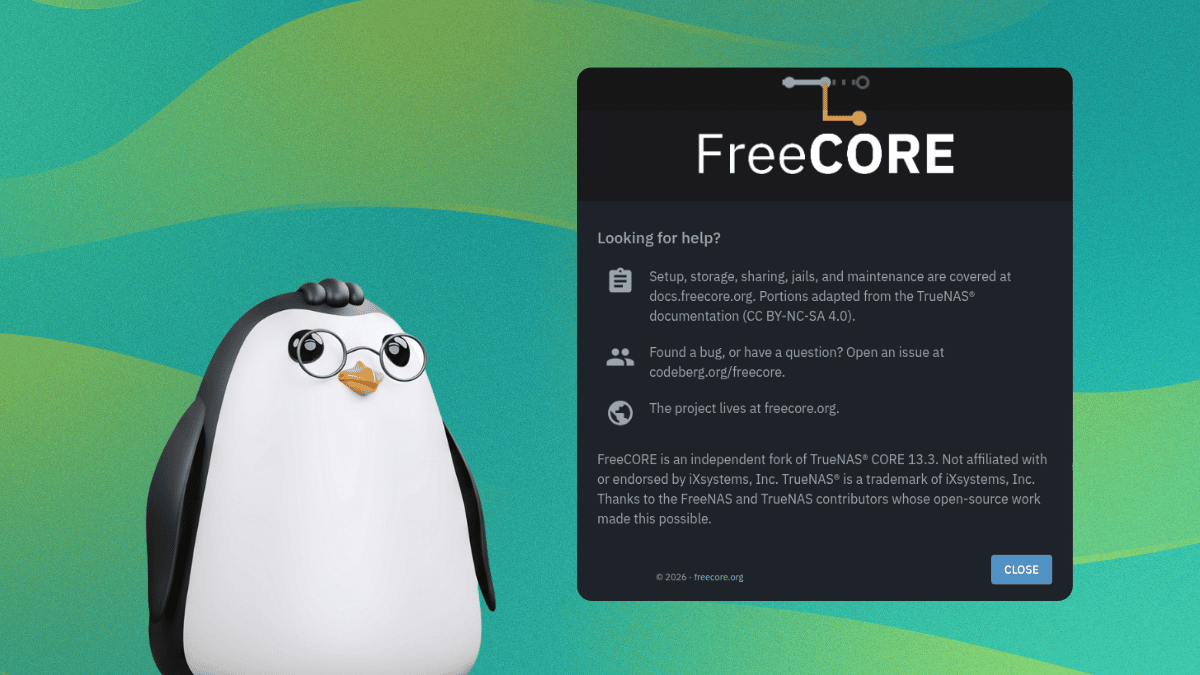
That void is now being addressed by FreeCORE, an independent open-source operating system designed specifically to provide a seamless, modern, and actively maintained pathway for users who rely on core FreeBSD technologies and have no desire to migrate their infrastructure to a Debian Linux base. Tracing its lineage directly back through TrueNAS CORE, FreeCORE preserves the foundational architecture that long-time users depend on, most notably FreeBSD jails and the bhyve hypervisor for virtual machine management.
The project itself represents a fascinating development in modern software engineering. FreeCORE is a specialized, one-person project born out of practical necessity. The developer required a viable FreeBSD-based exit strategy for their own hardware running TrueNAS CORE rather than being forced into a platform migration toward a Linux distribution. To achieve this ambitious goal, the project leaned heavily on modern AI coding agents for code implementation and infrastructure assembly, with the sole creator directing, supervising, and rigorously validating the work every step of the way. Despite its lean origins, the project has matured quickly, culminating in stable releases aimed directly at the TrueNAS CORE holdout community.

Beneath the familiar interface, FreeCORE brings its underlying operating system environment up to date by leveraging a modern FreeBSD 15 base. This foundational upgrade carries a cascade of practical component enhancements that significantly improve the platform’s overall capability, security, and performance profile. Among the most notable updates is the inclusion of a much newer release of OpenZFS, jumping from version 2.1.14 to 2.4.2, which brings enhanced storage management efficiencies, resilience improvements, and advanced data integrity features. Additionally, the underlying Python environment has been advanced from version 3.9 to 3.11, while the web-based administrative user interface now runs on a significantly newer build of the Angular framework, resulting in a snappier and more responsive management experience.
Security and hardware integration have also received substantial attention in FreeCORE. The platform introduces support for WebAuthn security keys, allowing administrators to implement hardware-backed multi-factor authentication as a second login factor for enhanced administrative security. Furthermore, one-time passwords are now supported for console-level logins. For administrators running localized applications within virtualized or containerized environments, jails can now directly share the host system’s graphics processing unit through a newly integrated Direct Rendering Manager driver, opening up possibilities for hardware acceleration in media streaming or compute workloads. Storage utilities have also been expanded with the integration of rar2fs, enabling the system to mount compressed RAR archives as read-only file systems directly.
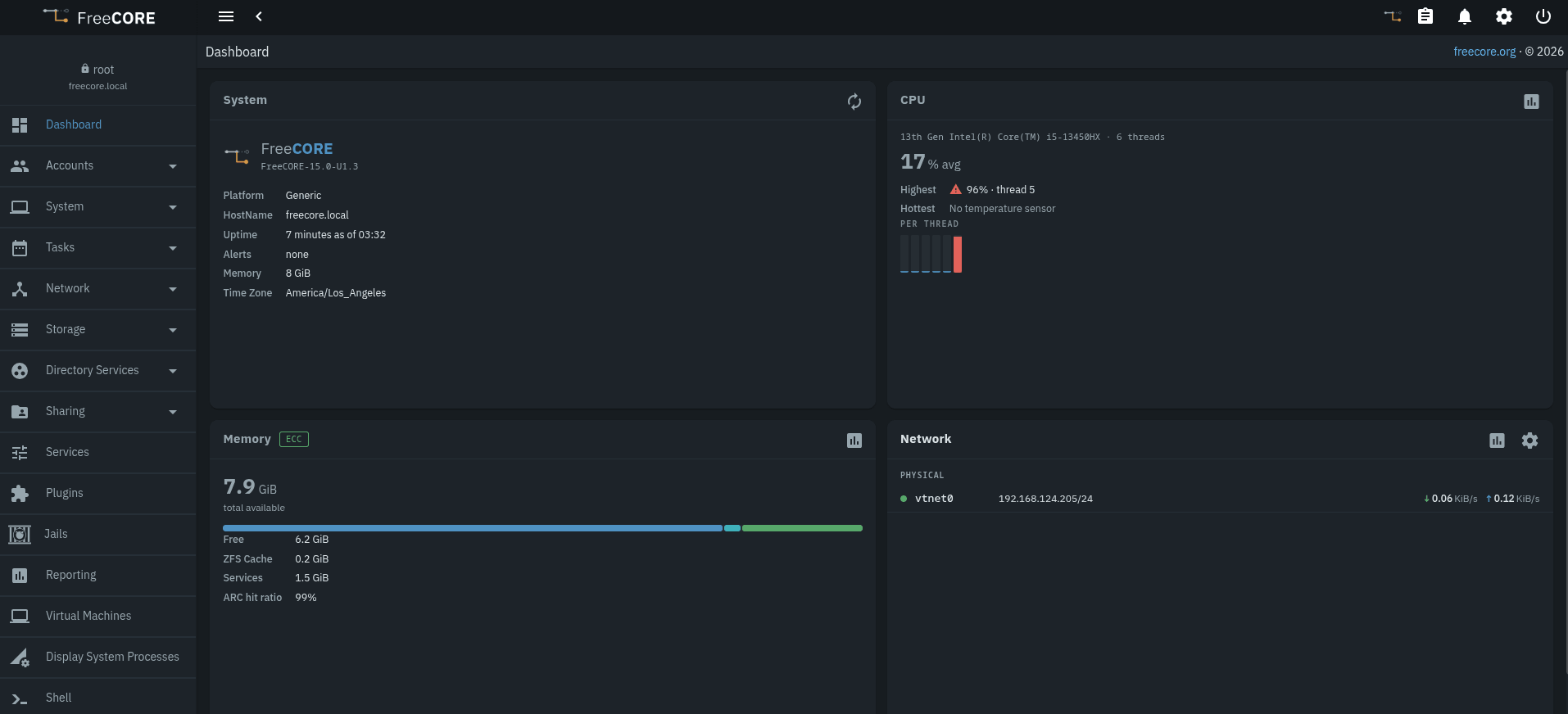
In addition to these low-level upgrades, FreeCORE removes all vendor-specific telemetry, ensuring a private administrative experience. It offers a comprehensive web management interface that provides complete control over storage pools, dataset sharing protocols, user accounts, virtual machines, and jails. Jail networking in FreeCORE can be flexibly routed through VNET, Network Address Translation, or Dynamic Host Configuration Protocol depending on the specific network topology of the deployment, while an advanced jail creation form exposes granular options for network administrators who demand precise configuration control.
For administrators currently running TrueNAS CORE 13.3 who wish to transition to the new platform, the migration process has been designed to be as frictionless as possible. After taking a comprehensive system backup, users can initiate the transition by executing a dedicated enrollment script that updates the system’s update repository and security certificates, switching them away from iXsystems infrastructure and directing them toward FreeCORE’s servers. From that point onward, the operating system upgrade proceeds through the standard system update interface just like any traditional maintenance release.
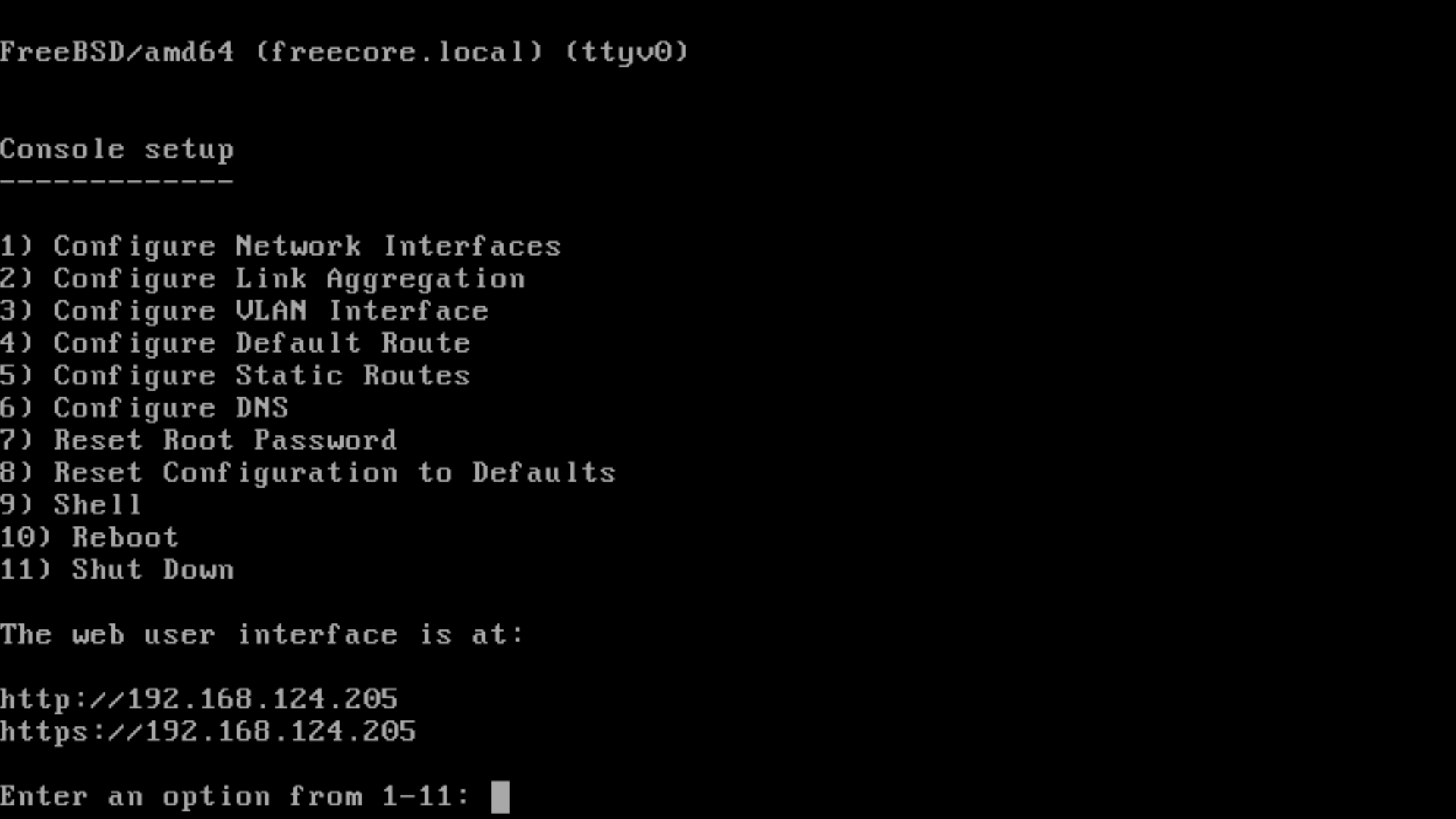
Upon the first system boot following the upgrade, the configuration database automatically migrates, though administrators should note that certain integrations require adjustment. For instance, OpenVPN configurations are replaced by WireGuard, and proprietary enterprise-licensed features do not carry over to the community-driven platform. Alternatively, users can choose a traditional fresh installation approach by writing the system image to removable storage media, verifying the image integrity, and performing a clean deployment onto their storage hardware. Complete documentation is maintained by the community to assist with deployment scenarios and ongoing system administration, with the entire source code hosted publicly on Codeberg for peer review and transparent development.

Leave a Reply