

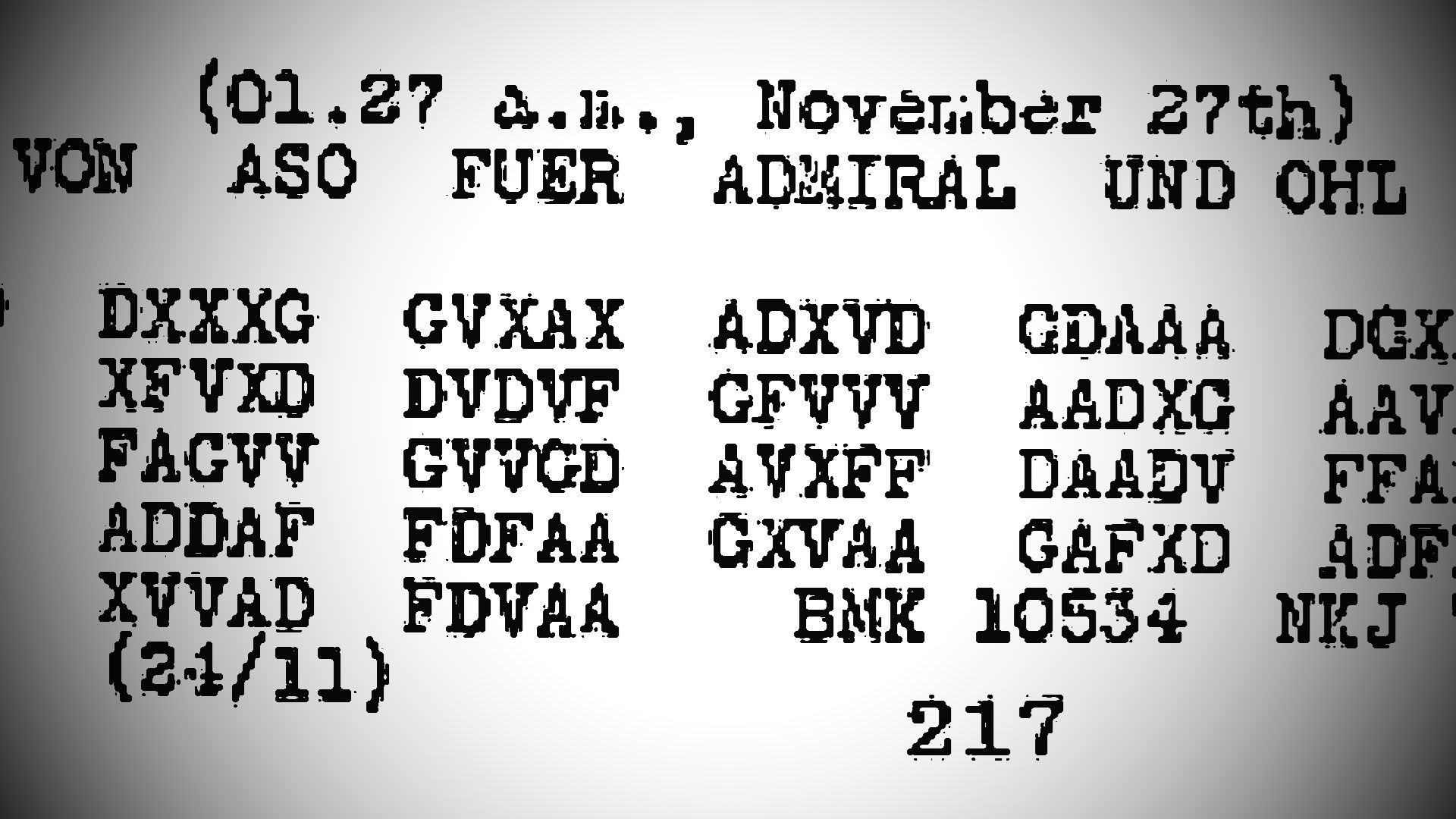
More than a century after it was originally transmitted across the airwaves, an encrypted World War I German radio message has apparently been successfully deciphered for the very first time. The long-obscured communication, which has remained an unsolved historical puzzle for 108 years, reveals specific tactical information regarding the movements of an English cruiser and an Allied squadron operating near the strategically vital Crimean Peninsula during the early stages of the Great War.
The breakthrough in unlocking this covert historical cipher was achieved by a developer known as Prinz, who utilized advanced artificial intelligence technology—specifically GPT-Astra—to analyze, crack, and translate the complex historical code. This development highlights the growing intersection between cutting-edge modern artificial intelligence and historical cryptography, demonstrating how advanced language models and computational tools can be applied to solve decades-old mysteries that once baffled human experts and codebreakers.
The encrypted message dates back to the turbulent era of the First World War, a period that saw the rapid evolution and deployment of wireless radio communications for military coordination. As nations increasingly relied on the airwaves to transmit sensitive operational orders, naval directives, and intelligence reports, military command structures developed sophisticated cryptographic systems to protect their secrets from interception by opposing forces. Imperial Germany, known for its rigorous military organization, employed various cipher systems to safeguard naval and ground movements. Despite these heavy encryption efforts, rival intelligence agencies continuously intercepted these radio signals, though many encrypted transmissions remained unreadable due to missing keybooks, complex transposition methods, or the destruction of wartime records.
For over a century, the contents of this specific transmission languished in historical archives, preserved only as a string of encrypted characters that defied traditional analytical methods. Historical cryptanalysis often requires exhaustive manual labor, comparative analysis of contemporaneous message traffic, and deep familiarity with the procedural habits of the encoding operators. However, even with these conventional techniques, countless historical ciphers have resisted decryption, leaving permanent gaps in the historical record regarding specific tactical maneuvers and operational decisions made during the conflict.
The turning point for this century-old cipher arrived when developer Prinz turned to modern artificial intelligence tools to tackle the computational and linguistic challenges of the encrypted text. By leveraging GPT-Astra, the developer was able to process the ciphertext through sophisticated pattern recognition frameworks and linguistic models capable of identifying underlying structures, common military abbreviations, and historical context that standard human analysis might overlook or struggle to parse efficiently.
While artificial intelligence has increasingly found applications in fields ranging from software engineering to scientific research, its deployment in digital humanities and historical cryptography represents an intriguing new frontier. Large language models and advanced AI architectures excel at recognizing subtle linguistic correlations, syntactic patterns, and statistical anomalies within large datasets. When applied to historical ciphers, these capabilities can significantly accelerate the process of hypothesis testing, code-breaking, and translation, allowing researchers to simulate countless potential decryption keys and transposition rules in a fraction of the time it would take a human cryptanalyst working manually.
The newly decoded and translated text provides a fascinating glimpse into the operational theater of the Black Sea and the Crimean Peninsula during World War I. According to the translation yielded by the AI-assisted process, the message explicitly relays vital intelligence concerning the movements of an English cruiser alongside an Allied naval squadron. During the First World War, the Black Sea region was a crucial and fiercely contested theater of operations involving the naval forces of the Russian Empire, the Ottoman Empire, and their respective allies, including British and German elements operating within the broader strategic landscape.
Naval intelligence during this period was paramount. The deployment, positioning, and maneuvers of capital ships such as cruisers could dramatically alter the balance of power in a regional conflict, threatening supply lines, blockading ports, or escorting troop transports. The revelation that German forces were tracking and transmitting intercepted tactical data regarding an English cruiser and an Allied squadron underscores the intense intelligence-gathering operations that accompanied traditional naval warfare. It provides historians with a clearer picture of how real-time operational awareness was communicated across military units through early wireless networks.
The successful decipherment of this 108-year-old message also serves as a testament to the changing toolkit available to modern historians, archivists, and amateur researchers. As artificial intelligence models continue to evolve and become more sophisticated, their utility in decoding historical manuscripts, untranslated ancient scripts, and wartime ciphers is expanding rapidly. Projects that previously required multidisciplinary teams of cryptographers, historians, and linguists working over the course of years can now potentially be advanced or solved through targeted computational analysis and advanced language models.
At the same time, experts note that applying modern AI to historical cryptography requires careful validation to ensure accuracy. Historical ciphers often contain corrupted characters, transmission static, or deliberate obfuscations that can mislead even advanced computational systems. The verification of Prinz’s decoded message relies on cross-referencing the translated details with known historical events, naval registries, and contemporaneous records from the Crimean theater to confirm that the output aligns logically with the maritime realities of World War I.
As details of the decipherment circulate within tech and historical communities, the achievement stands as a remarkable bridge between early 20th-century military communications and 21st-century artificial intelligence. By cracking a code that had remained unbroken for more than a century, this modern computational approach has successfully shed light on a forgotten moment of maritime espionage, offering a tangible connection to the intelligence operations that unfolded on the high seas during the First World War.

Leave a Reply