
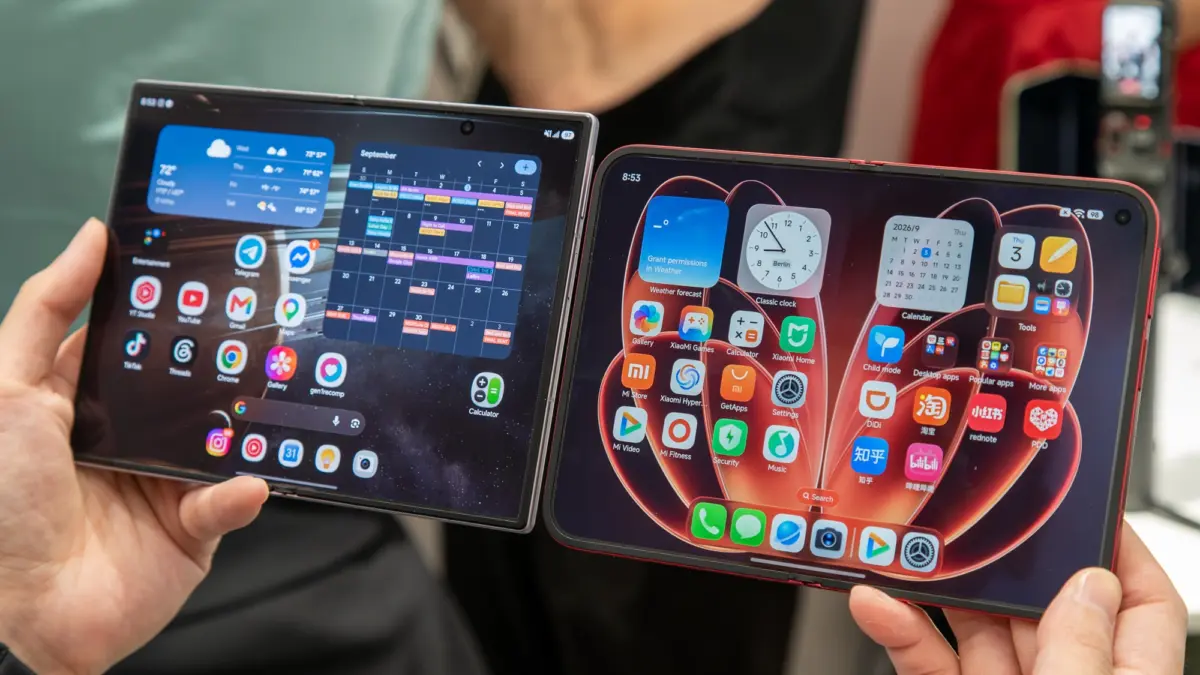
As anticipation builds across the consumer tech industry for Apple’s impending launch of its foldable iPhone Ultra, Xiaomi has managed to successfully steal a portion of that spotlight by showcasing its own cutting-edge mid-size foldable device. Unveiled during the bustling exhibition floors of IFA 2026, the Xiaomi 18 Fold immediately captured attention, even though initial public viewing was strictly limited to a display secured tightly behind glass. This cautious debut gave attendees only a visual taste of what the company has been cooking up in its hardware laboratories.
Fortunately, behind closed doors, a select few tech journalists were granted exclusive hands-on time with the physical device. Coming straight off the review cycle of Samsung’s formidable Galaxy Z Fold 8, industry experts found themselves genuinely impressed by the refined engineering and ambitious specifications packed into Xiaomi’s newest foldable flagship. However, despite the positive first impressions, questions remain regarding how well its proprietary in-house silicon will perform in real-world environments, alongside the undeniable hurdle that limited geographic availability will pose for its global market success.
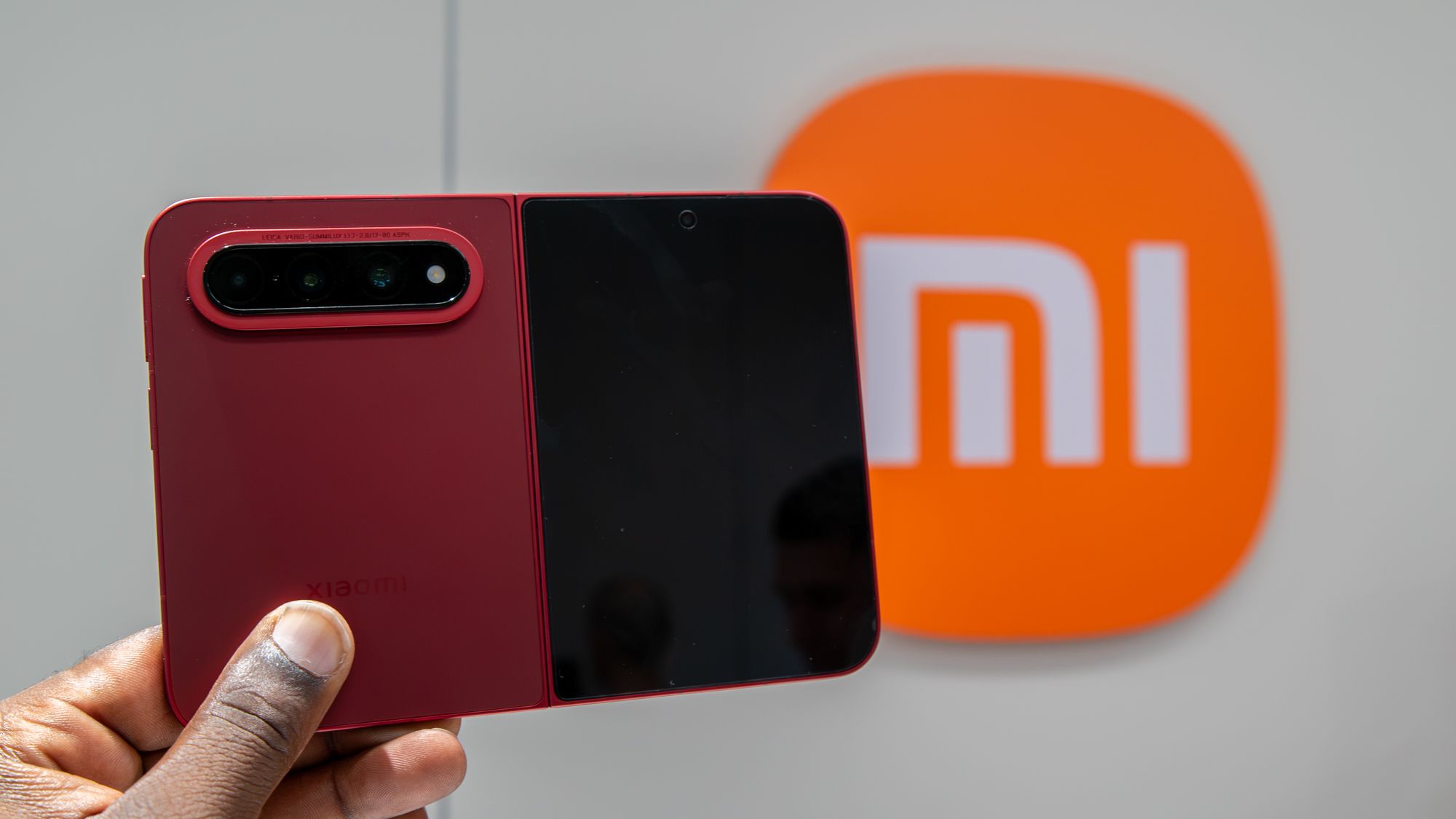
From a physical standpoint, the Xiaomi 18 Fold adopts a wider format that places it in direct competition with popular contemporary foldables like the Galaxy Z Fold 8, yet it maintains distinct design choices that set it apart. The device is notably shorter and wider than its Samsung counterpart, featuring significantly more rounded corners that closely resemble the circulating leaks and aesthetic rumors surrounding Apple’s much-discussed iPhone Ultra.
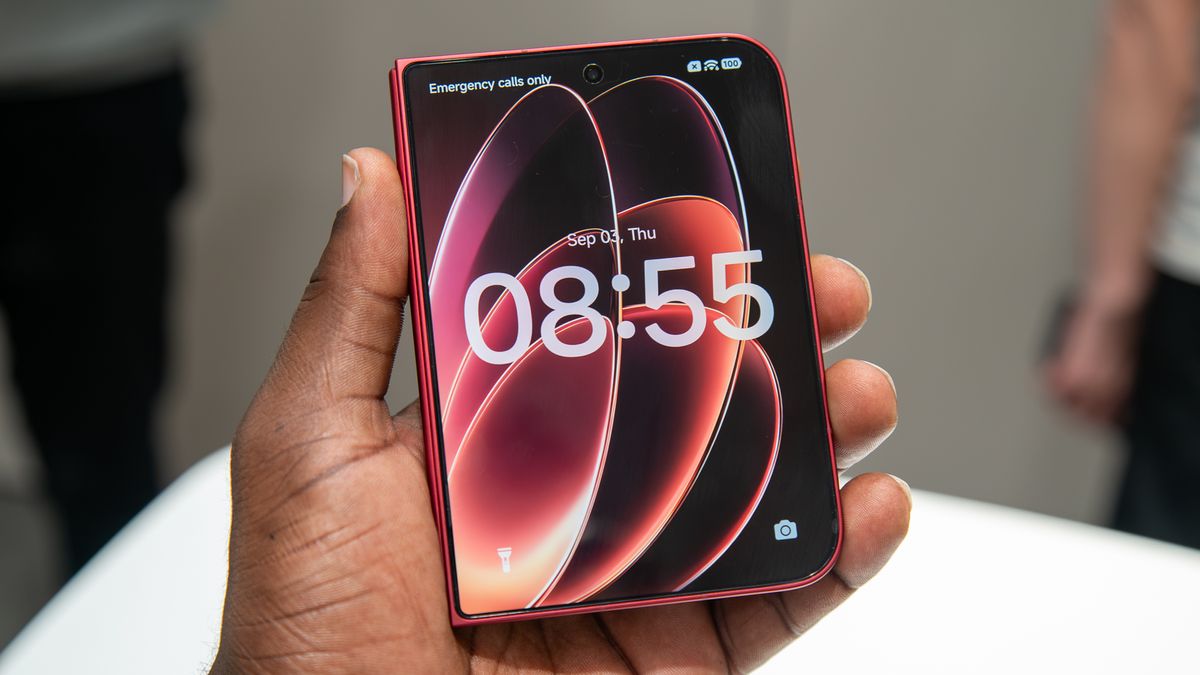
When held in the hand, the device feels remarkably cohesive and balanced. In its folded state, it boasts a compact, passport-like footprint that makes interacting with the external 5.4-inch display comfortable and exceptionally easy to navigate with a single hand. Unfolded, the Xiaomi 18 Fold transforms into a compact tablet experience, opening up to a generous 7.5-inch main display. Both the outer and inner screens utilize a balanced aspect ratio that closely mimics standard A4 paper dimensions. According to Xiaomi’s design philosophy, this 2:1 ratio serves as an optimal canvas for consuming various media formats, providing a natural viewing experience for both widescreen 16:9 video content and traditional 4:3 photographs.
Examining the display technology more closely reveals the ongoing engineering compromises inherent to foldable screens. The crease running down the center of the inner display is still fairly visible, particularly due to the reflective nature of the panel. Nevertheless, when running a finger directly across the fold, the physical indentation is remarkably subtle and barely perceptible to the touch. To achieve this balance of durability and tactile smoothness, Xiaomi incorporates a dual-layer Ultra Thin Glass (UTG) protective architecture designed to safeguard the flexible panel against daily wear and tear.
When compared side-by-side with the Galaxy Z Fold 8, the Xiaomi 18 Fold carries a marginally heavier and thicker chassis, though the difference is virtually imperceptible during normal handling. This slight increase in thickness is largely attributed to the advanced internal power source: a massive 6,000mAh silicon-carbon battery. This high-density energy storage solution gives Xiaomi a distinct advantage over competitors utilizing smaller conventional cells, such as the 4,800mAh unit found in Samsung’s rival foldable. Furthermore, the battery advantage is complemented by significantly faster charging capabilities, supporting robust 67W wired charging alongside rapid 50W wireless charging speeds.
Turning the device over reveals an equally competitive camera array housed on the rear panel. The camera system is anchored by a high-resolution primary 200MP main sensor, designed to capture intricate detail and sharp imagery in varied lighting conditions. Accompanying the primary sensor is a dedicated 50MP periscope telephoto camera, an inclusion that notably outclasses competitors like the Z Fold 8, which traditionally omit periscope hardware in their folding form factors.
While hands-on sessions did not permit the extraction of raw camera samples for independent analysis, expectations remain high for the optics. Powered by Xiaomi’s ongoing collaboration with Leica, the imaging system is anticipated to deliver the same signature aesthetic characteristics seen in recent Xiaomi flagship releases, including natural-looking background bokeh and rich, accurate color reproduction.
Beneath the sleek exterior, the Xiaomi 18 Fold introduces the company’s brand-new proprietary silicon: the XRING 03 chipset. Built on an advanced 3nm manufacturing process, this in-house processor is engineered to deliver elite computing performance alongside robust, on-device artificial intelligence capabilities. Xiaomi outlines an impressive architectural layout for the processor, featuring a 10-core CPU configuration split between two Ultra cores, four Premium cores, and four Pro cores. According to official manufacturer metrics, this setup yields a 60 percent performance increase while simultaneously slashing power consumption by 25 percent compared to the previous-generation XRING 01 chip.
Because formal benchmark testing was not permitted during the brief closed-door hands-on window, independent verification of these performance claims will have to wait until retail units can be thoroughly evaluated in a laboratory setting. This technological leap places Xiaomi under considerable scrutiny. With rivals leaning on established powerhouses like the Qualcomm Snapdragon 8 Elite Gen 5 and upcoming Apple silicon, the successful rollout of the XRING 03 is a critical milestone for Xiaomi’s high-end smartphone aspirations.
The processor architecture is further rounded out by a 16-core graphics processing unit designed to elevate smartphone visual rendering, alongside a dedicated neural processing unit capable of delivering 200 TOPS of tensor performance. Xiaomi highlights that this NPU power enables a 45 percent boost in on-device decoding speeds, streamlining complex AI tasks directly on the phone without relying on cloud servers. Configured with up to 16GB of fast LPDDR6 RAM and running the company’s proprietary HyperOS software interface, the foldable device serves as a premier showcase for Xiaomi’s broader technological ecosystem, bridging mobile computing with smart home and automotive integration initiatives.
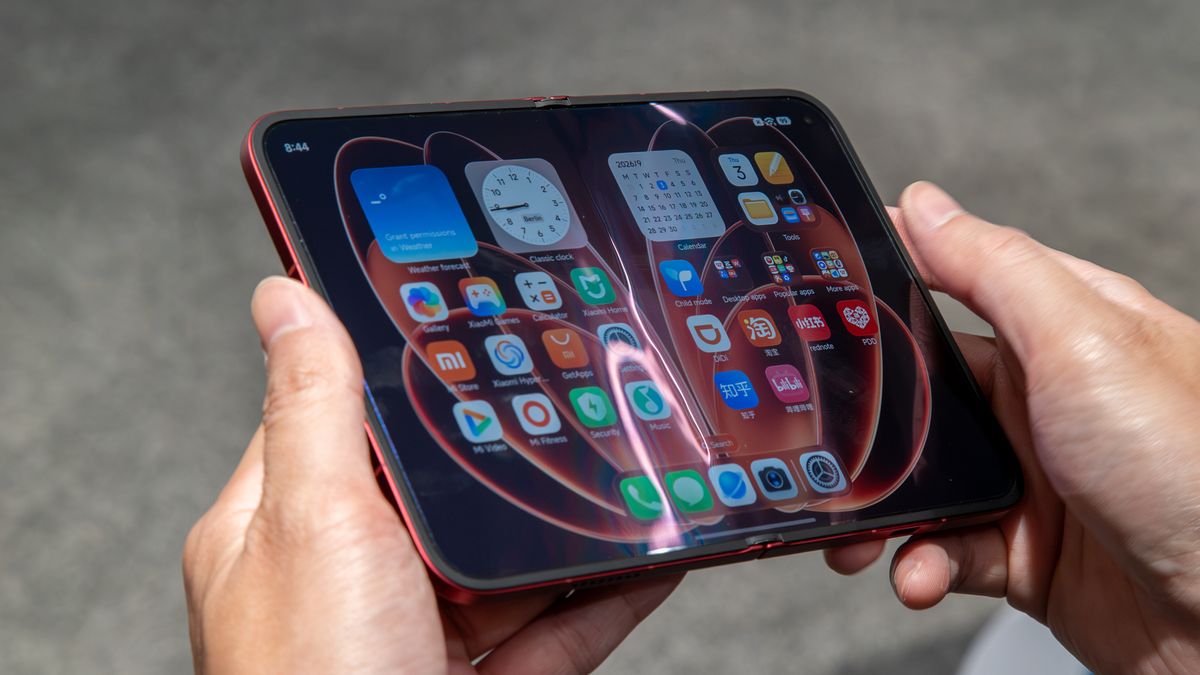
Despite the impressive spec sheet and hardware innovations, potential buyers outside of specific regions will face significant barriers to ownership. Much like its predecessor, the Xiaomi Mix Fold 4, the initial commercial rollout of the Xiaomi 18 Fold is restricted exclusively to the Chinese market, with no confirmed timeline or official announcement regarding a broader international release. While Xiaomi has steadily expanded its footprint throughout European retail markets in recent years, leaving global consumers waiting, the current geographic exclusivity remains a disappointment for enthusiasts abroad.
For consumers within the launch region, pricing for the standard configurations begins at 10,999 yuan, which translates to roughly $1,638.88 USD, positioning the device firmly at the premium end of the foldable smartphone market. The standard variant is showcased in striking color options including black, white, and a vibrant red model handled during the preview. Additionally, Xiaomi is offering a specialized ceramic edition of the device, configured exclusively with 16GB of RAM and a massive 1TB of onboard storage, retailing at 15,999 yuan, or approximately $2,383 USD.


Leave a Reply