
More than 15 years after James Cameron’s Avatar wowed audiences on the big screen and cemented its place as the highest-grossing film worldwide, 3D technology is experiencing a quiet, unexpected renaissance. Once dismissed as one of the biggest tech flops of the 2010s, three-dimensional viewing is finding new life through modern video glasses, virtual reality headsets, and an evolving streaming landscape that is finally delivering the visual experience enthusiasts have long desired.
For years, loving 3D movies meant enduring awkward compromises. Traditional theatrical viewing relied on polarized glasses, which forced viewers to accept half the resolution and roughly half the brightness because a single reflected image had to be split between two eyes. Nearly every legacy 3D technology demanded a sacrifice, whether it was a drastic drop in resolution, as seen on the Nintendo 3DS, or the nagging refresh rates and flicker associated with active shutter glasses.

The fundamental limitation of traditional displays was their inability to deliver a dedicated, full-resolution screen to each individual eye simultaneously. Modern video glasses and head-mounted displays, however, have fundamentally solved this structural flaw. By providing independent left and right views, current hardware allows viewers to experience content in its intended format without the traditional optical penalties.
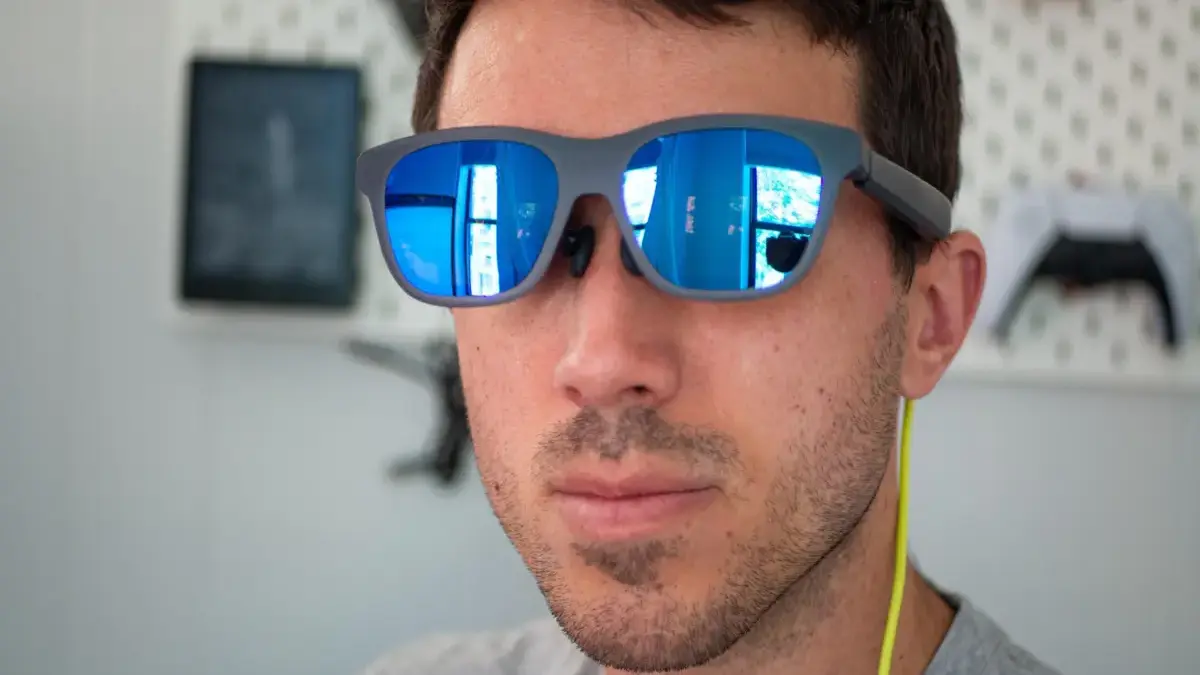
Advanced AR glasses, such as the Xreal One Pro, initially gained traction by offering gigantic virtual flat screens that mimic a private theater environment for any connected device. However, these displays are not permanently locked into a flat perspective. By activating side-by-side 3D modes—often achieved through a simple hardware toggle—the glasses can decode independent left and right video feeds to deliver a crisp, full 1080p view for each eye.
Similar side-by-side toggles have become standard features in popular video player applications for VR headsets like the Meta Quest and Steam Frame, while platforms like the Apple Vision Pro and upcoming Meta VR Glasses support native streaming of stereoscopic films. The visual payoff of this hardware evolution is profound.

When viewing properly mastered content, the sense of depth transforms familiar scenes entirely. The water parting to allow Moana through shifts from a flat visual wall into a living body of water filled with animated life. CG elements in films like The Lego Movie jump from standard flat screens into immersive digital dioramas, while the holographic displays in the operations room of Avatar gain distinct, layered depth. Cockpits, protective helmets, transparent glass, and fast-moving vehicular sequences—such as the lightcycles in Tron: Legacy or the battling convoy in Mad Max: Fury Road—reveal intricate surface textures, microscopic scratches, and ambient environmental reflections that are entirely lost in standard two-dimensional formats.
The technological leap extends beyond traditional Hollywood blockbusters. Recent cinematic experiments, such as Billie Eilish’s concert film shot by James Cameron using specialized twin-camera setups and remote-controlled AGITO rigs, offer an unprecedented sense of physical proximity to live performances. Similarly, interactive nature documentaries like Galapagos: The Last Eden leverage high-definition spatial rendering to showcase minute details, from the microscopic grains of sand clinging to a seal’s fur to the complex textures of wildlife.
Even historical cinematic works benefit from proper three-dimensional presentation. Werner Herzog’s acclaimed documentary Cave of Forgotten Dreams highlights how ancient art was inherently designed for a three-dimensional canvas. The bulging contours of a prehistoric cave wall transform flat charcoal lines into dynamic, leaping animal forms, illustrating that human artistic expression has valued spatial depth for tens of thousands of years.

Despite these technological strides, the enthusiast community still faces notable hurdles regarding content availability and distribution. Not all three-dimensional media is created equal. Many live-action films produced during the height of the theatrical 3D craze relied on post-production conversions rather than native dual-camera capture, frequently resulting in a "billboard" effect where flat visual layers appear stacked against one another rather than exhibiting true spatial depth.
Furthermore, acquiring high-quality copies of 3D films has grown increasingly difficult. The commercial standard for physical media has shifted decisively toward 4K Ultra HD Blu-ray, a format that does not support 3D video. Consequently, physical 3D media remains anchored to the aging 3D Blu-ray standard, which is typically capped at 1080p resolution, 24 frames per second, and lacks High Dynamic Range support. Sourcing these physical discs often requires navigating secondary marketplaces and specialty importers to secure rare titles.
Fortunately, major hardware manufacturers are actively working to convince Hollywood studios to transition their stereoscopic libraries to digital streaming platforms. The 2024 launch of the Apple Vision Pro established a new benchmark for digital 3D distribution, introducing 4K resolution, HDR, spatial audio, higher frame rates for select titles such as Avatar, and an extensive catalog of 3D films available through services like Disney Plus, frequently offering free upgrades to users who previously purchased the 2D digital editions.

This capability is expanding beyond ultra-premium hardware tiers. According to Meta’s director of entertainment, Sarah Malkin, upcoming consumer hardware releases will bring stereoscopic streaming to more accessible price points. Subscribers will soon be able to access 3D movie catalogs through dedicated applications on platforms like the Meta Quest 3S, the standard Quest 3, and upcoming Meta VR Glasses.
Major streaming services, including Disney Plus, HBO, Paramount Plus, and Peacock, are slated to integrate 3D content support. By the time upcoming consumer-grade VR and AR glasses arrive on the market, hundreds of films are expected to be available for rent or purchase directly through platform storefronts, with pricing intended to align closely with standard 2D Ultra High Definition digital releases. Hardware battery optimizations are also designed to accommodate full-length cinematic features, with operating life spanning standard theater-mode viewings on a single charge.
While mainstream digital streaming ecosystems gradually expand to support the format, dedicated enthusiasts continue to rely on manual archiving methods to build their digital libraries. Scouring thrift stores for physical 3D Blu-rays and utilizing software tools like MakeMKV and BD3D2MK3D allows cinephiles to rip multi-view source files and compress them into high-quality full-side-by-side formats. Transferring these files to portable media players and pairing them with modern AR glasses introduces significant friction into the viewing process, but for dedicated fans, the visual payoff remains well worth the effort.

As the industry pivots away from physical media toward native spatial streaming, the medium is finding a sustainable second act. Though many viewers are revisiting older cinematic favorites, the convergence of advanced display optics and accessible streaming technology is ensuring that the format’s long-delayed potential is finally being realized.


Leave a Reply