
As artificial intelligence systems transition from simple conversational chatbots to autonomous problem-solvers, their ability to interact with the digital world has fundamentally shifted. Central to this evolution is AI agent tool use—the critical process by which an AI model selects and employs external capabilities to retrieve information or execute actions beyond its native training parameters.
Published on September 24, 2026, industry insights highlight how these systems operate. Rather than performing external actions directly, an AI agent encountering a task requiring web searches, email dispatching, or database querying generates a precise request detailing the required operation. The underlying system running the agent then routes this request to the appropriate external tool, which executes the command and feeds the resulting data back into the AI.
Operating in an iterative loop, the agent selects a tool, transmits its request, analyzes the returned result, and determines its subsequent step. By repeating this cycle multiple times, complex multi-stage tasks are successfully resolved without requiring constant human intervention.
Mechanics of Tool Selection and Reasoning
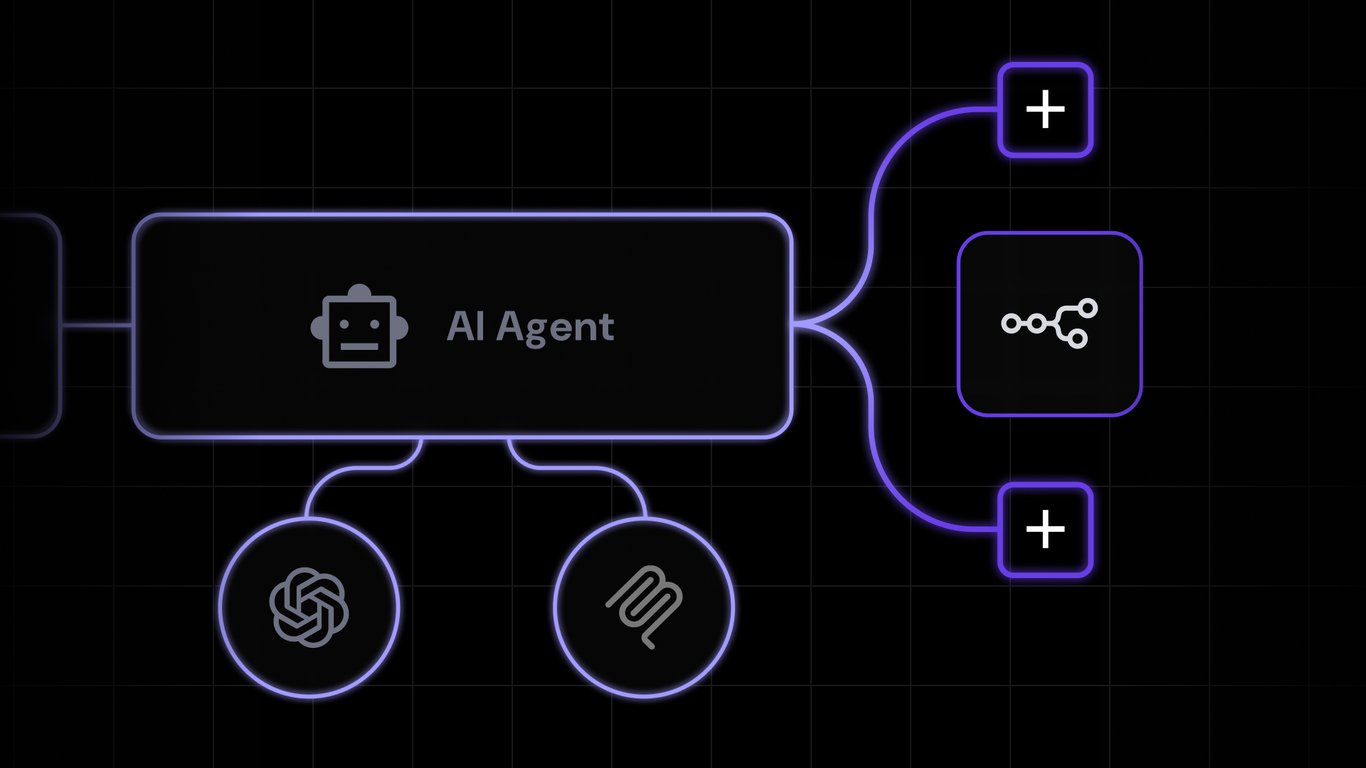
When an agent evaluates a problem, it relies on structured metadata associated with each available tool, including names, descriptions, and required input variables, weighed against the context of the current objective.
The reasoning path typically begins with the agent analyzing the user request to identify missing data or required actions. It then scans available capabilities to select the most appropriate tool, formulates the specific parameters needed for execution, and evaluates the resulting output. If the information is sufficient, the task advances; if not, the agent recalibrates and initiates a new tool call.
Industry standards distinguish several overlapping concepts in this ecosystem. Tool use encompasses the overarching capability of an agent to select and leverage external assets. Function calling serves as a specific mechanism enabling an AI model to request predefined functions by supplying structured inputs. Meanwhile, the Model Context Protocol (MCP) establishes a universal standard for connecting AI applications to external data sources. Distinct from these are agent skills, which supply reusable instructions and resources guiding how an agent approaches a specific class of tasks, such as structuring a weekly report or adhering to corporate compliance guidelines.
Real-World Applications Across Industries
Modern enterprise platforms, such as the Hostinger Agent ecosystem, demonstrate how these integrated workflows operate in practice, connecting natively with services as well as third-party applications like Gmail, Outlook, HubSpot, Notion, Google Calendar, Google Drive, and Jira. By combining web searches, file manipulation, and isolated code execution sandboxes, these agents streamline operations across diverse sectors.
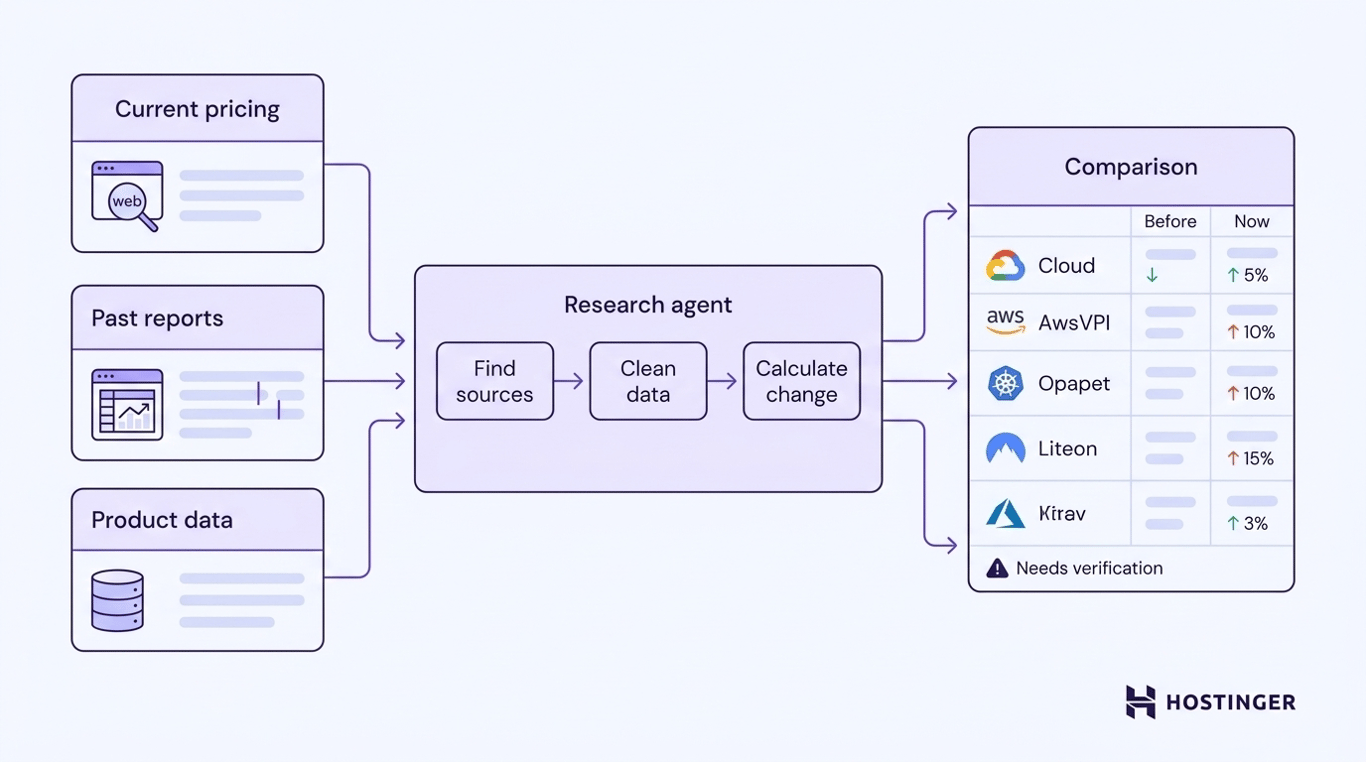
In research environments, agents combine web search engines, file retrieval systems, and data analysis utilities to synthesize complex information. When tasked with comparing annual cloud provider pricing changes, for instance, an agent gathers current web pages, retrieves historical spreadsheets, and executes code to clean datasets and calculate percentage variations.
Sales professionals utilize agents to bridge customer relationship management (CRM) platforms and communication channels. Following a sales call, an agent can review a prospect’s CRM history, synthesize interaction notes, draft a personalized follow-up email, dispatch it, and automatically update deal stages or schedule future tasks for human representatives.
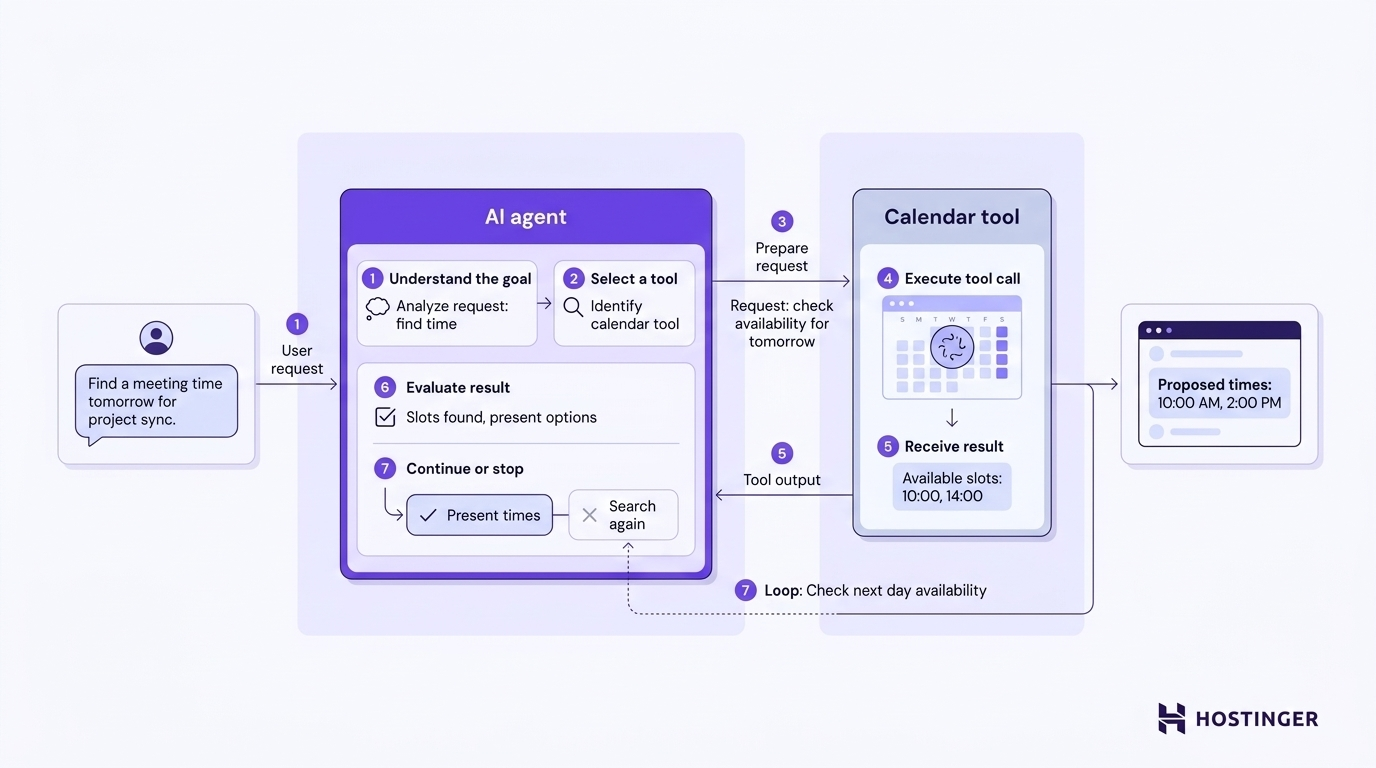
Business operations agents automate cross-platform administrative workflows. By synchronizing calendar apps, internal documentation, and email services, these agents coordinate schedules and dispatch status updates, reducing the friction of manual application switching.
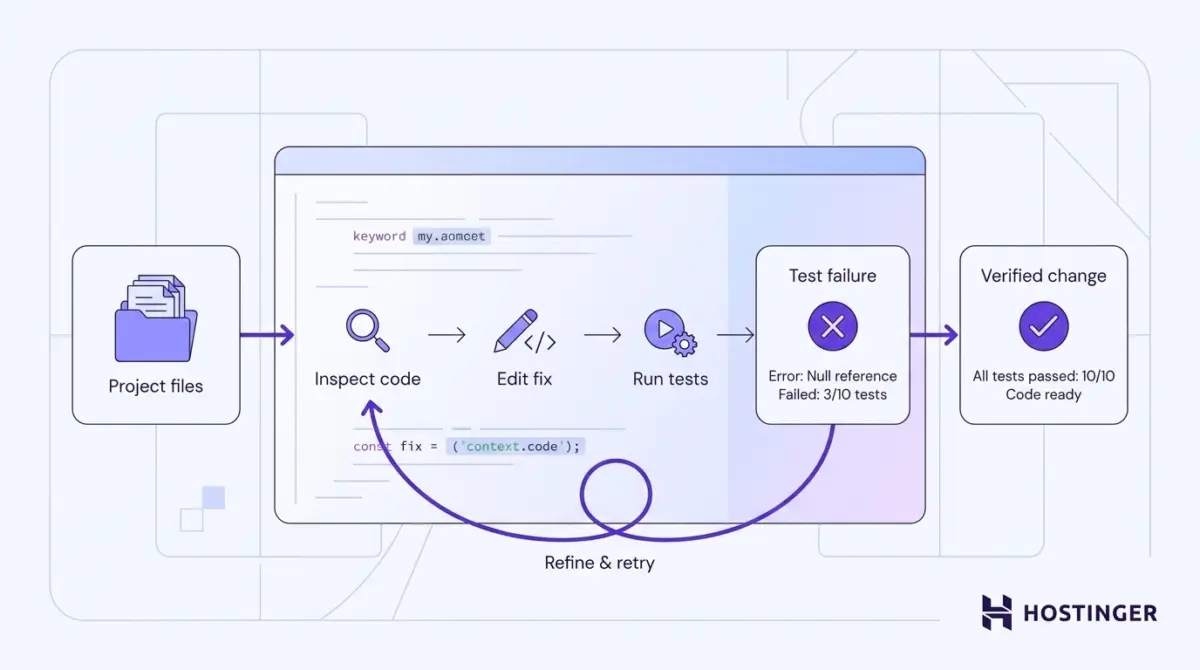
Within software development, coding agents interact directly with project files and testing suites. Upon encountering a bug report, the agent inspects relevant codebase directories, implements a patch, and executes automated project tests. Should a test fail, the agent analyzes the resulting error trace, refines its code modifications, and re-runs the verification loop until the software functions as intended.
Customer support operations similarly benefit from multi-system integration. When addressing a delayed shipment ticket, a support agent queries customer account databases, interrogates order-management software, and checks third-party carrier shipping statuses. Depending on whether a package is in transit or confirmed lost, the agent either provides tracking details or routes the ticket for a refund under established enterprise protocols.
Security and Integration Safeguards
Deploying autonomous agents requires rigorous security frameworks to mitigate operational risks. Reliable tool use depends on defining strict operational parameters, limiting data access scopes, validating inputs and outputs, and enforcing human-in-the-loop safeguards for high-risk actions.
A primary security concern in agentic workflows is prompt injection via external tool outputs. Because retrieved web pages, incoming emails, or parsed documents can contain malicious text designed to hijack an agent’s original instructions, security protocols dictate that agents must ignore inline commands embedded within retrieved content and strictly adhere to their primary system instructions and assigned permission boundaries.
Ultimately, connecting these capabilities to enterprise infrastructure relies on robust API integrations. While tool use governs the real-time selection of capabilities during a task, AI agent integrations govern authentication and permission structures, ensuring that agents can read necessary data while remaining restricted from unauthorized modifications or deletions.

Leave a Reply