
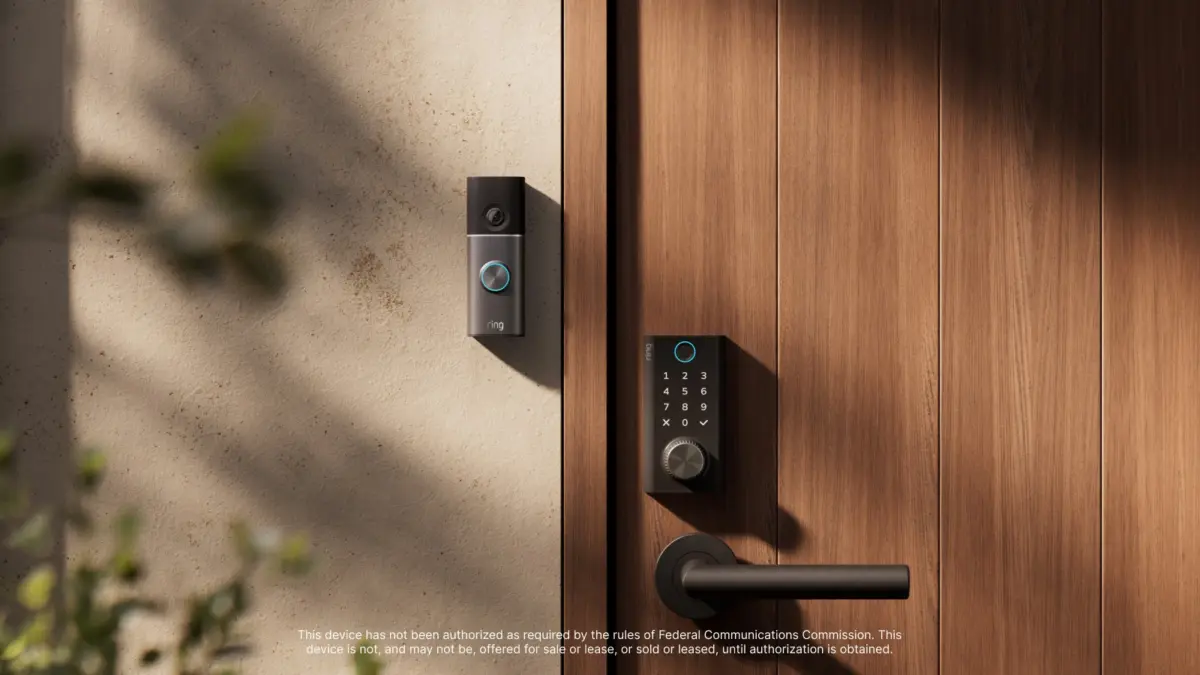
The company’s forthcoming entry into the smart lock market is designed to stand out from existing alternatives by directly confronting one of the most common consumer anxieties associated with connected home hardware: the persistent fear of battery failure leading to an accidental lockout.
While the smart lock market is already crowded with options from established competitors, Ring’s new device approaches the core mechanical and power challenges of automated door security from a fresh angle. Rather than relying solely on traditional backup measures or leaving users stranded when power runs out, Ring has integrated a physical power dial directly into the unit. If the device’s primary battery depletes completely, a homeowner can simply turn the built-in dial a few times to generate enough temporary power to engage the lock mechanism and gain entry to their home.
According to Ring founder Jamie Siminoff, the inspiration to rethink smart lock design struck while he was shopping for a connected lock to install at a vacation property. He quickly realized that traditional battery-dependent models presented a significant practical hurdle for homes that experience intermittent or low occupancy.
Siminoff noted that he struggled with the decision because the particular house is used very infrequently, and he knew the battery would inevitably die while the property sat vacant. He also worried that visiting family members or friends might find themselves locked outside, as the door lacks a direct connection to a home electrical power source and any standard smart lock remains entirely tethered to battery life.
Recognizing a widespread industry friction point, Siminoff decided to tackle the engineering problem head-on. Utilizing artificial intelligence tools during the developmental phase, his team worked on a project to create a mechanical override system that users could manually crank just enough to generate the electrical charge required to unlock the door. Once inside, the homeowner can easily remove the rechargeable battery pack and plug it in for a standard recharge.
Ring estimates that the charge on its new smart lock will last approximately one year under normal usage conditions. The device is programmed to send timely notifications to the user via the Ring mobile application when it approaches the time for a recharge. Furthermore, the Ring app serves as the central hub for managing access permissions, enabling homeowners to configure scheduled or temporary access for service providers such as dog walkers or house cleaning professionals.
Looking ahead, the company aims to open the platform to third-party app developers, allowing them to design specialized software extensions for the lock. This capability is expected to unlock additional use cases, such as facilitating property management for Airbnb hosts who need to frequently and securely update access codes for incoming guests.
To address the broader spectrum of everyday usability and security, the Ring lock provides four distinct entry methods, ensuring that users never have to worry about misplacing a physical key or forgetting a digital access code. Homeowners and authorized visitors can unlock the door using the device’s integrated fingerprint reader, a backlit touchscreen keypad, the Ring companion mobile app, or voice commands via Amazon Alexa.
Siminoff acknowledged that while the lock shares many foundational features with other smart locks currently available on the market, its unique ability to alleviate consumer anxiety over dead batteries and potential lockouts will serve as its primary competitive advantage. He emphasized that battery life concerns act as a major psychological barrier preventing widespread consumer adoption of smart home security devices.
Traditional smart locks that do attempt to offer backup methods frequently rely on cumbersome, less secure alternatives—such as hiding a physical house key somewhere on the exterior property, which compromises overall home security. Ring’s device is engineered to fit a standard single-cylinder deadbolt, making it compatible with a wide array of existing residential entry doors.
The new smart lock is scheduled to become available for purchase in the United States during the first quarter of 2027, following the completion of standard regulatory procedures and receipt of Federal Communications Commission authorization. When it launches, consumers will be able to choose from three distinct hardware finishes: black, silver, and brass, allowing the hardware to blend seamlessly with various home aesthetics and door designs.
Alongside the announcement of its inaugural smart lock, Ring also broadened its hardware lineup by introducing four new high-resolution 4K security cameras. The newly unveiled camera models include the Outdoor Cam 4K Plus, the Spotlight Cam 4K Plus, the Floodlight Cam 4K Plus, and a versatile pan-tilt Indoor Cam 4K, further cementing the brand’s expansive vision for comprehensive residential safety and surveillance.


Leave a Reply