
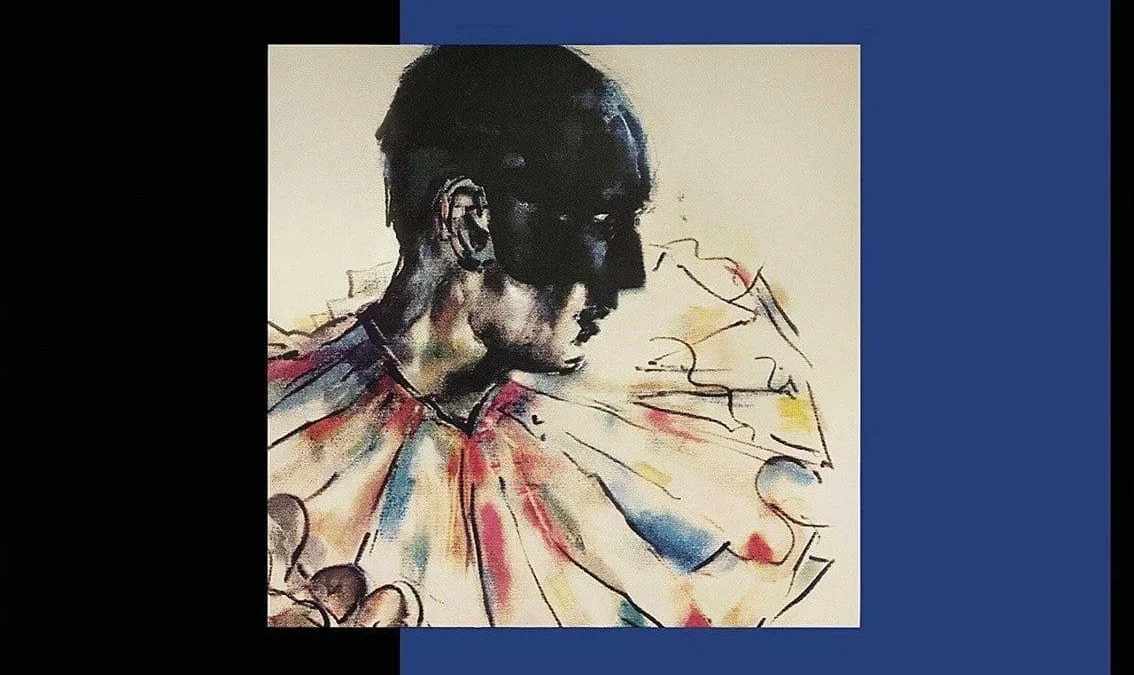
While deep in the grueling recording process for what would become Nine Inch Nails’ landmark 1994 masterpiece The Downward Spiral, Trent Reznor briefly shifted his focus to lend his formidable production talents to an old friend. That friend was Kevin McMahon, a musician with whom Reznor had previously shared history in the new wave band Lucky Pierre. Although Reznor’s official production credit on the self-titled debut album by McMahon’s project, Prick, is restricted to just four tracks, his creative fingerprints are unmistakable throughout the entire record. Yet, despite the heavy industrial atmosphere that Reznor naturally brought to the table, McMahon’s distinct artistic personality shines through, driven by an inner theater kid that injects the songs with a glammy flamboyance reminiscent of T. Rex. In doing so, Prick embraces the inherent theatricality of goth culture in a way that Nine Inch Nails, for all their dark intensity, never quite did.
The album opens with 鈥淐ommuniqu茅,鈥 a fuzzy blast of simple punk rock riffs overlaid with subtle electronic sprinklings. From the very beginning, McMahon鈥檚 vocal delivery establishes a restless dynamic, occasionally detouring from half-spoken verses that sound as though they were borrowed directly from a stage musical into full-throated, Al Jourgensen-esque screams. The rough-around-the-edges production style and the heavy focus on live instrumentation feel remarkably like a sonic prototype for textures that Reznor would eventually revisit years later on Nine Inch Nails’ 2005 album With Teeth.
However, it is on the second track, 鈥淩iverhead,鈥 where Reznor鈥檚 specific sonic influences fully rear their head, even though he is not officially credited as the producer for this particular song. The vocal melodies swerve unpredictably, evoking the artistic spirit of David Bowie during his Outside and Earthling eras, all while riding atop guitars that buzz with the distinct digital charr found on the Broken EP. Then, right around the three-minute mark, the track undergoes a dramatic transformation with a sweeping breakdown. The song slowly builds through meticulously layered electronic drums, mechanical chords, and loping, synthetic-sounding guitar melodies. The entire back half of the track is so structurally sound and texturally rich that it could easily have passed for a Downward Spiral or even The Fragile B-side.
These moments of meticulously layered, high-level production, however, are almost always immediately and delightfully undermined by sudden drops into raw chaos, such as the sloppy garage-punk intro that kicks off the track 鈥nTough.鈥
It is precisely these sudden stylistic collisions that give Prick its enduring charm. It is a serious record rooted in the heavy, often bleak aesthetics of 90s alternative music, but it refuses to take itself too seriously. McMahon is never afraid to lean into moments of sheer goofiness—singing lines like 鈥淧ink panties, blue panties, yellow panties. I鈥檓 gonna wrap around your nose, oh panty-ho-hose鈥 on the track 鈥淥ther People鈥—or to push his vocal performances to over-the-top theatrical extremes. He is consistently willing to let the guitars drift slightly out of time and the bass strings rattle against the frets, fully reveling in the gritty warmth of industrial lo-fi aesthetics.
Among the tracklist, 鈥nAnimal鈥 stands out as perhaps the best-known song from the album, aided by a music video that managed to secure at least some notable MTV airplay during its release cycle. The track combines backward-running melodic samples that bear a distinct resemblance to the sonic architecture of Nine Inch Nails鈥 iconic hit 鈥淐loser,鈥 while following a remarkably similar lyrical theme of raw, primal instinct. As McMahon sings in the chorus, consent is all that is required to bring out the savage and the animal within him. But where 鈥淐loser鈥 opts for a slinky, sophisticated disco sleaze, 鈥nAnimal鈥 strips away the polish, presenting itself as a piece of raw, shouted desire.
Meanwhile, 鈥淚 Apologize鈥 emerges as easily the most scatter-brained track on the entire album, and precisely for that reason, one of its most compelling highlights. The song opens with awkward, whip-crack-like percussion accompanied by McMahon singing slightly flat and emotionally unaffected, before it briefly takes off into a jangly new wave verse that abruptly morphs into a hard-rock stop right at the chorus. That structural stability is short-lived, however. The second verse shifts gears entirely into acoustic strums reminiscent of David Bowie鈥檚 Space Oddity era, which is then swiftly followed by a frantic guitar solo that sounds precisely like an arcade video game machine on the verge of a complete meltdown. That chaotic energy then drops away into a Ministry-esque dirge characterized by layered walls of heavy guitars and piercing screams. The song eventually returns to its primary chorus, but continues to pile on elements until it is stuffed completely to capacity, ultimately collapsing gracefully in on itself.
Ultimately, Prick鈥檚 self-titled record shares plenty of DNA with other prominent 1990s industrial and alternative acts of its time. But through it all, Kevin McMahon is clearly having a significantly greater amount of fun than many of his contemporary peers, and that irreverent, creative spirit helps elevate the album far above the myriad Nine Inch Nails wannabes that populated the musical landscape of the decade.
For listeners looking to explore this cult classic, Prick is currently available to stream across most major digital music services, including Apple Music, Spotify, Qobuz, Deezer, and YouTube Music.



Leave a Reply