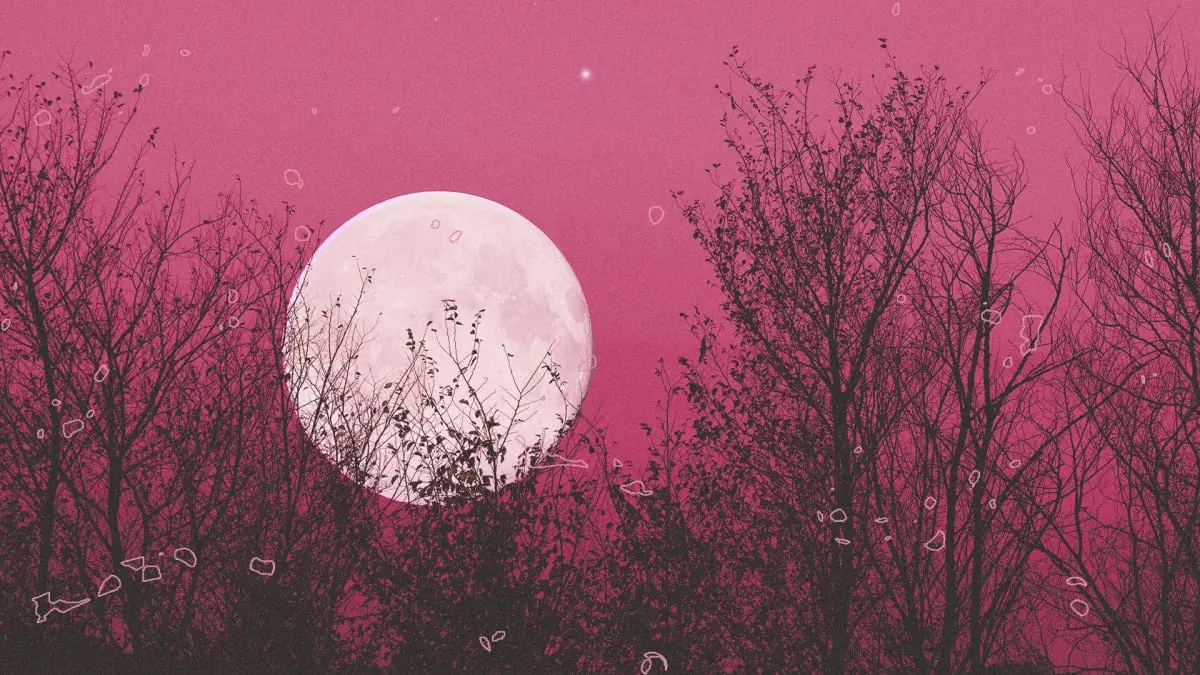
As of Sunday, November 22, tracking data provided by NASA’s Daily Moon Guide indicates that the Moon is currently positioned firmly within the Waxing Gibbous phase. At this stage in the lunar journey, roughly 92 percent of the lunar surface facing Earth is brightly illuminated by the Sun. The glowing orb dominates the evening sky, casting a silvery light across landscapes and outshining many of the faintest stars, signaling that the wait for the fully illuminated lunar disk is nearly at an end.
For casual observers stepping outside without any visual aids, the nearly full lunar surface already reveals several of its most famous large-scale features. Even to the unaided human eye, dark basaltic plains—known as maria—such as Mare Vaporum and Mare Serenitatis are clearly distinguishable against the brighter highlands. Observers can also make out the distinct brightness of the Aristarchus Plateau, a prominent geological feature located in the northwest corner of the lunar near side that stands out for its high reflectivity.
Those who choose to step outside with a pair of standard binoculars unlock an even deeper view of the lunar topography. With modest magnification, stargazers can easily pick out the rugged ridges of the Apennine Mountains, a sprawling mountain range that borders the Mare Imbrium. Binoculars also bring into sharp focus the Gassendi Crater, an ancient and complex impact structure located on the northern edge of Mare Humorum, alongside the smooth, dark volcanic plains of Mare Nectaris.
For amateur astronomers and hobbyists who roll out telescopes for the occasion, the viewing experience expands exponentially. Through a telescope, the lunar surface reveals intricate details that have captivated scientists and dreamers for generations. In addition to the broad maria and mountain ranges, telescope users can observe specific historical landmarks, including the precise landing sites of NASA’s historic Apollo 14 and Apollo 17 missions, where human footprints remain preserved in the lunar dust. Observers can also trace the path of Rima Ariadaeus, a striking linear rille or fissure system that cuts across the lunar highlands, showcasing the complex geological history etched into the crust of our celestial neighbor.
This impressive celestial display is merely a precursor to the main event. According to astronomical tracking and NASA’s schedule, the next official Full Moon will take place on November 24, when the Moon reaches the exact point in its orbit where it is directly opposite the Sun from our perspective on Earth, achieving 100 percent visible illumination.
To understand why the Moon undergoes these dramatic transformations week by week, it helps to look at the mechanics of our solar system. According to NASA, the Moon goes through a complete cycle of phases roughly every 29.5 days, a duration known as a synodic month. As the Moon continuously orbits our planet, the geometry of the Earth-Moon-Sun system shifts constantly. Consequently, the portion of the Moon’s sunlit hemisphere that is visible from Earth changes day by day, giving rise to the familiar and predictable progression of lunar phases.
The entire cycle begins anew with a New Moon, builds progressively toward a brilliantly illuminated Full Moon, and then gradually wanes back into darkness before the cycle repeats its eternal loop. This monthly dance is divided into eight distinct phases, each defined by the changing angles of sunlight hitting the lunar surface as viewed from Earth.
The cycle starts with the New Moon, a phase during which the Moon positions itself directly between the Earth and the Sun. Because the illuminated half of the Moon is facing away from us, the side facing Earth is cast entirely in shadow, making the lunar body virtually invisible to the naked eye against the backdrop of space.
As the Moon moves along its orbital path, a small sliver of sunlight begins to appear on its right side for observers in the Northern Hemisphere, marking the arrival of the Waxing Crescent phase. This slender curve grows broader over the following days until exactly half of the lunar disk is lit on the right side, a moment astronomers designate as the First Quarter.
Following the First Quarter, the Moon enters the Waxing Gibbous phase—the very stage currently illuminating the night sky. During this period, more than half of the lunar disk is lit up, swelling nightly as it inches closer to complete illumination.
The apex of the cycle arrives with the Full Moon, when the entire face of the Moon is fully illuminated and visible from Earth, shining brightly through the night.
Once the peak has passed, the lunar cycle reverses its visual trajectory. The Moon enters the Waning Gibbous phase, during which the illuminated portion begins to slowly recede, losing light from the right side from the perspective of the Northern Hemisphere. This is followed by the Third Quarter, also frequently referred to as the Last Quarter, which mirrors the First Quarter by presenting another half-moon, though this time it is the left side that remains illuminated by the Sun.
Finally, the cycle winds down with the Waning Crescent phase, leaving only a thin, fragile sliver of light lingering on the left side of the lunar disk. Shortly after this final crescent fades, the Moon slips back into the shadow of the New Moon, ready to begin another 29.5-day journey across the night sky.