
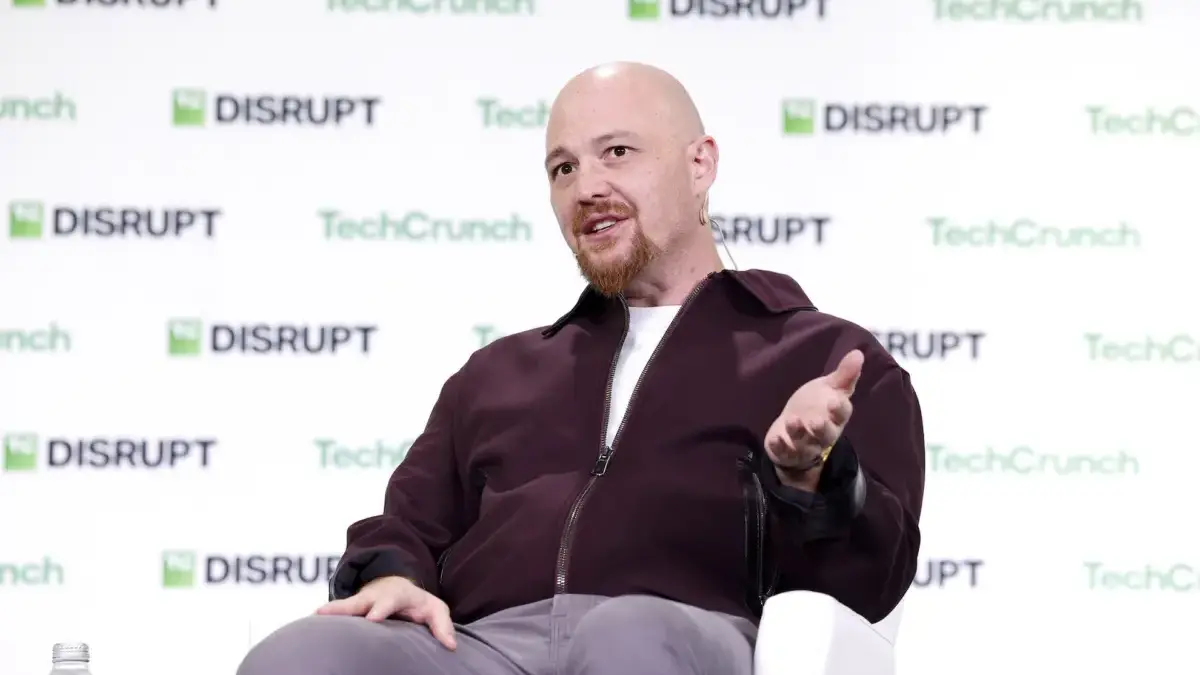
Replit, the popular AI-powered coding platform that has become a staple for startup founders, software engineers, and developers worldwide, is no longer working with AI lab Anthropic. The surprising revelation was made Thursday by Replit CEO and co-founder Amjad Masad while speaking onstage at TechCrunch Disrupt.
Addressing the audience, Masad explained that the decision to part ways with Anthropic was driven by a combination of factors, including overall cost, partnership dynamics, and performance metrics. While Replit officially announced a strategic partnership with OpenAI back in August, there had been no prior public indication that the company had simultaneously phased out its relationship with Anthropic, whose Claude models previously powered critical aspects of Replit’s cloud-based ecosystem.
"I think ChatGPT is better now," Masad stated during his appearance, explaining that his engineering team relies on a combination of internal benchmarks to rigorously assess platform metrics like speed, reliability, and capability. "We publish a public benchmark as well, and consistently, Sol and Astra perform better on building vibe-coded applications from scratch. It was a decision based on both cost, partnership, and performance. And for all these reasons, we just felt like they were a better partner for now."
Replit operates a cloud-based software development platform that allows users to write, build, test, and deploy applications directly from inside their web browsers. Under its previous high-profile alliance with Anthropic, Replit integrated the AI lab’s advanced Claude models to power its automated coding tools. That partnership was widely credited by industry analysts with helping Replit scale its business operations and grow its revenue exponentially over the past year.
However, Masad’s onstage comments regarding the dissolution of the partnership immediately raised eyebrows and drew pushback from industry insiders who are closely familiar with the commercial relationship between Anthropic and Replit. One source with direct knowledge of the matter, who spoke on the condition of anonymity, maintained that the partnership between the two companies was still active.
Adding to the complexity of the timeline, tangible evidence suggests that Replit was actively utilizing Anthropic technology in its production environment as recently as September. For example, a company blog post published in September explicitly cited Anthropic’s Claude Fable 5 and Claude Fable 5.1 as active models running within the Replit Agent’s production environment. Following Masad’s statements at TechCrunch Disrupt, TechCrunch reached out to Replit corporate representatives seeking formal clarification on the exact current status of the relationship, pending an update should a response be provided.
Beyond the shifting landscape of its underlying AI model providers, Masad used his time onstage at Disrupt to offer broader insights into Replit’s impressive business growth, highlighting a notable strategic shift toward enterprise customers as a primary revenue driver.
"We’re not sharing ARR numbers just yet, but in terms of growth, like, I would say, enterprise was like 2% of revenue last year," Masad told the audience. Illustrating the rapid commercial evolution of the platform, he added, "This year, I would say like 15% of our revenue is enterprise contracts, and more than 50% of our revenue is B2B."
As software development increasingly incorporates autonomous coding agents and advanced machine learning capabilities, Masad also emphasized the critical industry-wide necessity for robust AI safety measures, guardrails, and secure execution environments. Drawing an analogy between human workers and autonomous digital tools, he argued that creating a safe workspace is just as important for artificial intelligence as it is for people.
"In the same way that us humans need a certain environment to work — you need a nice office, maybe nice good food in the office, air-conditioning, computer — agents need a habitat for them to exist and do good work," Masad said. "So that habitat has good orchestration, good error recovery, good safety and security and sandboxing, good networking, good identity and authorization. And once you figure all of that out, then you can deploy AI safely."


Leave a Reply