
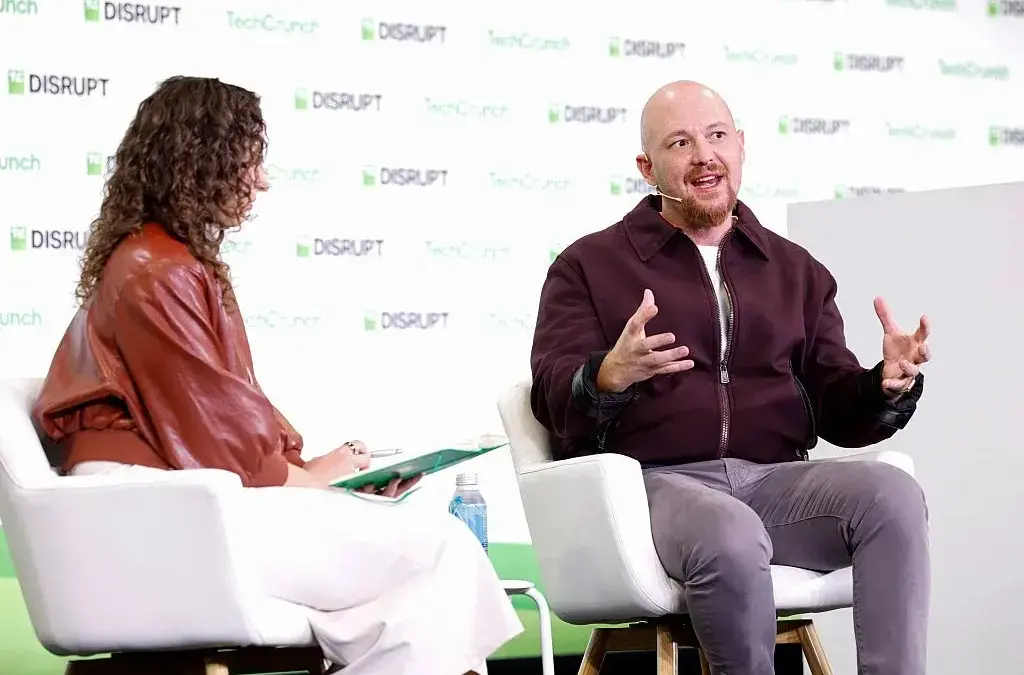
The rapid integration of artificial intelligence into the modern workplace is no longer a distant theoretical concept; it is an active, day-to-day reality reshaping businesses across the globe. As companies increasingly adopt advanced AI-powered coding and operational tools to build, test, and launch their own software, the fundamental nature of employment is undergoing a massive transformation. Amjad Masad, the CEO and co-founder of software development platform Replit, has witnessed this evolution firsthand through the experiences of his own company and the broader tech ecosystem. Speaking at the TechCrunch Disrupt conference in San Francisco on Thursday, Masad shared key insights into what these profound technological shifts mean for the future of work in the emerging age of autonomous AI agents.
During his presentation, Masad introduced a compelling vision of what he terms the "self-driving company." While the phrase immediately evokes images of autonomous vehicles and robotaxis navigating city streets, Masad is using the analogy to describe a corporate environment where autonomous AI agents handle the vast majority of repetitive, routine operational workloads. In this near-future and rapidly unfolding reality, human workers are liberated from tedious grunt work, allowing them to shift their focus toward high-level strategic thinking, creative problem-solving, and exercising critical human judgment and taste.
The pace of this transformation has caught many by surprise, and Masad emphasized that the corporate landscape has shifted beneath our feet faster than most realize. Addressing the audience at Disrupt, he pointed out that the professional lives of everyone in the room, particularly those deeply embedded in the technology sector, have changed dramatically over the course of just the past year. However, he cautioned that a significant portion of the workforce across America and the rest of the world remains largely unaware of the impending wave of change. This lack of preparation, he warns, means that the broader societal impact of AI integration is going to come as a major surprise to many industries and workers who have not yet felt its effects.
Reflecting on Replit’s own internal operations, Masad noted that his team spent the past year closely monitoring how modern AI tools changed their daily workflows. This internal introspection accelerated earlier in the year when generative AI agents matured to a point of high reliability, moving beyond simple chat interfaces into genuine task execution. According to Masad, the internal structure and operational rhythm of Replit changed completely, leading them directly to the self-driving company model. In this setup, the enterprise itself becomes continuously self-improving, with a substantial portion of day-to-day administrative and technical workflows driven entirely by autonomous agents rather than human intervention.
To illustrate how this framework operates in practice, Masad shared a detailed look at how Replit handles incoming customer support tickets. Rather than routing these inquiries directly to a human support representative who would have to start from scratch, the company utilizes an initial layer of AI agents. When a support request arrives, an agent immediately goes to work, performing preliminary triaging by cross-referencing the issue with existing GitHub repositories, internal codebases, and Linear project management tickets. By the time the support request is finally handed off to a human employee, the worker is equipped with all the necessary contextual data, background information, and diagnostic insights required to make an informed decision on how to proceed.
Once the human support professional determines the appropriate course of action and decides to submit a code patch to resolve the user’s issue, the execution remains remarkably streamlined. With just a single click, another specialized agent is deployed to implement and deploy the fix. This creates a seamless operational loop where autonomous agents execute the heavy lifting of information gathering, triaging, and deployment, while a human professional remains firmly in the loop to provide crucial oversight. Masad stressed that human judgment is an irreplaceable component of this workflow and that it is not going away anytime soon, noting that businesses will always rely heavily on human intuition, oversight, and aesthetic or functional taste.
Rather than resulting in mass job displacement, this agent-driven model is fundamentally altering the day-to-day responsibilities and focus of human workers. Instead of spending hours executing routine tasks, writing boilerplate code, or sorting through administrative backlog, employees at companies like Replit are spending significantly more time on higher-order challenges. Masad observed that walking through his company today reveals a radically different workplace dynamic, characterized by frequent collaborative discussions, intensive whiteboarding sessions, and deep architectural planning on how to build better systems. He believes that navigating this transition and figuring out what true AI transformation means is the defining challenge for the future of work.
When engaging in discussions with external businesses and enterprise clients, Masad noted that the dialogue frequently centers on how AI can be leveraged to maximize both human productivity and workplace satisfaction. Far from creating a dystopian environment of relentless tracking and pressure, proper AI adoption can actually make jobs significantly less boring and much more creative by removing the administrative friction that bogs down daily routines. Masad expressed a desire to champion a more optimistic perspective on technological advancement, noting that the broader tech industry in Silicon Valley often fails to articulate a genuinely positive and inspiring vision of the future, a narrative gap that he hopes companies like Replit can help fill.


Leave a Reply