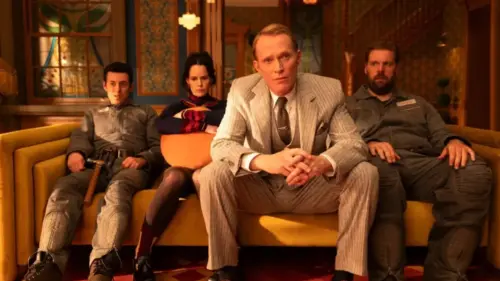
Sir Patrick Stewart, the acclaimed stage and screen actor whose majestic voice and commanding presence graced both the Royal Shakespeare Company and the bridge of the Starship Enterprise, has died at the age of 86. His passing came unexpectedly to the public, largely because the legendary performer chose to keep his final illness private. To generations of theatergoers and film lovers, his departure feels almost surreal, as if time itself could never truly diminish a figure who loomed so large across modern culture.
Stewart’s life was marked by a remarkable journey from humble, challenging beginnings to international renown. Raised in a troubled working-class household in Yorkshire, he transformed early hardship into a disciplined, lifelong passion for the dramatic arts. Though a committed socialist throughout his life, his monumental contributions to drama were officially recognized when he was knighted by Queen Elizabeth II. Off the stage and screen, Stewart channeled his voice and resources into vital public causes, serving as an outspoken advocate for domestic violence prevention, animal welfare, and LGBTQ+ equality.
His artistic breadth was vast, anchored by decades of classical theatrical training. Reflecting on the complex relationship between loss and celebration, one might recall Shakespeare’s Player King in Hamlet—a role Stewart performed opposite David Warner in 1965:
"Where joy most revels, grief doth most lament;
Grief joys, joy grieves, on slender accident."
While much of Stewart’s finest early work was crafted on the theatrical stage or in broadcast archives that remain difficult to source, he leaves behind a vibrant and expansive screen legacy. Though millions know him best as Captain Jean-Luc Picard in Star Trek or Professor Charles Xavier in the X-Men franchise, his filmography features dozens of remarkable, varied performances. Below is a look back at 10 of his most iconic and memorable roles beyond those famous flagship franchises.
Jeffrey (1995)
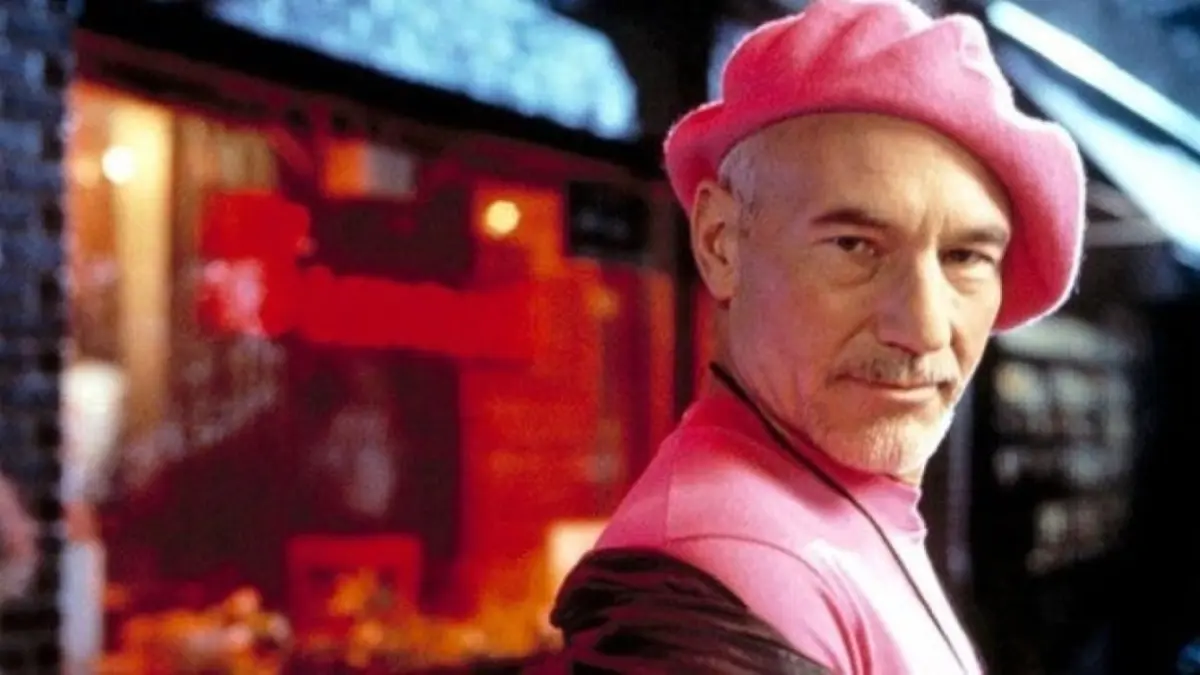
Arriving at a time when the HIV/AIDS crisis remained a heavy and painful reality across the world, Jeffrey stood out as a landmark achievement in queer cinema. The film managed to offer an uplifting, romantic comedy narrative without shying away from the real-world tragedy of the era, avoiding the common tropes of reducing LGBTQ+ characters to villains or tragic martyrs.
While the film was led by Steven Weber and Michael T. Weiss—and featured a stacked ensemble cast including Christine Baranski, Victor Garber, Nathan Lane, Olympia Dukakis, and Sigourney Weaver—it was Stewart who delivered the film’s defining performance. Playing Sterling, the irrepressible, campy, and fiercely loyal gay best friend, Stewart captured every scene he entered without allowing the character to descend into a caricature. As the proud leader of the "Pink Panthers"—a group dedicated to protecting community members from anti-gay violence—Stewart imbued the role with courage and pride. His portrayal demonstrated that a character could be unabashedly flamboyant while remaining strong, dignified, and fearless.
Excalibur (1981)
Director John Boorman’s sprawling, visually ambitious adaptation of Arthurian legend remains a memorable entry in cinematic fantasy. Rich in striking imagery and high-register drama, Excalibur brought together an incredible collection of theatrical talent to recount the mythic rise and fall of Camelot.
In the midst of the film’s vast ensemble, Stewart delivered a standout supporting performance as Leodegrance. As the boisterous and boorish father of Guenevere, Leodegrance is among the very first warlords to recognize Arthur’s divine right to rule and pledge his unyielding allegiance to the young king. Stewart brought vital gravitas and energy to the role, helping to ground the grand, operatic scope of Boorman’s vision with raw human passion.
Green Room (2015)
In Jeremy Saulnier’s intense survival thriller Green Room, Stewart delivered one of the most chilling performances of his late career. The story follows a touring punk band named the Ain’t Rights, who unwittingly accept a last-minute gig at a remote Oregon venue, only to discover too late that the club is run by a violent white supremacist organization. After witnessing a murder behind closed doors, the band members are trapped inside the venue’s green room, fighting for their lives.
Stewart stars as Darcy Banker, the calculated and soft-spoken leader of the neo-Nazi group. Free of theatrical bluster, Darcy is intellectual, calm, and eerily articulate, using a quiet composure to orchestrate ruthless violence. Stewart’s terrifyingly cold portrayal turned the character into an all-time classic thriller antagonist, transforming the claustrophobic film into an edge-of-your-seat horror experience.
Logan (2017)
Stewart’s tenure as Professor Charles Xavier spanned 26 years and nine feature films, standing alongside his work in Star Trek as one of the defining pop-culture roles of his career. While he frequently brought authority and warmth to the character across the main X-Men series, his performance in James Mangold’s Logan remains his undisputed masterpiece in the superhero genre.
Set in a bleak future, Logan presents Xavier not as an invincible leader, but as a frail, elderly man suffering from severe cognitive decline. Driven by a tragic loss of control and forced into hiding, Charles relies heavily on a weary Logan for survival. Stewart approached the character’s decline with extraordinary vulnerability, capturing the frustration, lingering hope, and deep sorrow of a giant fading away. It remains a poignant, brave portrayal of aging and mortality within a genre that rarely allows its heroes to grow old.

A Christmas Carol (1999)
Adapted from his acclaimed one-man stage production, this 1999 television adaptation of Charles Dickens’ classic holiday tale featured Stewart in the central role of Ebenezer Scrooge. Though the production itself possessed a traditional, stage-like feel, Stewart’s performance elevated the material into a masterful character study.
Leveraging his deep theatrical background and resonant voice, Stewart portrayed Scrooge with a fiery intensity that transitioned seamlessly into genuine redemption. He brought an unsentimental complexity to the miserly figure, demonstrating his rare ability to inhabit larger-than-life literary figures without falling into melodrama or hollow theatricality.
Hamlet (2009)
Long before he achieved global fame on television, Stewart spent two decades as an associate artist with the Royal Shakespeare Company. While much of his live theater work lives on primarily in stage history, this acclaimed 2009 modern-dress television production preserved one of his finest late-career Shakespearean performances for screen audiences.
Acting opposite David Tennant’s manic, grief-stricken prince, Stewart took on the dual roles of King Claudius and the Ghost of Hamlet’s father. As Claudius, Stewart presented a politician who was calculated, suave, and deeply dangerous, matching Tennant’s intensity step for step. The production remains a brilliant example of Stewart’s natural mastery of classic verse in a modern setting.
Match (2014)
Throughout his cinematic career, Stewart was often called upon to play larger-than-life figures—knights, monarchs, telepaths, and starship captains. In Stephen Belber’s drama Match, however, audience members were treated to a far more intimate and grounded performance from the veteran actor.
Stewart stars as Tobi Powell, an eccentric, renowned Juilliard dance instructor whose quiet routine is upended when a visiting couple arrives under the pretense of interviewing him about his storied career. As the conversation unfolds, hidden motives come to light, forcing Tobi to confront painful personal choices from his past. Stewart delivered a remarkably subtle and layered performance, charting a course from playful charm to heartbreaking emotional exposure.
Robin Hood: Men in Tights (1993)
Known throughout his early years on Star Trek: The Next Generation as a serious classical actor who initially urged his castmates to maintain strict decorum on set, Stewart eventually embraced comedic roles with obvious delight.
In Mel Brooks’ slapstick parody Robin Hood: Men in Tights, Stewart made a memorable late-film cameo as King Richard, returning from the Crusades to bestow his blessing on Robin Hood and Maid Marian. Delivering his lines with booming Shakespearean theatricality, Stewart gleefully leaned into the absurdity of the scene, showing a lighthearted humor that would become a beloved hallmark of his late-career media appearances.
Dune (1984)
Stewart’s first major venture into feature film science fiction came in David Lynch’s ambitious, unconventional 1984 adaptation of Frank Herbert’s seminal novel Dune.
Stewart portrayed Gurney Halleck, the loyal warrior-troubadour and arms master to House Atreides. Despite the film’s complex narrative and stylized tone, Stewart grounded every scene he appeared in, bringing warmth, tactical authority, and fierce devotion to the role. His performance established his ability to bring sincerity and presence to expansive fantasy and sci-fi universes long before he took command of the U.S.S. Enterprise.
The Kid Who Would Be King (2019)
In Joe Cornish’s modern-day retelling of Arthurian myth, Stewart returned to the legend of King Arthur in a wonderfully unexpected way. Playing an elderly version of the wizard Merlin living in modern Britain, Stewart spent the film clad in vintage rock T-shirts while guiding a group of school children chosen to save the world.
Stewart’s Merlin combined eccentric humor with an underlying warmth and wisdom. His performance provided the family adventure film with heart and weight, offering a touching screen farewell to the Arthurian lore that had played such an important role throughout his long acting career.
Sir Patrick Stewart’s legacy spans more than six decades across theater, television, and film. Whether delivering Shakespearean soliloquies, steering blockbuster franchises, or advocating for human rights, he approached his life and art with dignity, passion, and an unmatched dedication to his craft.