

Despite premiering almost three decades ago, Buffy the Vampire Slayer still endures as a defining touchstone of modern television. This beloved supernatural show didn’t just lay the foundation for a strong, well-rounded female lead in Buffy Summers, portrayed with nuance and grit by Sarah Michelle Gellar. Buffy also subverted established horror tropes, consistently mastered the "monster-of-the-week" format in a way few shows could manage in the late 1990s, and continually shattered social stigmas and cultural stereotypes. Across its acclaimed run, the series proved that femininity and world-altering strength were never mutually exclusive concepts, blending high-stakes supernatural combat with profound metaphors for the agonizing trials of growing up.
A successful television show that ran for seven seasons is bound to accumulate an extensive catalog of exceptional episodes. Some entries in the series become timelessly memorable because of the formidable "Big Bad" featured in them, while others earn their legendary status by delivering crucial character milestones, devastating losses, or wildly ambitious narrative swings. With these critical factors and fan reception in mind, here are the 10 best episodes of Buffy the Vampire Slayer of all time, ranked according to their enduring IMDb scores.
10. "Graduation Day: Part 2" (Season 3, Episode 22)
IMDb Rating: 9.1/10
While this two-part season 3 finale is arguably at its strongest when viewed as a complete, uninterrupted narrative unit, "Graduation Day: Part 2" stands on its own as a deeply satisfying conclusion to several major overarching storylines. In this climactic battle, Buffy and the Scooby Gang find themselves backed by an unexpected ally: the entire student body of Sunnydale High. Together, students and faculty alike band down to defeat Mayor Richard Wilkins, played with folksy menace by Harry Groener, just as he executes his evil plot to ascend into a giant, serpentine demon and slaughter everyone in town.

Beyond the bombastic action, this episode serves as a major emotional and narrative turning point for Angel, portrayed by David Boreanaz. Realizing once and for all that his cursed, immortal existence can never provide Buffy with the normalcy, safety, and human future that she genuinely deserves, Angel makes the agonizing choice to leave Sunnydale. "Part 2" takes the show’s foundational "high school is hell" metaphor and stretches it to its absolute limits, resulting in a cathartic climax where Buffy’s years of silent, exhausting efforts as the town’s protector are finally recognized and validated by her peers.
9. "Fool for Love" (Season 5, Episode 7)
IMDb Rating: 9.1/10
A definitive high point in the middle era of the show, "Fool for Love" serves as a masterclass in character humanization, specifically for the vampire Spike, brought to life with swagger and vulnerability by James Marsters. Through a series of illuminating flashbacks, the audience learns of Spike’s pre-vampire backstory: a shy, painfully insecure 19th-century English poet named William whose romantic verses were cruelly mocked by polite society. The episode offers a profound revelation about the nature of the show’s vampires, demonstrating that vampirism does not completely erase or rewrite a person’s soul; rather, it strips away their inhibitions and amplifies their core human flaws in the most brutal ways imaginable.
At the same time, "Fool for Love" forces the audience to question everything they thought they knew about the lineage of the Slayers. Spike posits a chilling theory born from his centuries of hunting and killing them: that all Slayers possess an unconscious, deeply rooted death wish. Given the crushing, impossible responsibilities that every Slayer must shoulder entirely alone, they eventually buckle and unwittingly embrace death after being burned out by their profoundly isolated lifestyles—at least according to the bleached-blond bloodsucker. Buffy is placed under intense scrutiny here, but the narrative also grants viewers rare access to the deeply wounded, insecure aspects of Spike’s psyche and his increasingly complicated, toxic fascination with the titular Slayer.

8. "Doppelgängland" (Season 3, Episode 16)
IMDb Rating: 9.2/10
What would happen in an alternate reality where Buffy Summers never arrived in Sunnydale to alter the town’s grim destiny? The series explores this terrifying thought experiment in an earlier season 3 episode titled "The Wish," revealing a dystopian world where Willow and Xander are not only malicious, leather-clad vampires, but are also twisted romantic partners. Later that same season, that alternate, evil version of Willow gets accidentally transported into the show’s primary reality in "Doppelgängland," arriving just in time to wreak havoc and inadvertently give the regular, reliable Willow an unlikely psychological confidence boost.
Alyson Hannigan delivers an electrifying and thoroughly entertaining dual performance, seamlessly bouncing between the sweet, timid academic Willow and her sadistic, leather-clad vampire counterpart. A particularly amusing series of comedic switcheroo scenarios makes for an immensely fun television experience. Beneath the humor, however, Willow is forced to confront the darker, more aggressive impulses buried within her own personality, learning to accept those hidden facets of herself without losing her fundamental kindness and moral compass.
7. "Passion" (Season 2, Episode 17)
IMDb Rating: 9.3/10
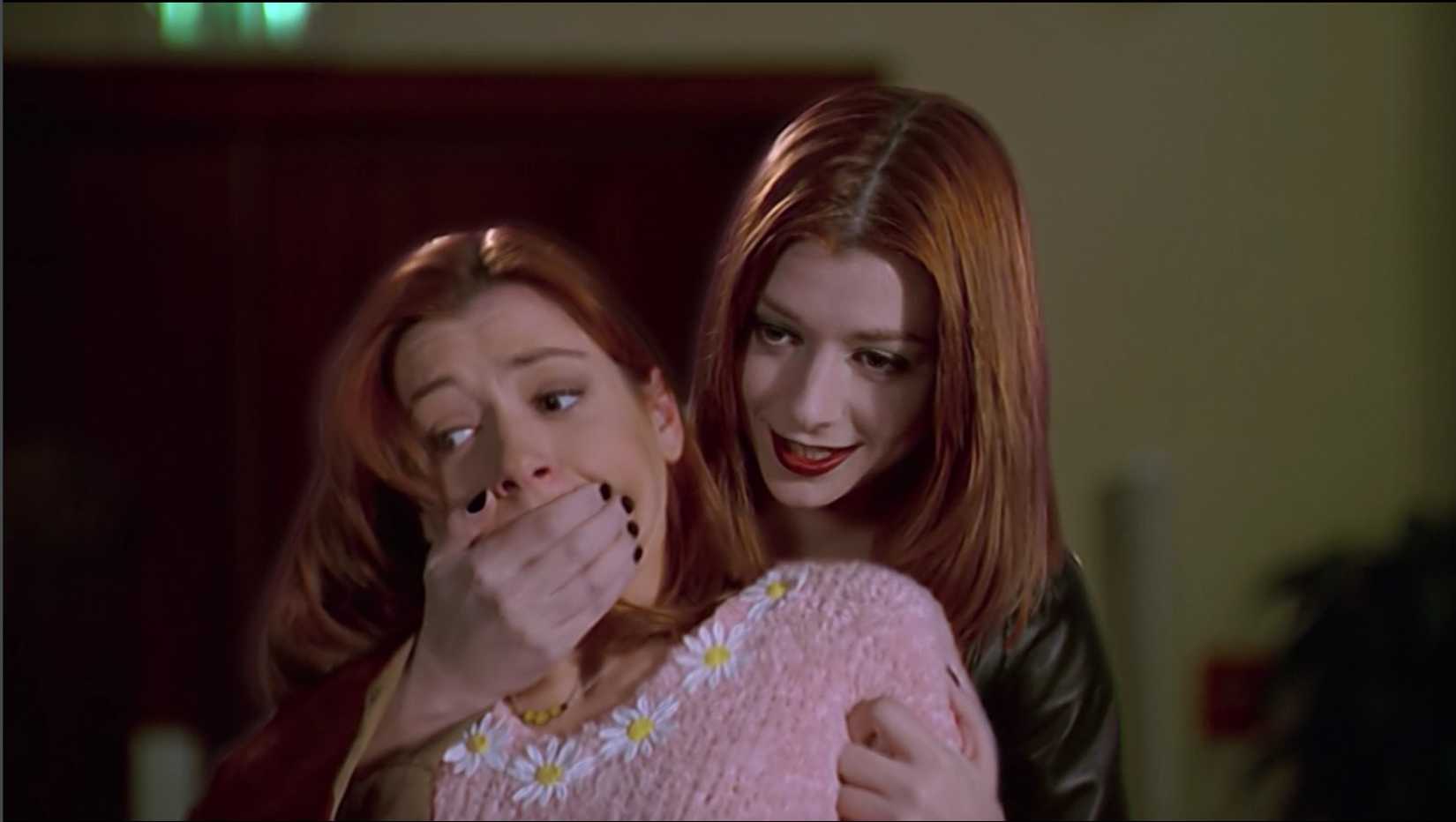
Despite his sincerely well-meaning, heroic actions throughout the entire first season and the early stretches of season 2, Angel had always represented a latent, benign threat due to the predatory nature of his vampire alter ego. That latent threat shifts into the terrifying primary focus of the series after Buffy and Angel sleep together, an intimate moment that inadvertently triggers a burst of true happiness, thereby breaking the ancient curse that bound a human soul to the vampire.
A few episodes later, Buffy raises the dramatic stakes to dizzying heights in "Passion." With his soul locked away once more, Angel transforms into Angelus, a sadistic monster who goes aggressively on the offensive, utilizing psychological torture, mind games, and calculated mass murder against anyone close to Buffy. This evolution adds a deeply terrifying edge to Buffy’s past romantic feelings for Angel, transforming those memories into instruments of agony as Angelus meticulously torments her and her loved ones. The episode also features a shocking, permanent death that pushes every character—including the normally level-headed and stoic watcher Giles—into the absolute pits of despair. Buffy had always dabbled in mature, dark themes, but this particular installment fully embraced the grim, uncompromised moral complexities of what it truly means to be a monster.
6. "Chosen" (Season 7, Episode 22)
IMDb Rating: 9.3/10
While Buffy’s seventh and final season is often debated by the fandom, its grand series finale stands firmly as an all-time classic that manages to give nearly every principal character a deeply fitting sendoff, even if longtime fans still mourn the tragic fate of Anya. The finale’s smartest, most revolutionary narrative twist is a master plan that turns the entire premise of the series completely on its head. For seven years, being the Chosen One came with an inevitable, crushing sense of isolation, burdened by the reality that only one girl in all the world could bear the weight.
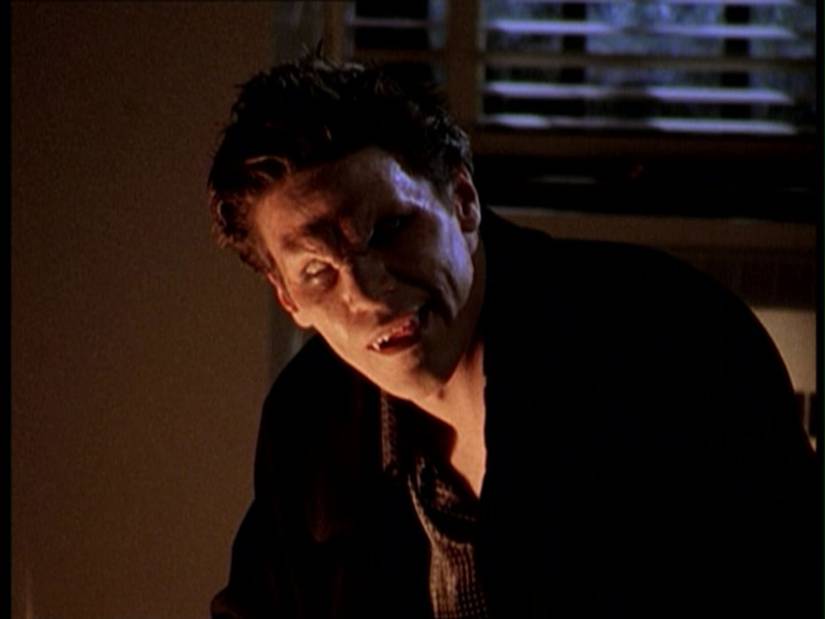
"Chosen" radically alters that historic status quo by allowing Buffy to share the burden with every potential Slayer across the globe, whose latent powers are suddenly activated en masse thanks to a powerful spell cast by Willow. This spell is a literal game-changer, putting an end to generations of unnecessary, isolated tragedy and fundamentally rewriting the rules of what it means to be a protector. Buffy has undergone staggering transformations since the show’s pilot episode, and here she appears as a mature, strategic, and profoundly empathetic leader. Spike also receives his definitive redemption arc, sharing an intensely emotional and bittersweet final moment with Buffy. Despite the heavy losses, the underlying sentiment of the finale is one of profound hope for the future: no young person ever has to suffer and fight alone again, as ultimate power is finally democratized rather than sustained by the sacrifice of a single individual.
5. "The Gift" (Season 5, Episode 22)
IMDb Rating: 9.5/10
Buffy’s brilliant season 5 finale is a narrative triumph that remains uniquely devastating upon every rewatch. The central point of intense contention is the fate of Dawn—a mystical energy key that was magically transformed into Buffy’s human sister to protect it from the hell-god Glory. As the walls between dimensions begin to crumble, Buffy protectively steps forward, flatly refusing to view Dawn as a necessary sacrifice for the greater good of the universe.
Instead of letting her sister die, Buffy makes the ultimate sacrifice: she dives headfirst into a glowing dimensional portal in Dawn’s place, plummeting to her death to close the rift. There is an incredible emotional finality to this utterly selfless act, as it underscores Buffy’s complete evolutionary arc from a reluctant, whiny teenager into a deeply compassionate adult who willingly makes the most agonizing choice imaginable to keep everyone she loves safe. It is a bleak, tragic end to a relentlessly courageous soul—even if corporate pressures and network renewals meant she would inevitably be resurrected at the start of season 6.
4. "Becoming: Part 2" (Season 2, Episode 22)
IMDb Rating: 9.5/10
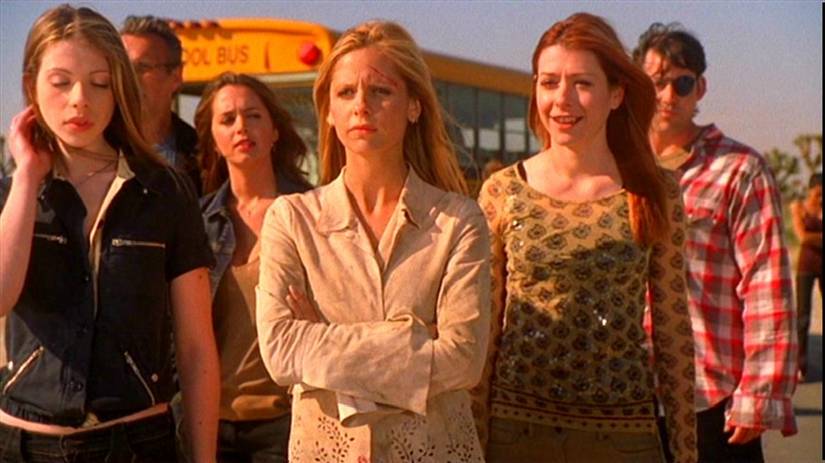
As another exceptional season finale, "Becoming: Part 2" stands as a monumental high point for Buffy as both a warrior and a character. She is put through an unimaginable gauntlet after being forced into the life of a hunted fugitive, compelled to forge an uneasy, desperate alliance with her former enemy Spike in order to stop Angelus. The physical and emotional confrontation between Buffy and her former lover takes on towering mythic proportions during this episode, featuring the iconic moment where Buffy blocks Angelus’ heavy swords with her bare hands.
When Angelus taunts her with the bleak observation, "No weapons, no friends, no hope. Take all that away, and what is left?", Buffy delivers one of the most famous lines in television history with quiet, ironclad resolve: "Me." The finale ultimately ends in staggering heartbreak for Buffy, who is forced to drive a sword through the newly re-souled Angel and send him to hell just moments after he is restored, while Willow achieves a significant, magical milestone on her own arduous journey toward becoming a powerful witch.
3. "The Body" (Season 5, Episode 16)
IMDb Rating: 9.7/10

One of the greatest episodes in the entire history of Buffy the Vampire Slayer does not feature a single demon, vampire, or supernatural monster. When Buffy’s mother, Joyce, passes away, it is not the result of a demonic attack, a dark curse, or a vampire bite. Instead, it is caused by a sudden, entirely mundane brain aneurysm—a stark reminder of the fragile, unpredictable nature of real human mortality.
Buffy returns home from a routine day to find her mother lying lifeless on the living room couch, and she becomes immediately, horrifyingly unmoored by the sudden wave of grief. There is no supernatural intervention, no magical cure, and no dramatic fantasy melodrama; instead, every character is forced to sit in agonizing silence with the cold, unvarnished reality of death. A profound numbness grips Buffy, while Xander and Willow process the shock outwardly through confused denial and frustrated emotional outbursts. Every single reaction depicted is painfully valid, and the episode does an extraordinary job of capturing the visceral shock of unexpected loss. Sarah Michelle Gellar delivers a remarkably restrained, haunting performance that strips away all of Buffy’s usual heroic bravado, resulting in television that hits with devastating emotional truth.
2. "Once More, with Feeling" (Season 6, Episode 7)
IMDb Rating: 9.7/10
A casual viewer might assume that a one-off musical episode in the middle of a dark supernatural drama would be nothing more than a gimmicky, throwaway bottle episode. However, "Once More, with Feeling" makes remarkably sophisticated use of the musical format, turning song and dance into a narrative vehicle for deep psychological exposure.

A mysterious spell forces the entire population of Sunnydale to burst into spontaneous song and express their deepest, darkest secrets aloud. This musical compulsion drags long-festering emotional truths out into the open—most notably the devastating revelation that Buffy was ripped out of a peaceful heaven when her friends resurrected her at the start of season 6. The far-reaching implications of this cosmic trauma are allowed to fester as every character inadvertently learns the harrowing truth. The musical numbers themselves are brilliantly written and composed, shifting genres fluidly to match the shifting emotional moods of the cast, such as when Xander and Anya perform a bouncy, 1950s-style show tune to mask the deep-seated doubts they hold regarding their impending marriage. Orchestrating a musical episode of this caliber is a monumental gamble for a dramatic series, but the production pulls it off with staggering confidence and emotional resonance.
1. "Hush" (Season 4, Episode 10)
IMDb Rating: 9.7/10
Widely regarded as one of the most inventive and daring episodes in the history of television, "Hush" completely abandons the show’s characteristic witty banter and dialogue-driven charm, relying almost entirely on pure visual storytelling for the majority of its runtime. When a group of eerie, fairy-tale monsters known as the Gentlemen arrive in Sunnydale, they systematically steal the voice of every living person in the town, leaving the entire population entirely mute so they can silently harvest human hearts without interruption.
The long, disorienting stretches of absolute silence work brilliantly in favor of character development. With verbal communication stripped away, every character is forced to rely on silent physical cues, handwritten notes, and desperate hand gestures, making it impossible to hide behind clever jokes or keep their emotional defenses up. Apart from introducing some of the most chilling and visually terrifying antagonists the series ever produced, the episode serves as a powerful reminder that Buffy did not always need bombastic supernatural spectacle to shine as a prestige drama. "Hush" went on to earn two prestigious Emmy Award nominations—one for Outstanding Writing in a Drama Series and another for Outstanding Cinematography—a testament to its exceptional artistic and technical quality.



Leave a Reply