As the Internet extends further into remote and underserved regions, it increasingly carries a massive share of everyday, mission-critical services. From essential telephony and messaging to complex banking transactions and remote telemedicine, maintaining a reliable power supply has become an absolute necessity for both end-users and the network infrastructure operators who keep communities connected. Without a stable power foundation, digital inclusion initiatives risk collapsing at the most critical moments.
Over the past decade, solar photovoltaics combined with advanced battery energy storage systems have emerged as a highly attractive alternative to long, precarious grid supply lines and expensive, noisy diesel generators. The economic landscape of renewable energy has shifted dramatically during this period, with solar panel prices plummeting to a fraction of their historical costs. Simultaneously, reliable, high-capacity lithium iron phosphate batteries have become widely available in quantity at much lower price points. As a result, solar PV is now recognized as a worthwhile addition to both residential and commercial grid supplies, proving its value even within urban environments where grid reliability can occasionally falter.
Despite these technological and economic advancements, deploying solar PV can still prove bewilderingly complex for newcomers. Poorly planned implementations frequently fail to meet local operational needs, leading to stalled initiatives, abandoned hardware, and infrastructure that is ultimately dismantled and never replaced. Dr. Ulrich Speidel, a senior lecturer in Computer Science at the University of Auckland, notes that he has witnessed such failures even in projects managed by sophisticated power utilities in developed urban areas. For network operators and technicians working in remote regions, feeling anxious about adopting solar power is entirely understandable. However, experts emphasize that solar infrastructure can be made to succeed reliably when approached with realistic expectations and rigorous planning rather than overly optimistic assumptions.
Figuring Out Power Requirements and System Types
Before evaluating pricing, requesting commercial quotes, or purchasing hardware, the foundational question for any solar deployment is determining the precise equipment loads the system must support. Network operators must compile a comprehensive inventory of all on-site devices. This list typically includes servers, core routers, network switches, uninterruptible power supply units, air conditioning systems, facility lighting, on-site computing equipment, link transmitters and receivers, and power tools utilized by maintenance crews. Creating a detailed spreadsheet is widely considered an industry best practice for tracking these power requirements.
Every electrical device carries a specific power consumption rating, usually designated in watts on the manufacturer’s hardware label. When physical labels are missing or obscured, operators can consult technical documentation online, leverage artificial intelligence estimation tools to approximate power consumption, or invest in inexpensive plug-in power meters to measure actual draw. Crucially, operators must account for hidden loads that may reside behind storage cupboards or inside utility enclosures, particularly devices that generate heat, such as hot water cylinders. If these thermal loads cannot be physically isolated or excluded from the renewable energy supply circuit, their consumption metrics must be integrated into the overall calculation.
Summing these individual figures reveals the absolute minimum power output the system must deliver during peak operational phases. For loads that fluctuate significantly—such as a facility kettle that operates intermittently rather than continuously, or computer power supplies operating under variable loads—operators must estimate realistic averages or perform direct measurements. Completing this rigorous power audit prevents operators from acquiring undersized systems that inevitably fail under real-world conditions.
Once the power audit is complete, operators must determine the structural architecture of the solar installation, weighing the distinct advantages and disadvantages of standalone versus grid-connected configurations.
A standalone island PV system operates completely independently of any local power grid. This architecture is frequently the only viable choice for deeply remote locations where no electrical grid infrastructure exists. The primary advantage of an island system is its relative simplicity, as operators bypass the bureaucratic and technical hurdles of securing utility permission to interconnect with an external grid. However, the distinct disadvantage is that island systems must be meticulously oversized to guarantee uninterrupted power delivery even during extended periods of inclement weather, such as prolonged overcast or stormy days. Because the system cannot export surplus generation into a local grid, there is no financial mechanism to offset capital costs through energy sales. Furthermore, any maintenance procedure requiring a complete system shutdown results in an immediate loss of power to connected loads, a vulnerability that typically necessitates bridging with a mobile backup generator.
Alternatively, a grid-connected PV system links to the local power distribution network while retaining the technical capability to island itself automatically during unexpected grid outages. This configuration offers significant operational benefits, particularly the ability to export excess renewable generation back into the local grid to offset installation costs. In smaller, isolated grids—such as those found on Pacific islands heavily dependent on imported diesel fuel—exporting surplus power reduces operational load and mechanical wear on diesel generators while lowering overall fuel consumption. These systems can even provide valuable grid-stabilization services to the local community.
Nevertheless, grid-connected setups introduce greater technical complexity, managing three distinct power sources—solar panels, battery banks, and the grid—alongside three potential destinations for power distribution: facility loads, storage batteries, and the grid itself. Optimizing power flow to determine whether to charge batteries or export to the grid requires sophisticated modern inverter systems capable of intelligent automated management. Furthermore, grid-connected architectures necessitate dedicated uninterruptible power supply units for sensitive equipment that cannot tolerate momentary power interruptions. Because grid-tied inverters must strictly synchronize with the alternating current frequency of the public utility, an abrupt grid failure forces the system to transition into island mode and generate its own internal AC frequency. This frequency will rarely match the returning utility signal once the main grid is restored, requiring a brief inverter shutdown phase that must be bridged by local UPS hardware.
Experts strongly advise against selecting a PV system designed purely as a backup-only emergency reserve. Operating a solar installation solely as an idle backup while continuing to purchase expensive power from the main grid represents the least economical approach, leaving expensive renewable infrastructure underutilized for the majority of its operational lifespan.
Modelling System Capacity and Site Integration
With power requirements established and architectural preferences selected, the next critical phase involves modelling the installation to determine the necessary panel generating capacity and verify whether the physical site can accommodate the hardware.
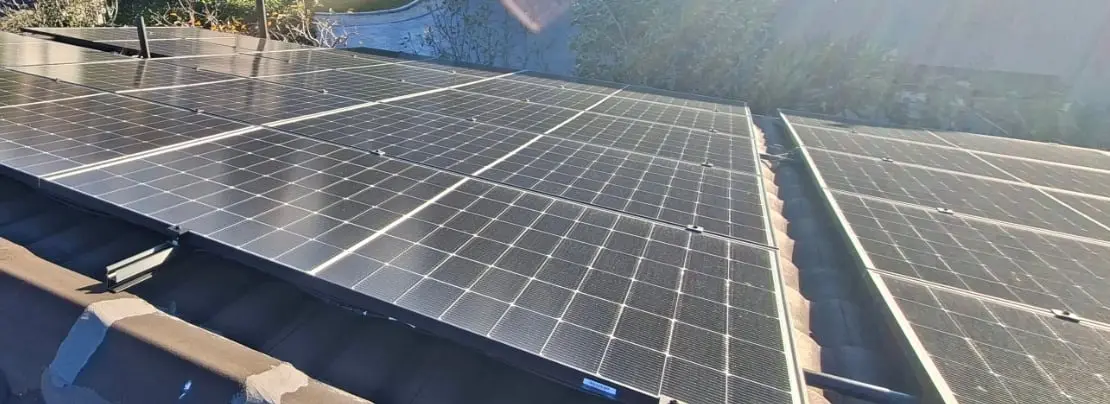
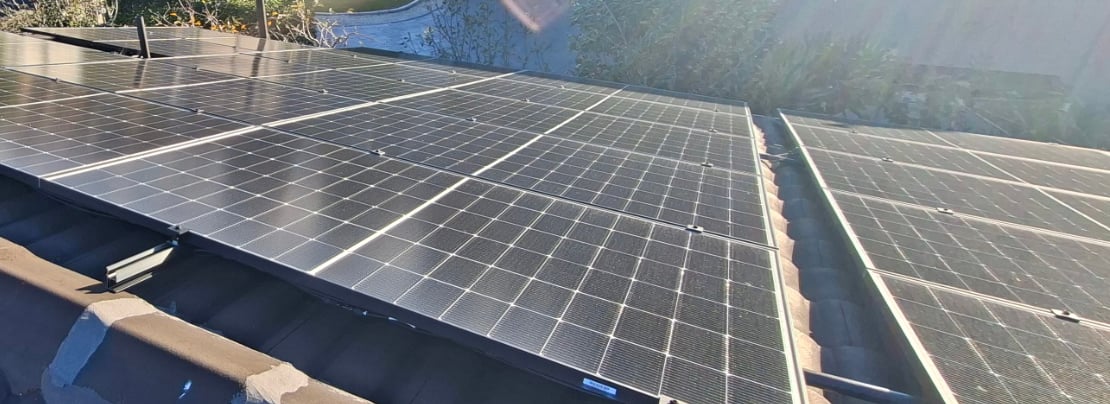
Standard commercial PV panels generally feature a peak generating capacity ranging between 430 and 460 watt-peaks. However, panels achieve these optimal ratings only under specific laboratory conditions: direct sunlight hitting the glass at an ideal angle on a clear day, with clean surfaces and relatively cool ambient temperatures. Real-world environmental factors invariably reduce actual output, making predictive modelling an essential engineering step.
Comprehensive modelling requires specialized software tools provided by reputable inverter manufacturers and energy organizations, many of which are accessible online at no cost. Accurate models depend on precise inputs, including geographic location, roof pitch and orientation, available surface area, and potential shading obstructions from nearby trees or architectural structures.
For smaller installations supporting loads under ten kilowatts, system designers typically select a versatile hybrid inverter capable of handling at least ten times the average power requirement calculated during the initial power audit. This sizing buffer ensures the system can simultaneously recharge energy storage batteries and supply active facility loads during available sunlight windows. For larger infrastructure projects, independent inverter capacities for the photovoltaic array and battery storage subsystems are typically deployed.
Regarding battery storage capacity, engineers generally recommend sizing energy reserves to sustain critical loads for up to five days without any incoming solar generation. Storage capacity is quantified in kilowatt-hours, and dividing total available storage by the expected load yields the projected backup duration. As a fundamental design rule, installations featuring larger panel arrays and higher inverter capacities can tolerate smaller battery storage reserves because they possess the generation capacity to recharge storage banks much faster once weather conditions improve.
During the physical layout phase, solar panels are wired in series to form strings, combining individual nominal direct current voltages to achieve a total voltage target ideally sitting roughly 100 to 200 volts below the maximum permitted threshold for the specific site. These strings are then connected to the maximum power point tracking inputs of the inverter within the simulation software to evaluate whether the configuration can successfully support the required load in island mode.
Operators must run simulations to project annual performance across seasonal variations, refining the model iteratively. If simulations indicate excessive surplus power generation, operators can optimize capital expenditure by reducing panel counts or inverter sizes. Conversely, if projected generation falls short of operational demands, capacity can be expanded by adding panels, upgrading inverters, or increasing battery storage, while also evaluating whether non-essential loads can be automatically shed during extended grid outages. Iterative modelling ensures operators finalize a configuration tailored precisely to their operational reality before committing capital to hardware procurement.