

The global crackdown on digital piracy has taken a new turn, placing a major smartphone ecosystem and a massively popular mobile application under the regulatory microscope in Europe. The controversial pirate streaming application MovieBox has achieved a staggering milestone, racking up more than 300 million downloads through the Palm Store, the native app marketplace preinstalled on millions of mobile devices across developing markets. This explosive growth has transformed the application into a central target for international rightsholders, who have officially flagged the platform to the European Commission, while major media conglomerates have begun drawing direct lines between the software’s operations and a major multinational hardware manufacturer.
The application, which offers unauthorized access to copyrighted movies, television series, and live sporting events, has long been a thorn in the side of content creators and distributors. Last year, copyright enforcement authorities in Nigeria celebrated what they believed was a major victory when they managed to suspend MovieBox.ng, a pirate streaming portal that was drawing tens of millions of visits on a monthly basis. However, the operators of the service demonstrated remarkable resilience. The core infrastructure quickly shifted to a new domain, and the accompanying Android application remained entirely operational, continuing its rapid expansion across mobile devices without missing a beat.
This persistent resilience has now caught the attention of policymakers in Brussels. In formal submissions prepared for the European Commission’s upcoming 2027 Counterfeit and Piracy Watch List, two prominent industry heavyweights—the Motion Picture Association (MPA) and French pay-TV giant Canal+—have formally identified MovieBox as a massive, commercial-scale intellectual property infringement operation that demands immediate international attention and regulatory scrutiny.
From 243 to 305 Million Downloads
The scale of MovieBox’s distribution network is staggering, with rightsholders pointing specifically to the app’s primary distribution channel as the key driver of its success. In its comprehensive overview of mobile piracy applications, the MPA noted that MovieBox had already amassed more than 243 million downloads exclusively from the Palm Store.

The Palm Store is far from a standard, independent third-party app marketplace. Instead, it serves as the official, preinstalled app distribution platform for mobile devices manufactured by Tecno, Infinix, and itel. These three smartphone brands all operate under the corporate umbrella of Transsion, a major Chinese device manufacturer that cemented its dominance by capturing an extraordinary 61.5 percent of all mobile phone sales across the African continent in 2024, according to the company’s own financial and corporate filings.
French broadcaster Canal+ provided even deeper historical context and growth metrics regarding the application’s trajectory. In its submission to European regulators, the company detailed how MovieBox seamlessly transitioned its web traffic to an alternative domain following the enforcement actions taken against its original Nigerian web address. According to Canal+, the application not only survived the disruption but experienced accelerated growth following the domain migration, successfully doubling its download figures in less than a year.
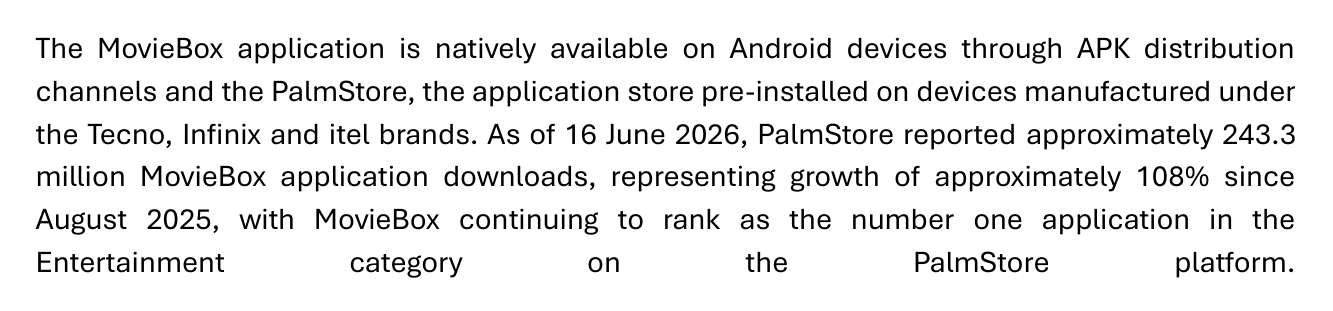
Data cited in the Canal+ submission revealed that by mid-June of 2026, the Palm Store reported approximately 243.3 million downloads of the MovieBox application. This figure represented a staggering growth rate of roughly 108 percent compared to the metrics recorded in August of the previous year. Furthermore, the application consistently maintained its position as the number one software offering in the Entertainment category on the Palm Store platform.
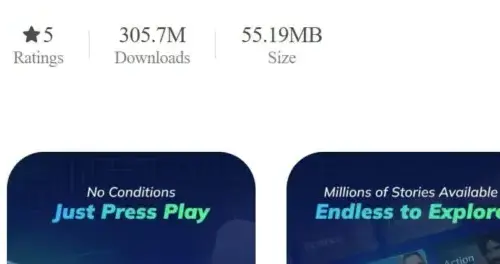
That mid-summer milestone, however, has already been eclipsed by subsequent data. Recent checks of the Palm Store listing indicate that download numbers have surged past 305.6 million, representing an increase of more than 60 million installations in less than four months.

The public-facing profile of MovieBox makes no secret of its content offerings, explicitly promoting a wide array of movies, serialized television dramas, and live sports broadcasts. The application’s promotional description invites users to enjoy free access to live sports streams directly within the interface, specifically highlighting coverage of Europe’s top five football leagues. Promotional artwork featured on the store listings frequently showcases high-profile intellectual property, including major Hollywood franchises from brands like Marvel and Disney.
Transsion’s Own App Store Ecosystem
The involvement of the Palm Store brings the underlying hardware and software ecosystem into the piracy debate. Palm Store is an integrated component of Transsion’s proprietary digital services division. In a draft prospectus filed in connection with a planned public listing in Hong Kong, Transsion explicitly describes the marketplace as its own proprietary app distribution platform. The company reported that the app store attracted an average of more than 180 million monthly active users over the course of the previous year.
The same corporate prospectus sheds light on the commercial mechanics of the platform, noting that Transsion typically monetizes its app store by charging third-party developers fees calculated on the basis of the number of software installations processed through its distribution network. Whether this transactional monetization model directly applied to the distribution of MovieBox remains unconfirmed by public corporate disclosures.
Allegations of Deeper Ties to the Ecosystem
Simply hosting a third-party application within an app store does not automatically imply active participation or complicity by the platform operator in the software’s illicit activities. However, the submission filed by Canal+ suggests that the operational ties between the streaming app and the corporate ecosystem may run significantly deeper than standard arm’s-length hosting arrangements.
According to Canal+, historical domain registration records associated with the original streaming site uncovered registration details linked directly to Transsion. Furthermore, technical analyses of the Android application package revealed digital certificates signed under the Transsion name, alongside embedded references pointing toward infrastructure and services owned and operated by the device manufacturer.
While the regulatory submission stops short of explicitly asserting that Transsion directly owns or operates MovieBox, it highlights a web of overlapping technical and administrative footprints. Canal+ also points to Excellent Innovation Limited, a Hong Kong-registered corporate entity that investigators connected to MovieBox through various administrative vectors, including historical domain registrations, SSL security certificates, developer attributions, and local trademark filings. Notably, the Palm Store listing itself officially credits this same Hong Kong company as the developer of the application.
In contrast, the submission filed by the Motion Picture Association does not reference Transsion by name. The Hollywood-backed group limits its assessment to the observation that MovieBox is widely believed to be operated by entities based out of China, functioning as a massive vector for unauthorized content distribution across developing digital economies.
Canal+ also possesses a distinct commercial interest in the matter beyond broader intellectual property protection. The French media conglomerate maintains a controlling ownership stake in MultiChoice, the dominant pay-TV provider behind DStv, which operates extensively across the very same African markets where Transsion devices and the MovieBox application enjoy their highest penetration rates.

Neither of the formal submissions filed with European regulators indicates whether rightsholders have formally issued takedown notices or direct requests to Palm Store or Transsion demanding the removal of the application from the marketplace.
Before the European Commission reaches any formal determinations regarding the composition of its upcoming watch list, the entities and services named in the regulatory filings are afforded a standard opportunity to respond. Guidance published by the Commission outlines that reasonable efforts will be made to contact the reported service providers, inviting them to submit written responses addressing the allegations leveled against them by industry groups.
The updated Counterfeit and Piracy Watch List is anticipated for official release in the spring of next year. European regulatory officials have emphasized that inclusion on the watch list does not constitute a formal legal finding of wrongdoing or a definitive confirmation of statutory violations. Instead, the initiative is designed to serve as a diplomatic and regulatory instrument intended to encourage platform operators, market intermediaries, and national governments to take proactive measures against widespread digital copyright infringement. Representatives for both MovieBox and Transsion were approached for comment regarding the submissions, but no responses were received prior to publication.
Leave a Reply