
The consumer personal computer market is facing an unprecedented crisis, driven by a convergence of rising component costs, severe supply shortages, and the relentless expansion of the artificial intelligence sector. PC builders and enthusiasts attempting to upgrade their systems or construct new rigs are finding themselves priced out of the market entirely, as standard hardware essentials—ranging from memory kits to high-end graphics cards—reach staggering price points across major online and traditional retail channels.
In the current economic and technological climate, the traditional pathways for building a personal computer have been severely constrained. Standard kits of DDR5 memory are currently experiencing extraordinary price surges, while NVMe solid-state drives have climbed to historic highs. Compounding these issues is the devastating impact of the AI-driven onslaught on the graphics processing unit market. Manufacturers across the semiconductor industry are increasingly shifting their production capacities away from consumer-grade hardware to prioritize high-margin AI data center accelerators and professional-grade infrastructure. Consequently, consumers are left with dwindling choices, frequently forced to choose between severely inflated prices or persistent out-of-stock notices for critical components.
The fallout from these market dynamics affects every tier of the consumer base. For those attempting to assemble a high-performance gaming rig, the dream of building a top-tier system has become financially prohibitive. High-end components are either entirely unavailable through official channels or command astronomical markups from secondary sources. Meanwhile, shoppers looking to construct budget-friendly PCs are discovering that the traditional value propositions no longer exist. Affordable modern components have virtually vanished from the shelves, leaving budget builders with limited alternatives, such as older AM4 CPUs that are increasingly tied to aging platforms with restricted long-term upgrade paths. Even these budget processors have faced retail pricing pressures, frequently appearing above manufacturer suggested retail prices even when sold directly through first-party channels due to the broader supply constraints rippling through the entire ecosystem.
The severity of the crisis is perhaps most visibly encapsulated by the state of flagship graphics hardware. Nvidia’s premier gaming GPU, the GeForce RTX 5090, serves as a stark illustration of the broader market dysfunction. At the time of writing, consumers attempting to secure an RTX 5090 online are confronted with a marketplace where the cheapest available unit commands an astonishing $6,549.99. Crucially, this exorbitant figure does not originate from a major first-party manufacturer or authorized retail partner, but rather from a third-party reseller capitalizing on extreme scarcity on platforms like Amazon.
Adding to consumer anxiety are widespread industry reports indicating that production of the RTX 5090 has been effectively halted or drastically curtailed. Semiconductor manufacturers are allegedly reallocating those precious wafer allocations toward lucrative AI data center and professional-grade processing units, where demand and profit margins remain astronomical. This impending supply drought threatens to drive market prices even higher over the coming months, with industry watchers already anticipating that alternative high-end models, such as a rumored RTX 5080 variant equipped with substantial video memory, may be positioned to inherit the role of gaming flagship under increasingly difficult economic conditions.
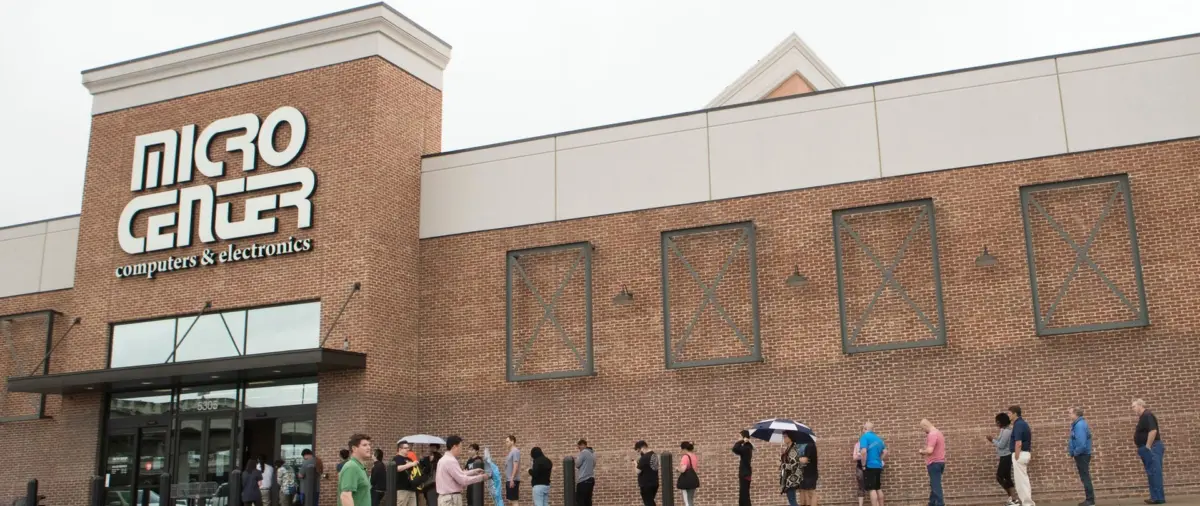
For consumers desperately searching for reasonable pricing amidst this widespread market turmoil, the standard online retail giants—including Newegg, Amazon, and Best Buy—offer little refuge from inflated costs and depleted inventories. However, a localized alternative remains viable for a fortunate segment of the consumer base. PC builders who happen to live within a reasonable driving distance of one of Micro Center’s approximately 30 brick-and-mortar locations across the United States may find better pricing stability and localized inventory that bypasses some of the worst online scalping and third-party markups. While traveling to a physical storefront is not a feasible option for the majority of the market, physical specialty retailers represent one of the few remaining avenues for securing essential hardware without succumbing to the prohibitive costs currently dominating the digital marketplace.

Leave a Reply