
The openSUSE project has announced a significant shift in how it delivers its stable and enterprise-aligned Linux distributions. For years, the openSUSE ecosystem has been neatly divided among several distinct variants tailored to different use cases. These have traditionally included Leap, the stable fixed-release option sharing its source code with SUSE Linux Enterprise (SLES); Tumbleweed, the fast-moving rolling release favored by enthusiasts and developers wanting the latest packages; MicroOS, the immutable rolling variant tracking Tumbleweed; and Leap Micro, the immutable, fixed-release counterpart designed specifically for container hosts, edge devices, and virtual machine workloads.
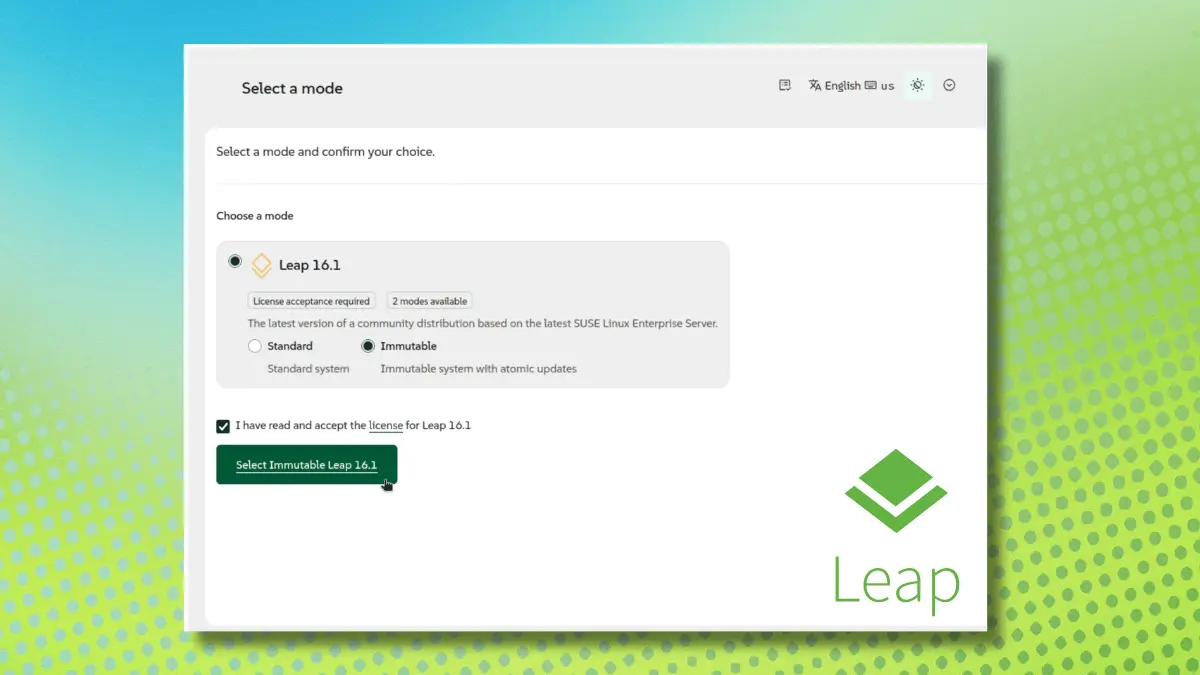
However, that structural separation is now coming to an end. The openSUSE project has officially decided to phase out the standalone Leap Micro product line. Moving forward, immutable Linux infrastructure will no longer exist as a separate operating system image sitting beside the main enterprise-grade release. Instead, it will be integrated directly as a native, selectable mode within the main openSUSE Leap installer.
This major transition begins with the upcoming release of openSUSE Leap 16.1, the release candidate for which has just been made available for public testing. By merging the architectural benefits of Leap Micro directly into the core Leap distribution, the openSUSE developers aim to simplify the user experience, reduce maintenance overhead, and bring the power of atomic updates and immutable architecture to a much wider audience without complicating the core Leap deployment path.
A New Installation Paradigm
Historically, Leap Micro existed as an independent product because building and deploying immutable Linux systems required an entirely separate installation path and tooling ecosystem. Users who wanted the robust security, predictable state, and transactional reliability of an immutable operating system had to look outside the standard Leap ecosystem.
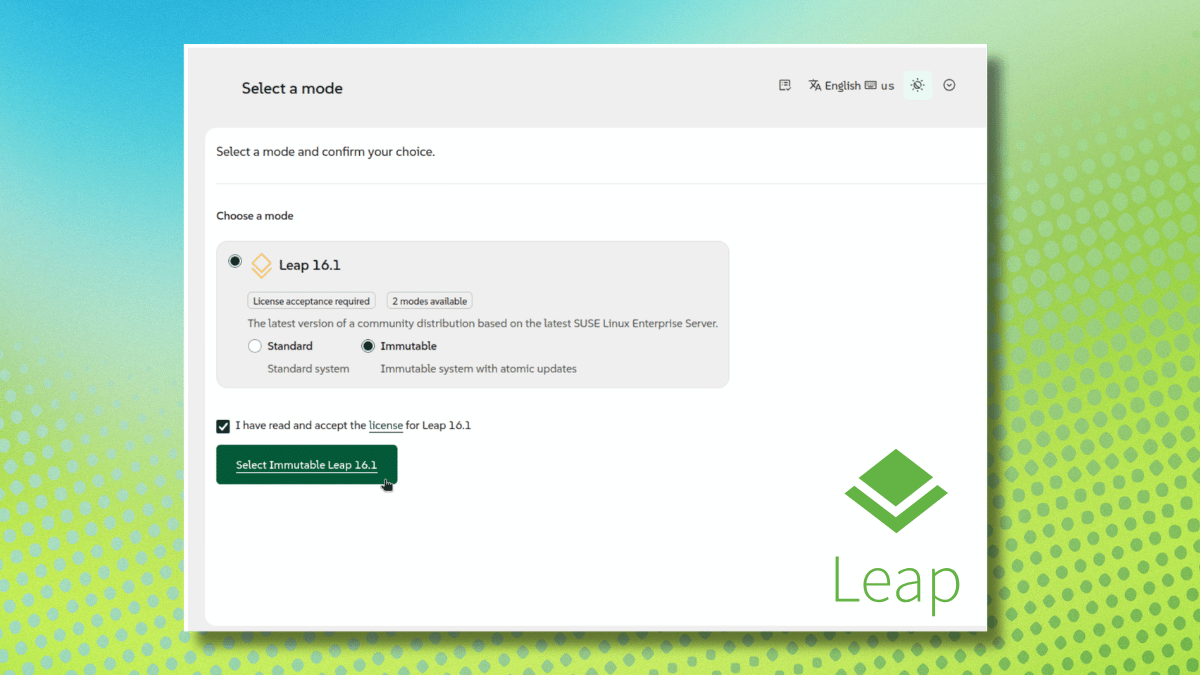
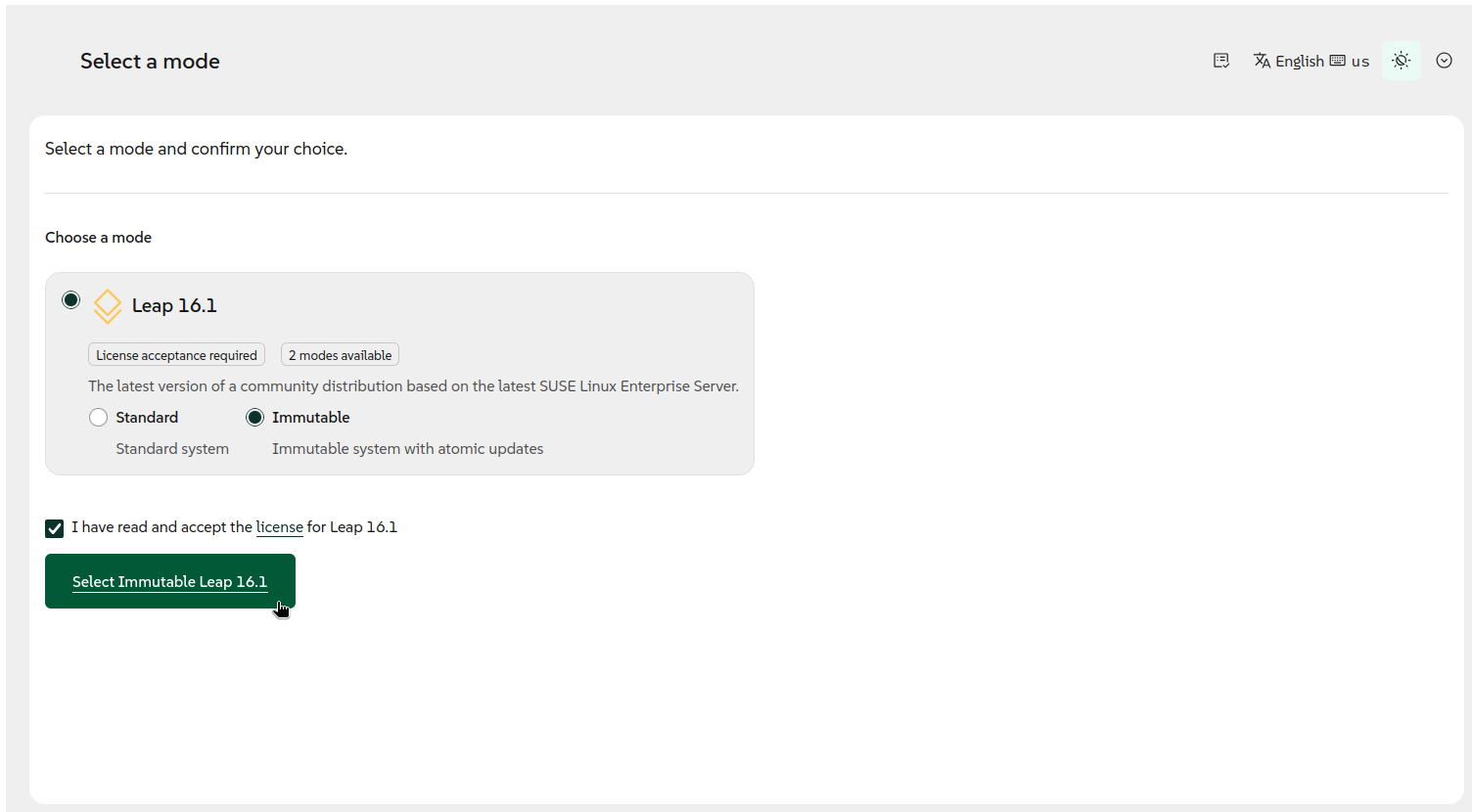
With the arrival of Leap 16.1, that barrier is being removed through the integration of the Agama installer. During the setup process for Leap 16.1, administrators and users will encounter a new option allowing them to toggle on an "Immutable" mode. Choosing this option configures the system with a read-only root filesystem, enforcing transactional updates and robust snapshot-based rollbacks from the very first boot.
Under the hood, the technical foundation of this new immutable mode is identical to what Leap Micro previously provided. The fundamental change is structural rather than functional: the technology now lives inside Leap rather than alongside it as a separate sibling project.
For managing system updates, the immutable mode relies on the proven transactional-update utility. This tool safely applies system changes within a new snapshot behind the scenes before a reboot occurs. If an update introduces a regression, a driver conflict, or any other critical issue, administrators can simply roll back to the previous stable snapshot during boot, ensuring high availability and system resilience in production environments.
When it comes to application deployment and software management, the ecosystem embraces modern containerization and sandboxing standards. Podman and Distrobox serve as the primary mechanisms for handling containerized workloads, while Flatpak takes care of desktop applications for users who choose to run graphical environments on top of the immutable base.

Importantly, openSUSE has ensured that users who prefer a traditional workflow are not forced into the new paradigm. System administrators and desktop users who want the conventional file system layout can simply opt for the standard installation mode, preserving the traditional openSUSE Leap experience they have relied on for years.
The Future of Leap Micro and Migration Paths
Because the openSUSE project has designated Leap Immutable as the direct successor for all container workloads, edge deployments, and enterprise setups that benefit from atomic updates, the standalone Leap Micro branch will be discontinued. Consequently, there will be no Leap Micro 6.3 or 7.0 releases. The project has consolidated its engineering efforts into a single, unified codebase that can satisfy both traditional and immutable use cases depending on installer choices.
For organizations and system administrators currently running existing deployments of Leap Micro 6.2, the openSUSE development team has prepared a transition path. The project is offering the experimental openSUSE Migration Tool, designed to help current Leap Micro users migrate their workloads and systems smoothly toward the new integrated immutable Leap environment as they plan their upgrade cycles.
Desktop Upgrades and Additional Features in Leap 16.1
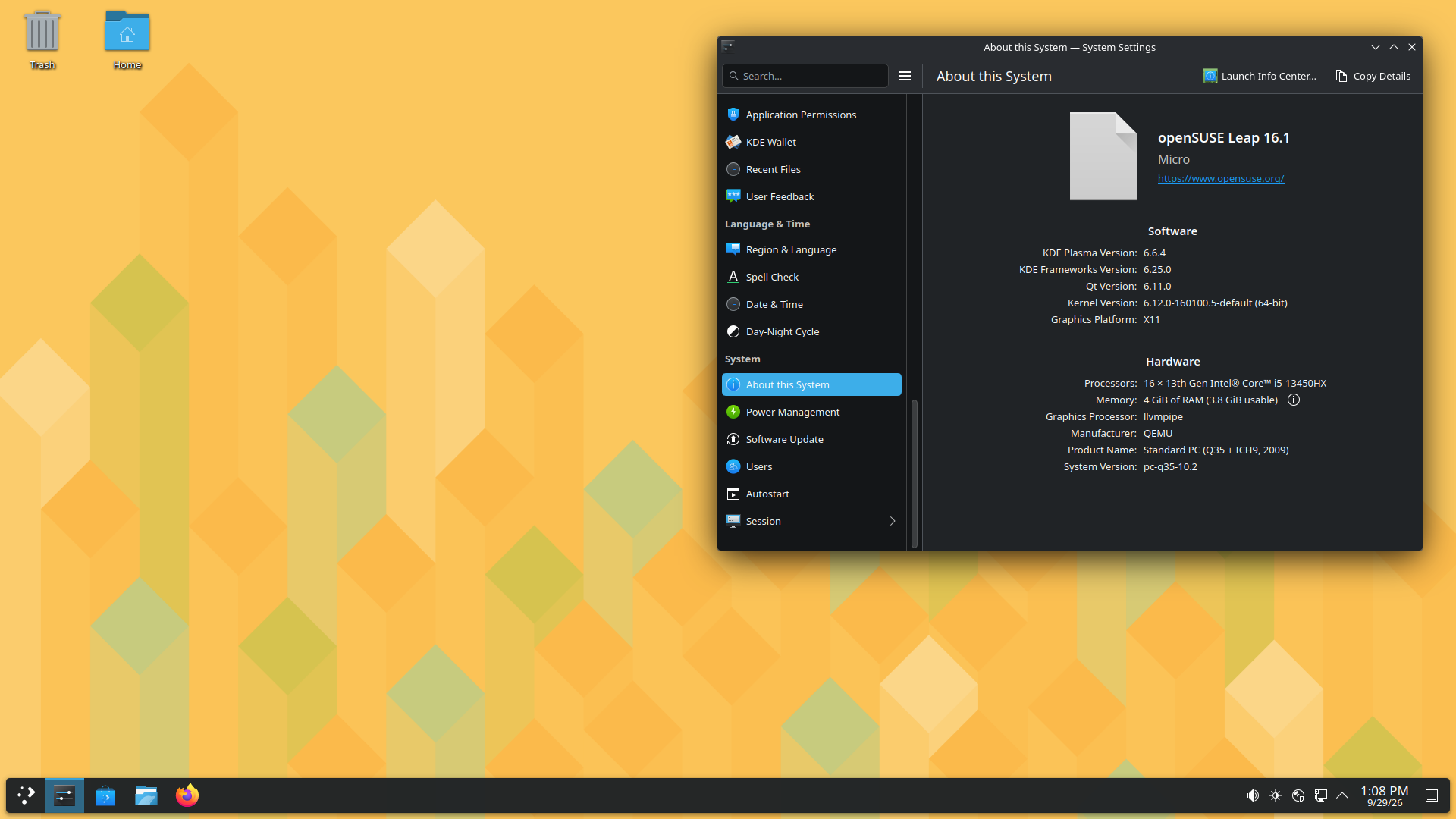
Beyond the introduction of the new immutable installation mode, the Leap 16.1 release brings a substantial array of updates, package refreshes, and underlying improvements to the broader openSUSE ecosystem. Because Leap 16.1 is a major point release in the Leap 16 series, it packs significant software advancements across both major desktop environments supported by the distribution.
KDE Plasma users will find themselves upgraded to KDE Plasma 6.6. This release introduces notable productivity and usability enhancements, including integrated optical character recognition (OCR) support built directly into the Spectacle screenshot utility, alongside various accessibility improvements designed to make the desktop environment more inclusive and responsive.
On the GNOME side, Leap 16.1 ships with GNOME 48. This release brings advanced features such as improved High Dynamic Range (HDR) support and a new default audio player application. Interestingly, the GNOME version included in Leap 16.1 shares the same core version that shipped with Leap 16.0, but it comes bundled with a critical gnome-shell bug fix patch. The openSUSE developers have adopted a deliberate strategy of staging GNOME component upgrades gradually across subsequent point releases rather than attempting a massive version jump all at once, ensuring greater stability for enterprise and desktop deployments alike.
The release cycle for Leap 16.1 is tightly coupled with SUSE’s enterprise release schedule. Project maintainers have confirmed that the final, stable commercial release of openSUSE Leap 16.1 is planned to land on the exact same day as the release of SUSE Linux Enterprise (SLES) 16.1.
Availability of the Release Candidate
As the openSUSE project moves toward the final stable release, the development team has made the official release candidate (RC) build of Leap 16.1 available for testing. The project has committed to publishing a fresh release candidate build every week as they methodically test and refine the system, tracking toward their eventual Gold Master Candidate (GMC) status.
Testing images for the Leap 16.1 release candidate are currently available for download directly from the official openSUSE Leap website. The images support a wide array of enterprise and consumer architectures, including x86_64 for standard desktop and server hardware, aarch64 for ARM-based systems and edge devices, ppc64le for IBM POWER processors, and s390x for IBM mainframe environments. Developers, system administrators, and openSUSE community members are encouraged to test the new installer options, particularly the immutable mode, to help ensure a robust and polished final release.

Leave a Reply