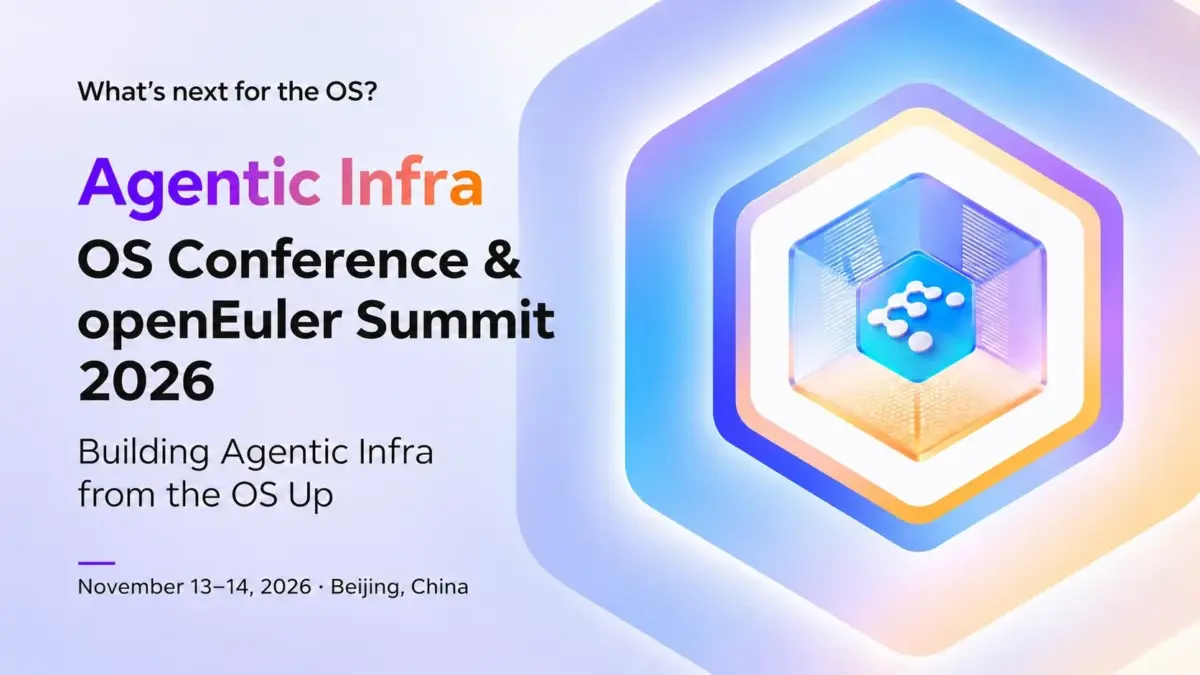
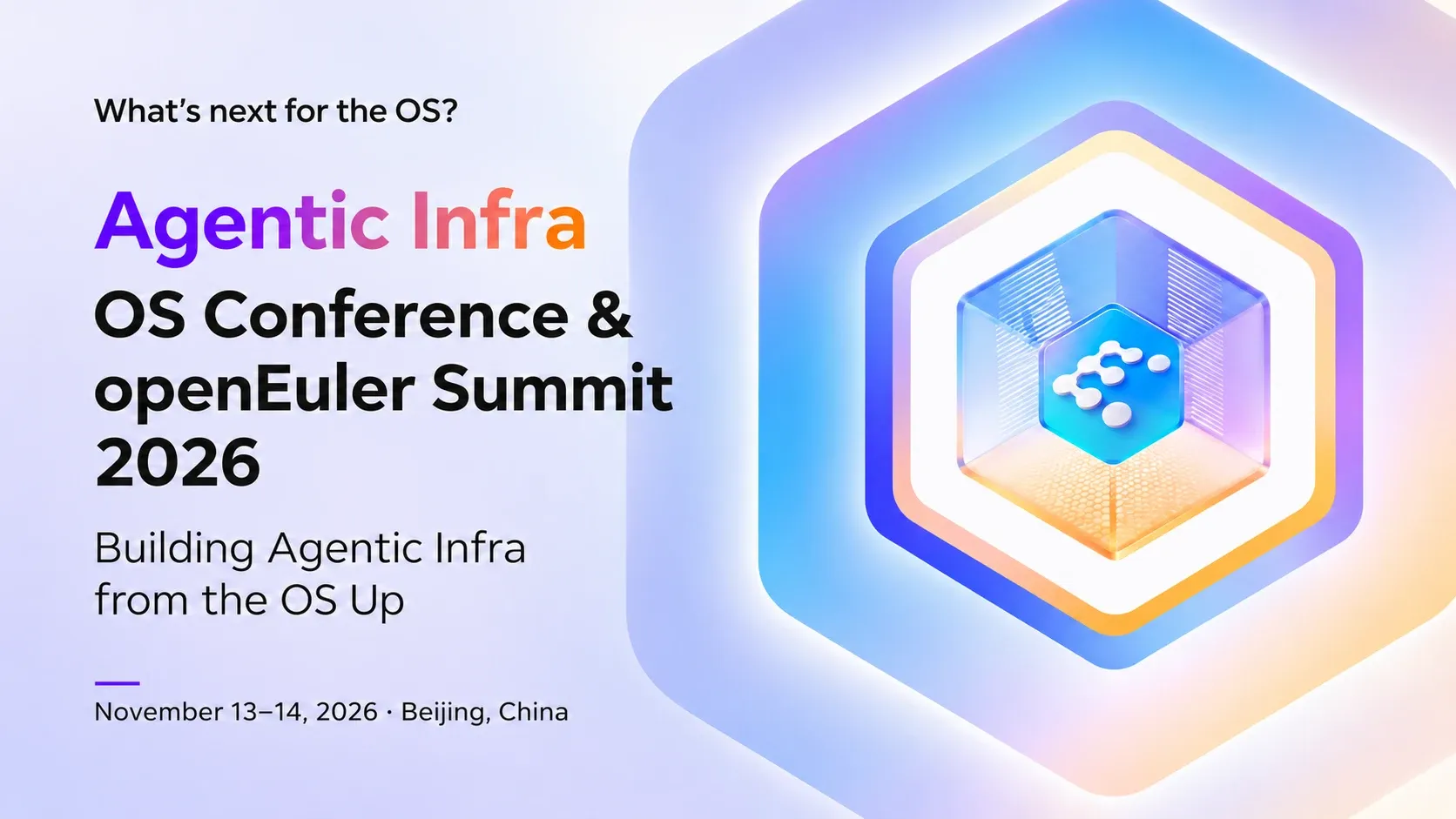
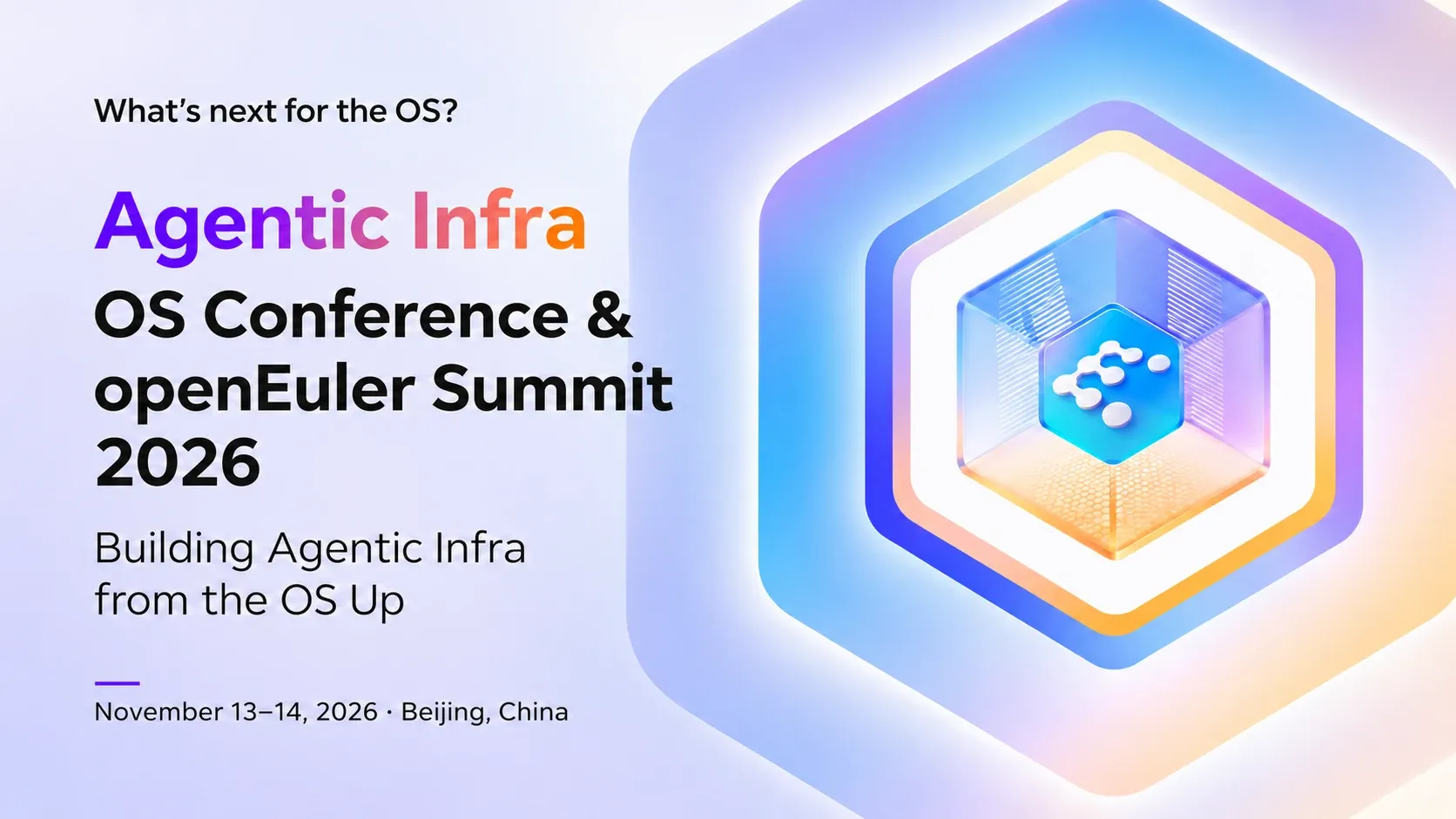
The intersection of operating systems and artificial intelligence will take center stage this November as the tech community gathers for the Agentic Infra OS Conference & openEuler Summit 2026. Scheduled to run from November 13 to November 14 at the prestigious Zhongguancun International Innovation Center in Beijing, the two-day high-profile event aims to address the rapidly evolving demands that large-scale AI computing and complex AI agents place on foundational system software.
Operating under the guiding theme "Building Agentic Infra from the OS Up," the conference is expected to draw a diverse crowd of software developers, core open-source contributors, enterprise users, and key industry partners. Organizers have structured the event to bridge high-level architectural strategy with hands-on community collaboration. The first day will be heavily industry-focused, headlined by major keynote addresses at the Agentic Infra OS Conference, while the second day will shift toward a community-centric atmosphere built around the openEuler Summit.
As artificial intelligence applications transition from simple prompt-and-response utilities to complex, autonomous workflows, infrastructure teams are encountering a new class of engineering challenges. Modern AI workloads require far more than raw model performance or hardware acceleration. They demand sophisticated resource coordination across tightly integrated computing clusters, secure execution environments for untrusted agent workloads, and robust observability tools capable of tracking complex system behaviors in production environments.
These shifting paradigms form the conceptual backdrop of the upcoming summit. Traditional operating systems were designed around process and resource abstractions that are increasingly being strained by modern AI requirements. When autonomous agents run extended, multi-step task loops while maintaining state and memory across distributed systems, the underlying operating system must evolve to support these persistent, resource-heavy workflows efficiently.
The conversation at the summit builds directly upon technical milestones recently achieved within the open-source ecosystem. Earlier this year, the openEuler community delivered openEuler 24.03 LTS SP4. Built upon the Linux kernel 6.6, that significant release introduced an enterprise-grade agent sandbox runtime, major reliability and usability enhancements for SuperPoD clusters, advanced NPU resource partitioning, rapid fault recovery mechanisms for inference services, and targeted performance optimizations for AI compilers. Developed through the collaborative efforts of over 2,000 developers spanning nearly forty community member organizations, that release effectively framed the core engineering questions that will dominate the upcoming discussions in Beijing.
Operating Systems Are Becoming Part of AI Infrastructure
The role of the operating system within the modern technology stack is undergoing a fundamental transformation. For decades, the OS functioned primarily as an abstraction layer between hardware and user-space applications, managing CPU scheduling, memory allocation, and peripheral devices. Today, however, operating systems are increasingly recognized as an integral component of the broader AI infrastructure stack.
This evolution is driven by the sheer complexity of deploying large language models and autonomous agents at scale. Engineers are no longer just optimizing individual applications; they are re-architecting system software to handle the immense throughput, low latency, and high availability demanded by enterprise AI deployment. At the upcoming summit, these broad industry challenges will be examined through two closely connected focal points: SuperPoD OS and agentic infrastructure.
SuperPoD OS
SuperPoD OS represents openEuler’s specialized operating system architecture designed specifically for SuperPoD computing clusters. As computing infrastructure scales up to meet the demands of massive AI training and inference workloads, traditional single-node operating systems fall short. SuperPoD OS addresses the critical need for sophisticated system software capable of orchestrating and coordinating resources seamlessly across massive, tightly coupled computing clusters.
During the event, openEuler developers and project maintainers will showcase the latest advancements in this domain. These demonstrations will naturally build upon foundational capabilities introduced in the 24.03 LTS SP4 release, such as the UnifiedBus architecture, advanced memory-pooling techniques, and localized fault-detection tools.
The published conference agenda highlights practical enterprise adoption, featuring a prominent session from JD.com detailing its hands-on experience utilizing openEuler-based SuperPoD systems to power large-scale advertising workloads. JD.com, a Fortune Global 500 enterprise and one of China’s largest direct-sales retailers, represents the exact type of high-throughput corporate environment driving the demand for resilient cluster-level operating systems. In addition to enterprise case studies, the schedule includes collaborative sessions examining how Ubuntu and openEuler are working together to foster and expand the broader SuperPoD ecosystem.

Agentic Infrastructure
While cluster-level orchestration handles the massive hardware demands of AI, the agentic infrastructure track focuses on the foundational software layers required to run autonomous AI agents safely, reliably, and efficiently. As AI agents gain the ability to execute complex, multi-step workflows, interact with external tools, and manage persistent memory across systems, the security and resource management of their execution environments become paramount.
The agentic infrastructure program will dive deep into these exact requirements, exploring everything from secure sandboxed execution environments and operating-system-level memory management to the handling of key-value caches and tight integration across the broader AI software stack.
A central highlight of this track will be a dedicated presentation from Meituan, a major food delivery and local services tech giant. Meituan’s engineering teams are scheduled to share practical insights regarding their utilization of openEuler for agent sandboxing. This session will provide attendees with a real-world perspective on the operational realities of managing and isolating agent execution environments within high-demand production settings.
Event Overview and Exhibition
Beyond the headline keynotes and technical deep dives, the two-day gathering is designed to be a comprehensive hub for engineering collaboration. The schedule features more than thirty keynote presentations and panel discussions addressing a wide spectrum of technical domains. Specialized subforums will cover traditional kernel development, edge computing, modern development tools, performance optimization, and software security. In addition, the first day of the conference will host targeted, invitation-only sessions focused on specific deployment scenarios within the internet and financial industries.
Attendees will also have access to an expansive, one-thousand-square-meter demonstration and interaction zone. This physical exhibition space will allow developers and enterprise architects to see the technology in action, test out new features, and engage in direct technical discussions with leading industry practitioners and core open-source contributors.
The event serves as a vital meeting point for professionals navigating the rapid convergence of operating system engineering and artificial intelligence. By bringing together diverse perspectives from across the open-source landscape and enterprise sectors, the conference aims to accelerate the development of robust, scalable infrastructure capable of supporting the next generation of intelligent systems.
As preparations for the event continue, infrastructure engineers, software developers, and ecosystem partners can review the full schedule and secure their registration through the official openEuler event portal.