
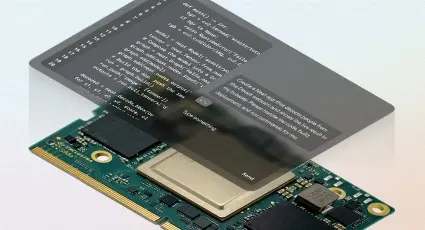
The newly published six-page technical guide details the practical steps required for migrating existing applications using the proprietary SiMa.ai Palette software stack. As edge computing and embedded artificial intelligence continue to expand into complex industrial, automotive, and smart-infrastructure deployments, developers increasingly look for optimized alternatives to general-purpose graphics processing units that can reduce power consumption and simplify deployment pipelines.
According to SiMa Technologies, the framework is structured to bridge the gap between conventional CUDA workflows and the specialized execution model of the SiMa.ai Modalix MLSoC. While NVIDIA ecosystems have long dominated machine learning development due to the maturity and ubiquity of the CUDA programming model, alternative hardware platforms are gaining traction by offering superior energy efficiency and purpose-built processing pipelines tailored specifically for computer vision and edge AI workloads.
The technical documentation outlines the fundamental architectural differences between traditional GPU deployment workflows and the SiMa.ai software ecosystem. Understanding these differences is critical for engineering teams aiming to preserve model accuracy and throughput while adapting to a new compilation and execution environment. The guide breaks down the core concepts behind the migration process, shedding light on how developers can translate custom layers, optimize neural network graphs, and manage memory allocation effectively within the Palette software stack.
A significant portion of the framework focuses on the practical mechanics of model and application migration. Moving a machine learning model from a CUDA-accelerated environment to an edge-optimized MLSoC involves more than simple code translation; it requires careful consideration of quantization, operator support, and hardware constraints. The SiMa.ai guide addresses these challenges by explaining how the Palette toolchain handles model ingestion, optimization, and target generation. Engineers are provided with insights into how the software stack automates large portions of the optimization pipeline, allowing for a smoother transition of complex computer vision and deep learning pipelines from NVIDIA Jetson and discrete GPU setups to the Modalix platform.
In addition to model conversion, the documentation highlights essential technical considerations that development teams must evaluate before initiating a full-scale deployment. These factors include hardware resource utilization, latency targets, input-output pipeline bottlenecks, and overall system power budgets. By outlining these considerations early in the migration planning phase, SiMa Technologies aims to help organizations avoid common pitfalls associated with cross-platform hardware transitions.
The release of this migration guide comes at a time when embedded systems developers are placing a higher premium on energy efficiency, real-time performance, and simplified software integration at the extreme edge. While NVIDIA hardware and the CUDA ecosystem remain foundational pillars of AI research and cloud-scale training, the deployment of intelligent systems at the edge often demands alternative hardware paradigms that can operate under strict thermal and power constraints.
Engineers and system architects interested in exploring the migration framework can access the documentation through the SiMa Technologies portal, where technical resources and associated software tools are provided to support development teams evaluating the transition from NVIDIA Jetson and related CUDA workflows to the SiMa.ai Physical AI platform.


Leave a Reply