
The intersection of artificial intelligence, rapidly expanding cloud infrastructure, evolving security demands, and an ever-increasing reliance on digital services formed the core agenda of the recent INNOG 9 session. Co-located with APNIC 62, the gathering drew a diverse assembly of network operators, infrastructure providers, security specialists, and policymakers from across the region to address a shared, high-stakes question: How must modern networks evolve to remain resilient, secure, and scalable in the face of unprecedented technological shifts?
With a distinctly operational perspective drawing heavily on the collective experiences of nations like India and Bangladesh, the event explored a wide gamut of critical topics. Discussions ranged from the imperative deployment of IPv6 and the fragilities of submarine cable infrastructure to enterprise security postures, the hidden operational costs of spam, and the monumental network transformations required to support artificial intelligence at scale.
Scaling Edge and AI Workloads with IPv6-First Architecture
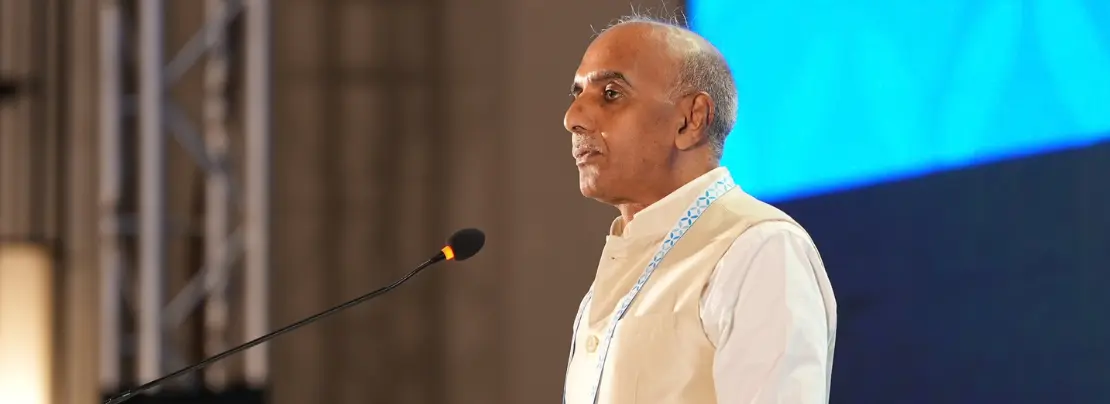
Opening the session, Dr Devesh Tyagi, Chief Executive Officer of the National Internet Exchange of India (NIXI), addressed the audience on the pressing need to rethink network foundations. As artificial intelligence, the Internet of Things (IoT), edge computing, and machine-to-machine communications experience exponential growth, network operators face extraordinary demands for scale, agility, and automation. Dr Tyagi argued forcefully that IPv6 should no longer be viewed merely as a reactive patch to address the inevitable exhaustion of IPv4 addresses. Instead, it must be embraced as the foundational architecture for all future digital infrastructure.
According to Dr Tyagi, an IPv6-first approach needs to be integrated directly into infrastructure design rather than treated as an afterthought. As AI workloads become increasingly distributed and the footprint of edge computing expands across regions, core networks, data centres, applications, and security systems must be engineered around IPv6 from their inception. During his presentation, Dr Tyagi also spotlighted NIXI’s ongoing work in expanding critical Internet exchange infrastructure, promoting proactive IPv6 adoption, and advancing robust routing security technologies. These include the Resource Public Key Infrastructure (RPKI), Route Origin Authorizations (ROAs), and Autonomous System Path Authorizations (ASPAs), all of which are vital to safeguarding the stability of global routing.
The Hidden Vulnerabilities of Subsea Cable Isolations
Moving from architectural foundations to physical resilience, Sumon Ahmed Sabir, Chief Information Officer at Fibre@Home and a member of the APNIC Executive Council, offered a sobering examination of regional infrastructure vulnerabilities. Drawing directly on Bangladesh’s turbulent experience during major Internet shutdowns and disruptions in 2024, Sabir examined the systemic risks that emerge when international connectivity goes dark while local physical infrastructure technically remains operational.
Sabir pointed out that many critical digital services fail during international outages not because domestic networks are entirely unavailable, but because they rely on external dependencies that operators frequently overlook during normal operations. Examples highlighted included Domain Name System (DNS) resolvers hosted outside the domestic economy, remote application components, third-party Application Programming Interfaces (APIs), external time synchronization systems, and vital mobile payment platforms. Sabir argued that network operators must conduct comprehensive audits to identify these hidden dependencies and intentionally build local resilience wherever feasible.
His presentation outlined practical, actionable recommendations for regional operators. These included establishing and operating local DNS resolvers, maintaining local cached copies of critical services, strengthening domestic DNS infrastructure, and developing proactive contingency plans capable of sustaining operations through prolonged submarine cable outages.
Integrating People, Technology, and Process into a Unified Security Posture
Shifting the focus to enterprise security from the vantage point of the financial sector, Abhijit Chakravarty, Executive Vice President and Head of Networks and Cybersecurity at Kotak Mahindra Bank, explored how modern organizations can construct a unified security posture across increasingly complex and distributed environments. Chakravarty emphasized that true digital resilience depends just as heavily on human elements and organizational processes as it does on advanced technology.
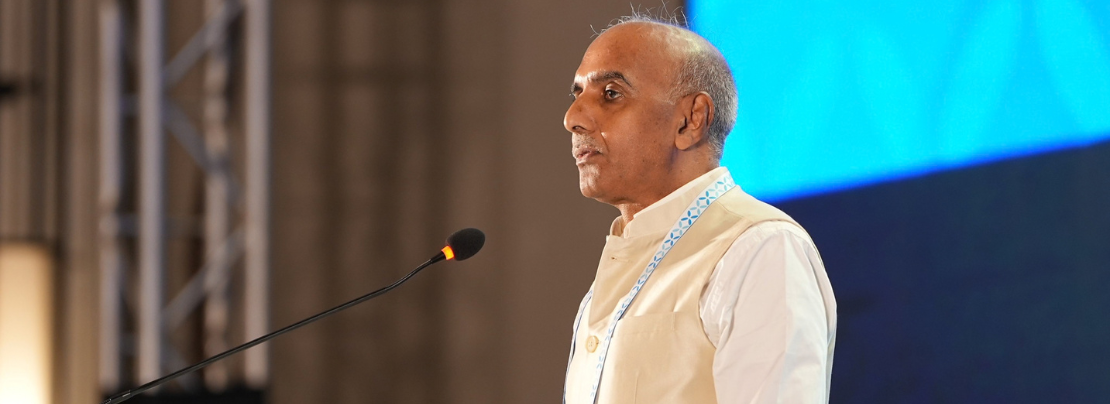
Chakravarty urged organizations to move beyond the passive collection of massive volumes of security telemetry and focus instead on generating actionable intelligence. He underscored the critical importance of adhering to Zero Trust principles, stressing that modern enterprises must operate under the assumption of a breach rather than relying on the traditional, outdated assumption of absolute perimeter protection. His presentation highlighted the rapidly growing role of behavioral analysis, comprehensive identity protection, AI-assisted threat detection, and end-to-end visibility across sprawling enterprise environments.
The Far-Reaching Costs of Spam Beyond the Crowded Inbox
Addressing an often-underestimated operational threat, Samarjit Biswas, Vice President of Global Emerging CyberSecurity Technologies for Telecom at XELE Labs, examined the broader ecosystem impacts of spam, abuse, and compromised end-user devices. Biswas detailed how IP deny lists and global reputation databases can severely disrupt not just individual email delivery, but entire enterprise networks, government services, and operator reputations. Poor network hygiene, he argued, triggers consequences that ripple far beyond a crowded inbox.
Biswas demonstrated how compromised customer customer-premises equipment, brute-force attacks, malware infections, and misconfigured mail infrastructure frequently lead to legitimate IP addresses being blacklisted. Once an IP address is placed on a deny list, customers routinely experience blocked services, degraded digital access, and a sharp spike in costly support incidents. His presentation underscored the urgent necessity of rigorous abuse monitoring, precise reverse DNS management, proactive traffic filtering, and ongoing customer education to maintain clean network ecosystems.
The Geographic Concentration of Subsea Infrastructure Serving India
Examining the physical arteries of the global Internet, Ashutosh Zutshi, Senior Vice President at NEC India, focused on the heavy concentration of submarine cable infrastructure serving the Indian subcontinent. Because submarine cables carry the vast majority of international Internet traffic, they represent one of the single most vital components of the modern digital economy. India’s rapidly expanding data centre industry is poised to drive massive transformations in the volume, placement, and routing of future submarine cables.
Zutshi noted that a substantial portion of India’s international connectivity currently converges on a relatively narrow set of landing points concentrated in Mumbai and Chennai. While this geographic distribution historically aligned with where domestic data centre capacity was built, future growth will necessitate expanding landing points into additional coastal locations to enhance geographic diversity and overall national resilience. His presentation also emphasized the growing imperative of protecting submarine cable assets from maritime disruptions and streamlining repair processes as cable capacity densities continue to multiply.
Optimizing Networks for Intelligence and AI Workloads
The formal presentations concluded with an examination of how artificial intelligence is fundamentally rewriting the demand curves for network, data centre, and connectivity infrastructure. Harsha Ram, Business Head of Network Services at Sify Technologies Limited, explained that network operators are shifting their primary engineering focus from optimizing infrastructure for traditional content delivery to optimizing networks specifically for computational intelligence.
According to Ram, modern AI workloads introduce entirely new performance requirements encompassing ultra-low latency, massive bandwidth, specialized data centre architectural designs, advanced fibre footprints, and robust submarine connectivity. Future data centres will need to accommodate increasingly dense Graphics Processing Unit (GPU) deployments that generate unprecedented thermal and electrical loads. Simultaneously, core networks will be forced to push inference capabilities closer to end-users while managing gargantuan traffic flows between distributed AI facilities. Ram also explored the emerging concept of sovereign AI infrastructure, noting that economies globally are increasingly seeking to retain strict control over their proprietary data, foundational models, and domestic AI capabilities.
The co-location of INNOG 9 with APNIC 62 provided a vital platform for regional collaboration, allowing professionals to share operational lessons, evaluate diverse technical strategies, and confront common challenges head-on. From practical routing deployments and security operations to large-scale infrastructure planning and the rise of AI-driven networks, the sessions underscored the sheer breadth of transformation currently sweeping through the telecommunications industry. Video recordings of all individual talks from the INNOG 9 session remain available for community review, offering a comprehensive resource for operators navigating the next era of Internet evolution.

Leave a Reply