
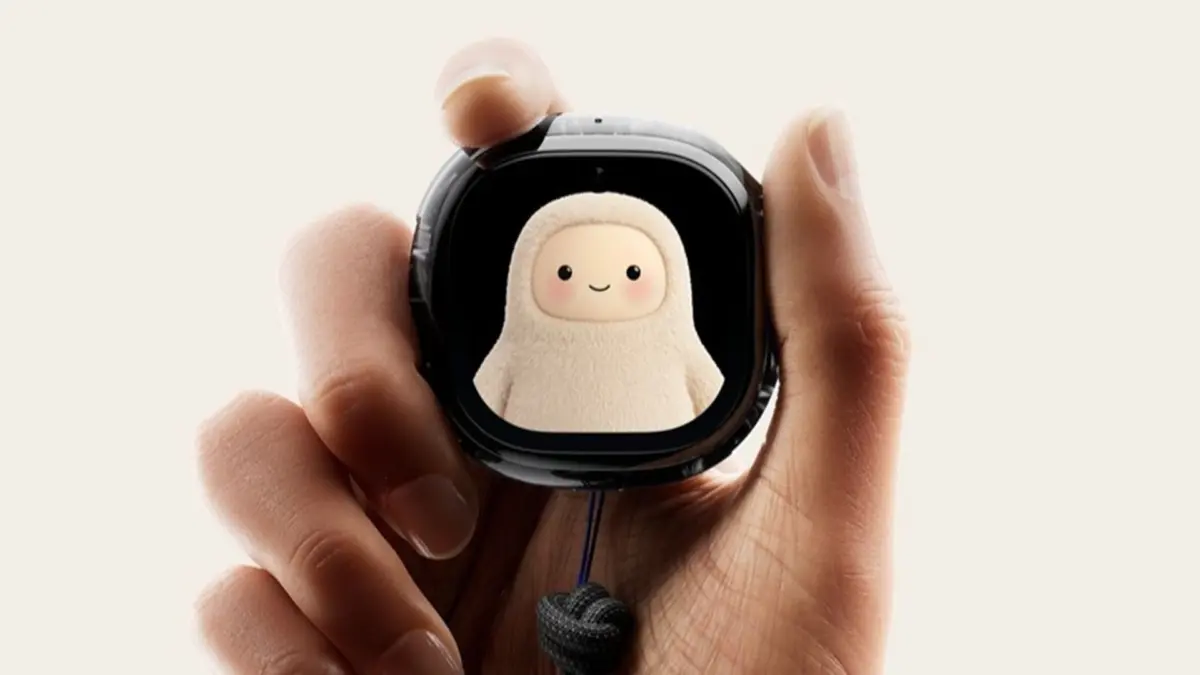
As the dust settles on Meta’s annual developer conference, tech enthusiasts and industry analysts are trying to make sense of the company’s latest hardware experiment. Blending nostalgic industrial design with bleeding-edge generative AI capabilities, the Muse Charm looks less like a traditional piece of enterprise hardware and more like a high-tech reinvention of the classic Tamagotchi for the modern era.
According to initial reports from publications like The Verge, the Muse Charm is a dedicated, palm-sized AI companion designed to let consumers interact seamlessly with Meta’s proprietary AI assistant, Muse. Early preview imagery provided by Meta showcases a small, rounded gadget equipped with a wrist strap, evoking fond memories of the virtual pet keychains that dominated playgrounds in the late 1990s and early 2000s—though virtual pets are themselves undergoing a broader cultural renaissance.
Industry watchers expect Meta to target a December launch for the Muse Charm, positioning it as a stocking stuffer for the holiday shopping season. Beneath its diminutive, rounded exterior, the device packs a surprising array of modern hardware specifications. Reports indicate that the Charm will feature a built-in 5G modem, a 2-inch OLED touchscreen, an integrated camera, a microphone, onboard speakers, and a standard USB-C port for charging and data transfer.
The primary utility of the device revolves around direct, hands-on access to Meta’s Muse AI. As detailed by Bloomberg, the inclusion of a built-in cellular modem ensures that users can converse with the AI on the go without being perpetually tethered to a smartphone hotspot or Wi-Fi network. Furthermore, the onboard camera is designed to give the AI crucial real-world context. Users will reportedly be able to point the charm’s camera at their surroundings and ask questions, functioning in a manner similar to opening a live multimodal camera feed on existing digital assistants like Gemini Live to translate foreign signage, identify objects, or analyze visual environments.
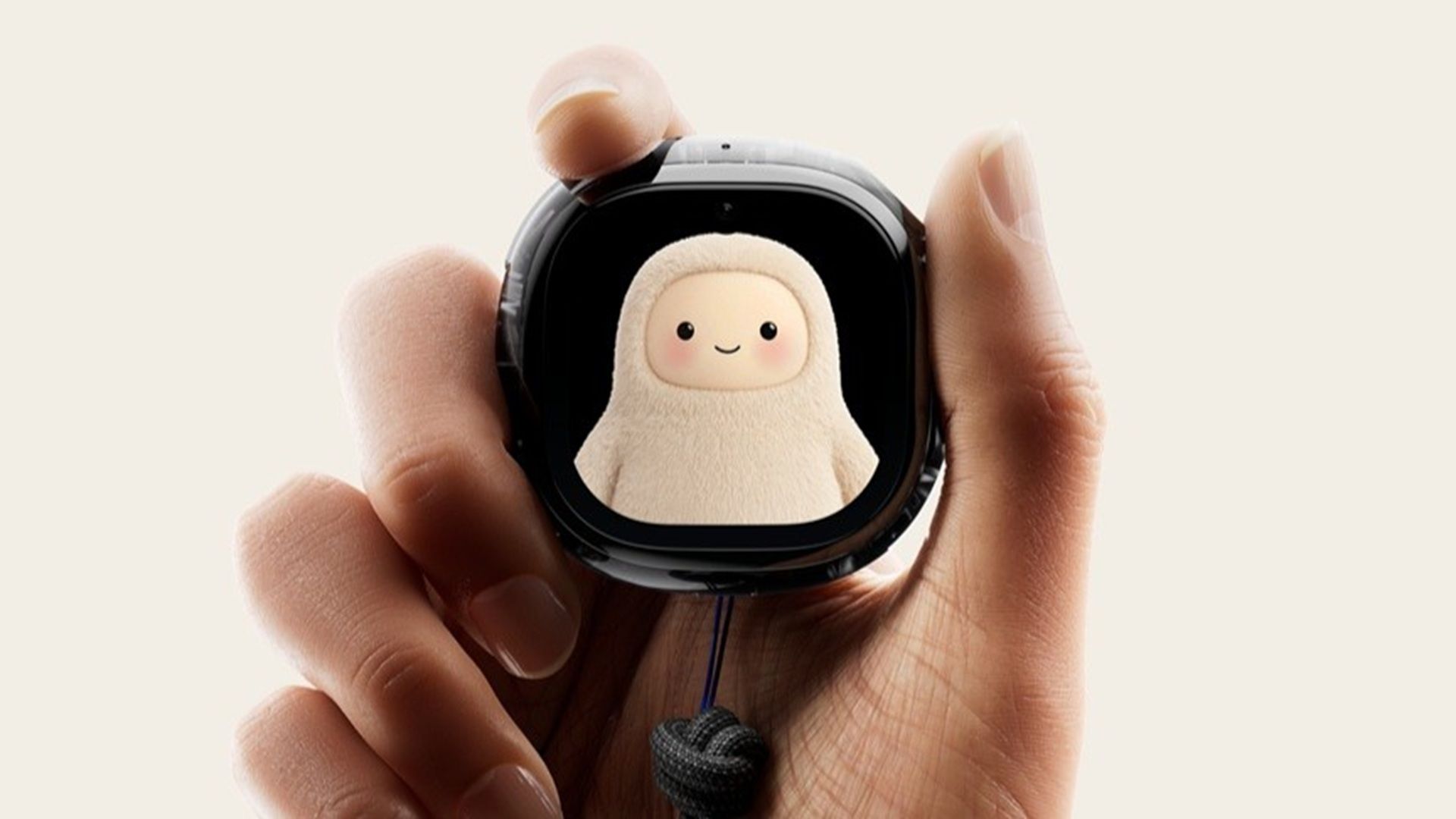
During the keynote presentations at Meta Connect 2026, Meta CEO Mark Zuckerberg emphasized the engineering feat required to squeeze such robust functionality into such a tiny chassis. Highlighting the device’s unique value proposition, Zuckerberg noted that for users who prefer not to wear smart glasses, the Charm offers by far the fastest and most direct way to converse with Muse and share real-time visual context of the world around them. Beyond pure functionality, the device features playful on-screen avatars designed to charm users, cementing its status as a cornerstone of Meta’s aggressive, multi-pronged hardware push into ambient artificial intelligence.
While official pricing details have not been fully finalized, industry insiders and early leaks suggest that the Muse Charm could command a price point roughly mirroring modern smartwatches, placing it firmly in the mid-tier accessory category rather than acting as a cheap impulse buy.
Muse Will Charm You
The debut of the Muse Charm was part of a much broader hardware showcase at Meta Connect 2026. While the company dedicated significant airtime to showcasing its newly refined AI glasses, it also stunned the virtual reality community with an entirely different kind of wearable: a radically slimmed-down pair of VR glasses.
The reveal of these new VR Glasses caught industry analysts and attendees entirely off guard. Traditional virtual reality devices have long struggled with form factor, typically manifesting as relatively bulky, face-mounted headsets that demand considerable facial pressure and weight distribution. Meta’s new hardware strips away that traditional bulk entirely. Reports from the convention floor indicate that the new device is approximately 83 percent lighter and 60 percent smaller than standard VR headsets currently dominating the market, such as the Apple Vision Pro.
Despite the dramatic reduction in physical size and weight, these VR Glasses are explicitly not designed for all-day wear, nor are they a hybrid pair of everyday AI audio glasses. Instead, they represent a targeted approach to high-fidelity immersive media consumption. On the specification front, the glasses are equipped with advanced 5K micro-OLED panels, delivering a sharp resolution of 37 pixels per degree (PPD).
Achieving this level of visual clarity in such a compact chassis required noticeable engineering compromises. According to hands-on accounts from the event, Meta achieved this reduction in size by narrowing the field of view (FOV). The newly unveiled VR Glasses feature an FOV that is roughly 11 degrees narrower than the Quest 3S and a substantial 25 degrees narrower than the baseline Quest 3. Whether consumers will gladly sacrifice peripheral immersion for unprecedented comfort and form factor remains one of the central questions of Meta’s upcoming hardware generation.
Android Central’s Take
Stepping back from the keynote spectacle, the overarching strategy behind some of Meta’s more niche hardware choices invites a healthy dose of skepticism. The rationale behind carrying a standalone, pocket-sized device that looks and acts like a modernized digital pet—built for the singular purpose of talking to an AI assistant—feels remarkably unorthodox.
When factoring in the rumored price tag, which reportedly lands in the territory of a fully featured smartwatch, the Muse Charm occupies a peculiar market segment. Equipped with a touch screen, a live camera, and compatibility with both Android and iOS devices for initial configuration, the gadget risks being perceived as a solution in search of a problem. For many tech critics, the Muse Charm flirts dangerously with being categorized as an unnecessary gimmick, leaving open the ultimate question of what lasting utility it brings to a consumer’s daily digital routine.


Leave a Reply