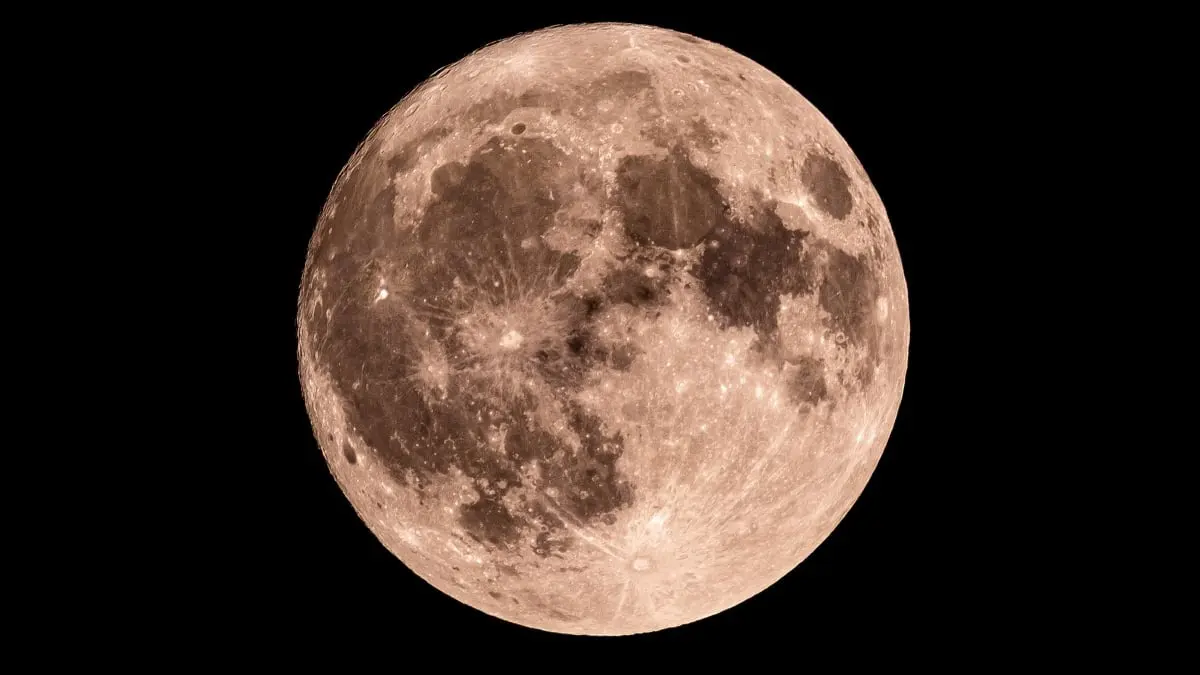
What is Today’s Moon Phase?
According to tracking data provided by NASA’s Daily Moon Guide, the lunar body currently sits squarely in the waxing gibbous phase. With approximately 99 percent of its sunlit hemisphere visible from our perspective on Earth, the moon is just a microscopic fraction away from achieving total full illumination, creating a dazzling brightness that dominates the nighttime environment and washes out fainter stars in the immediate vicinity.
For those heading outdoors tonight without the assistance of visual aids such as binoculars or telescopes, favorable atmospheric conditions will allow keen observers to pick out several prominent lunar features. Among the most easily identifiable geological formations visible to the unaided eye are the striking Copernicus Crater, the prominent Tycho Crater with its massive ray system extending across the surface, and the dark, smooth expanse of the Mare Crisium, one of the lunar maria located in the moon’s northeastern quadrant.
Observers equipped with binoculars gain a deeper window into the lunar landscape, unlocking the ability to spot additional geological marvels. Through standard binoculars, viewers can comfortably resolve the Endymion Crater situated near the eastern limb, the complex Alphonsus Crater located within the highlands, and the expansive basin known as the Mare Nectaris.
For astronomers utilizing backyard telescopes, the level of detail increases exponentially. Telescope owners have a prime opportunity to examine historic landmarks on the lunar surface, specifically pinpointing the precise landing sites of the Apollo 16 and Apollo 17 missions where human footsteps were last left on another world. In addition to these historic coordinates, telescopic observers can clearly discern the unique contours of the Schiller Crater, an elongated impact structure located in the southern hemisphere of the moon.
When is the Next Full Moon?
The transition from the current waxing gibbous phase to the official full moon will occur imminently. Depending on the precise timezone in which an observer is situated, the exact moment of the full moon falls across late October 25 or October 26. This fleeting window marks the astronomical peak of the lunar cycle, after which the moon will slowly begin the process of waning as it embarks on its next monthly journey around our planet.
What are Moon Phases?
To truly appreciate the changing appearance of the lunar disk, it helps to understand the celestial mechanics driving the monthly cycle. The moon requires approximately 29.5 days to complete one full orbit around Earth. Throughout this continuous orbital journey, the visual appearance of the moon shifts noticeably from night to night. As the moon travels along its path, observers on Earth witness varying proportions of its sunlit side. The cycle begins with a completely darkened disk, progresses through a slim crescent and various quarter phases, culminates in a brilliant full moon, and then steadily diminishes before resetting the cycle entirely.
As space agencies and astronomical institutions like NASA frequently explain to the public, these distinct phases are not caused by Earth’s shadow falling on the moon—a common misconception often confused with lunar eclipses. Instead, the phases are the direct result of the moon’s changing geometric position relative to both Earth and the sun as it orbits our planet. As the relative angles shift, our perspective of the sunlit half of the lunar surface changes accordingly.
Astronomers categorize this continuous progression into eight distinct phases that define the lunar month. The cycle commences with the New Moon, during which the moon is positioned directly between Earth and the sun. Because the illuminated hemisphere faces entirely away from our planet, the side of the moon facing Earth remains shrouded in shadow, rendering it virtually invisible to the naked eye against the backdrop of space.
As the moon moves eastward along its orbit, a small sliver of sunlight begins to appear on its right side for observers situated in the Northern Hemisphere, marking the Waxing Crescent phase. Within roughly a week of the new moon, the cycle reaches the First Quarter. During this phase, exactly half of the lunar disk is illuminated on the right side, creating a classic half-moon appearance high in the sky during the afternoon and evening hours.
As the days progress past the first quarter, more than half of the lunar surface becomes illuminated, though it has not yet reached maximum fullness. This expansive stage is known as the Waxing Gibbous phase, which directly precedes the climax of the lunar month: the Full Moon. During the Full Moon phase, the Earth, moon, and sun are aligned in an approximate straight line, placing Earth squarely between the other two bodies. This geometry allows the entire face of the moon to be fully illuminated by direct sunlight, presenting a dazzling, fully realized disk to observers below.
Following this peak illumination, the cycle reverses its visual trajectory. The moon enters the Waning Gibbous phase, during which it gradually begins losing visible light from the right side as seen from the Northern Hemisphere. Several days later, the moon reaches the Third Quarter, also frequently referred to as the Last Quarter. Like the first quarter, this phase presents a half-illuminated lunar disk, but with the opposite side—the left half—now catching the light of the sun.
Finally, the lunar month concludes with the Waning Crescent phase. During this concluding stage, only a thin, fading sliver of light remains visible on the left side of the lunar disk. Shortly after this final crescent diminishes, the moon completes its 29.5-day orbit, returning to the alignment of the new moon and preparing to begin the ancient, predictable celestial cycle all over again.