
As the web development ecosystem continues its rapid evolution, the latest edition of the industry roundup What’s !important has highlighted a wave of innovative techniques, experimental APIs, and forward-thinking proposals designed to make frontend development more intuitive and performant. From advanced tooltip mechanics and native HTML elements to powerful new ways of querying layout data, developers have been hard at work pushing the boundaries of what is possible with modern CSS and HTML.
Refining User Interactions: Delayed and Instant Tooltips
One of the prominent discussions making the rounds in the developer community centers on micro-interactions, specifically how tooltips behave. In a recent breakdown, Abhishek Jakhar addressed a common UX pain point: tooltips that trigger either too aggressively or linger when they are no longer wanted. Jakhar explained why optimal tooltips should feature an initial delay to prevent accidental triggers, followed by an instant disappearance once the user moves away. He demonstrated how developers can implement this behavior using current techniques, while also noting a critical caveat regarding hit areas. If a hoverable region is too narrow, a tooltip can be de-triggered unintentionally, making a structured delay mechanism essential for maintaining a stable user experience.
Building upon this concept, Chris Coyier proposed a modern implementation leveraging upcoming browser capabilities known as interest invokers. These rely on two key CSS properties: interest-delay-start and interest-delay-end. While browser support is currently limited to Chrome, this approach represents a prime example of progressive enhancement in action, allowing developers to adopt forward-looking features safely while ensuring fallback experiences for other engines.
The <geolocation> Element and Progressive Enhancement
Progressive enhancement remains a central theme in modern web design, particularly when dealing with complex hardware-integrated APIs. The Geolocation API has historically been a source of friction for developers due to its reliance on external hardware like GPS satellites, Wi-Fi networks, and cellular towers, coupled with the frustrating complexity of managing permission states over time.
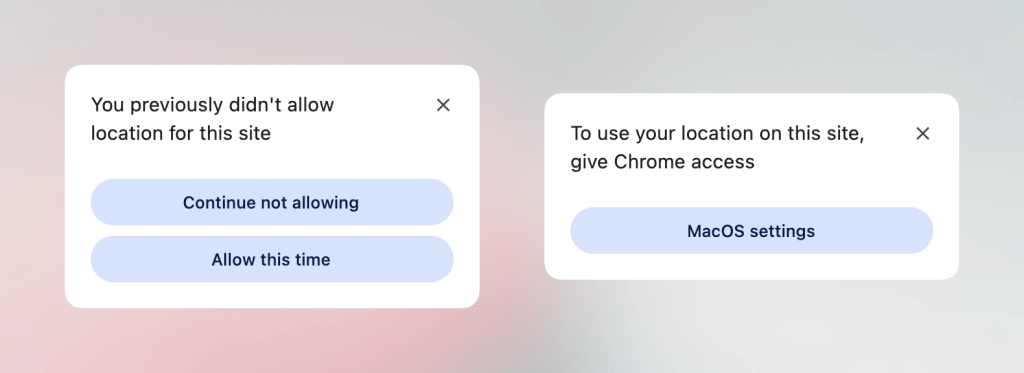
To alleviate these challenges, proposals surrounding the <geolocation> HTML element aim to streamline the process, though they introduce unique challenges of their own, such as specific styling restrictions. Because support is currently concentrated in Chrome, developers are looking at bridge strategies. By utilizing the new <geolocation> element alongside the traditional JavaScript Geolocation API, engineering teams can implement these features today while maintaining broad compatibility across different browser environments.
MicroLighter and the Custom Highlight API
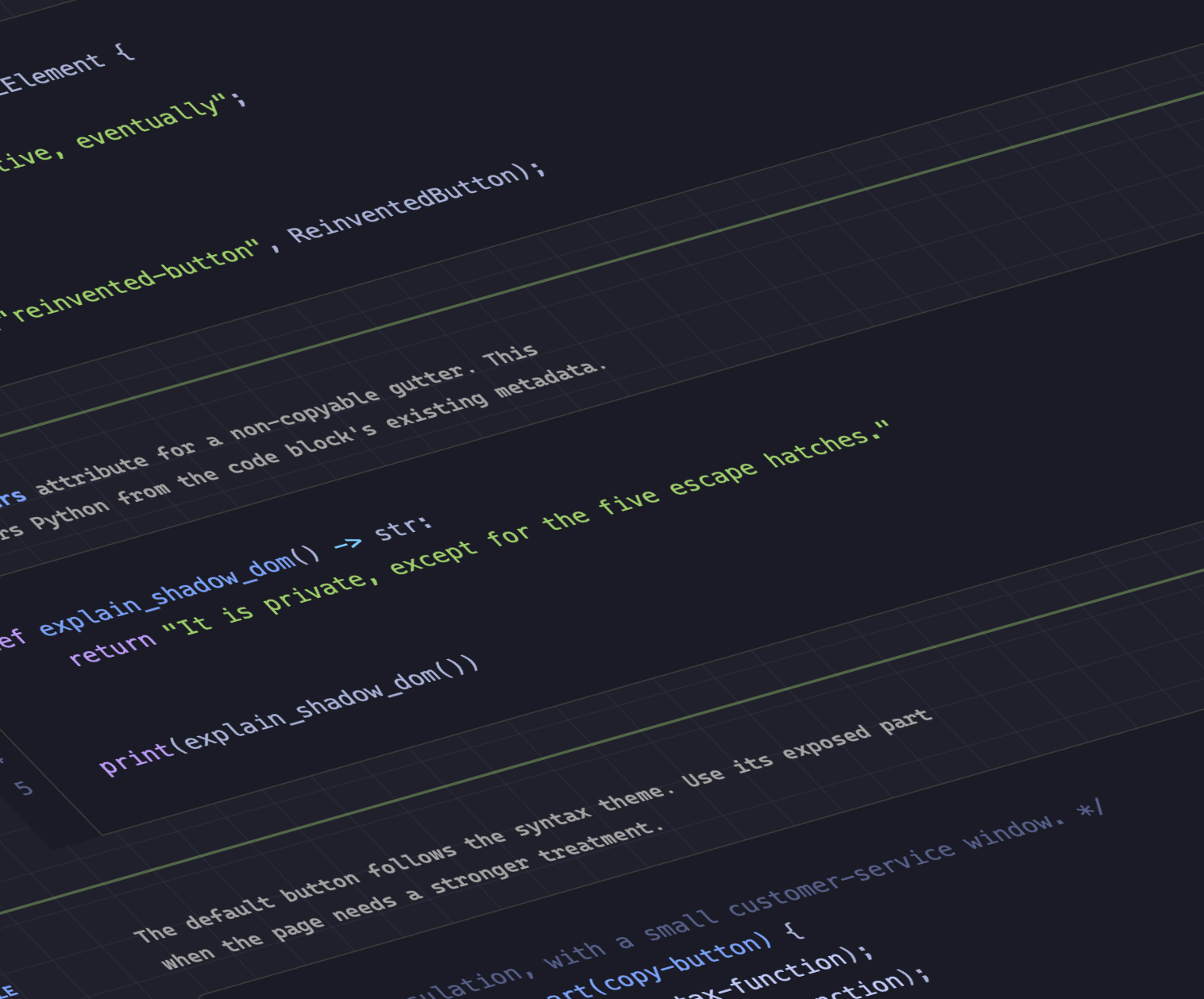
Syntax highlighting is another area experiencing a renaissance thanks to modern browser primitives. Dave Rupert recently introduced MicroLighter, a lightweight syntax highlighter built on top of the emerging Custom Highlight API using the ::highlight() pseudo-element. Rather than injecting heavy spans and DOM nodes into every code block, this approach separates the content from the styling layer, yielding performance benefits and cleaner markup. Rupert and fellow developer Geoff provided detailed walkthroughs on how the community is adopting this API to build faster, more efficient developer tools.
Bridging CSS Grid Information and Custom Properties
Moving into the realm of layout and design systems, Temani Afif demonstrated a clever technique for passing CSS grid information directly into CSS custom properties. By capturing layout metrics such as the total number of rows and columns, as well as the specific X and Y coordinates of individual grid cells, developers can unlock entirely new patterns in stylesheet logic.
While this technique currently requires columns of equal width, the ongoing evolution of CSS suggests that such layout constraints will likely loosen over time. Afif illustrated the practical utility of this approach by applying grid-derived data to calculate hover proximity, opening up sophisticated interaction design possibilities directly within stylesheets without heavy JavaScript overhead.
The Ongoing Debate Over Dark Mode Toggles
As user preferences for interface themes become ubiquitous, user experience designers and developers continue to debate the ideal implementation of dark mode toggles. The community currently finds itself divided between two-state and tri-state configurations. Lea Verou has advocated for a straightforward two-state toggle, whereas Bramus has made a strong case for tri-state controls that allow explicit user overrides alongside system inheritance. Meanwhile, developers like Vale.Rocks have championed a hybrid approach centered on an auto-until-overridden two-state model, reflecting the nuanced challenges of accommodating user preferences across diverse applications.
The Class Prefix Selector and Future Selectors
Bramus also turned attention toward potential improvements in selector syntax by introducing the concept of the class prefix selector. Although not yet implemented in any browser, the proposed syntax offers a remarkably clean and high-performance alternative to existing attribute selectors.
Traditionally, targeting elements with specific class prefixes required cumbersome attribute selectors such as [class^="something-"] or [class*=" something-"], which can introduce performance overhead and readability issues. A dedicated class prefix selector simplifies this pattern significantly. Given its utility and clean developer ergonomics, many in the community anticipate strong interest from browser vendors regarding its eventual standardization.
Feature Detection and Layout Balancing
Expanding the capabilities of conditional styling, Bramus introduced the @supports named-feature() function, currently supported in Chrome. This function enables developers to query hyper-specific browser behaviors that were previously undetectable, such as whether a specific rendering engine respects CSS transforms when handling anchor positioning elements. This enhancement aims to make feature queries more robust and granular.
At the same time, layout control continues to improve with the introduction of flex-wrap: balance in Chrome. Operating on a similar principle to the popular text-wrap: balance property for typography, this new rule allows developers to automatically balance wrapped flex items across multiple rows or columns. Ahmad Shadeed explored the practical applications of this feature, demonstrating how it solves longstanding layout awkwardness in responsive design. As these features move from experimental proposals to standard implementations, the web platform steps closer to a more expressive and capable future.


Leave a Reply