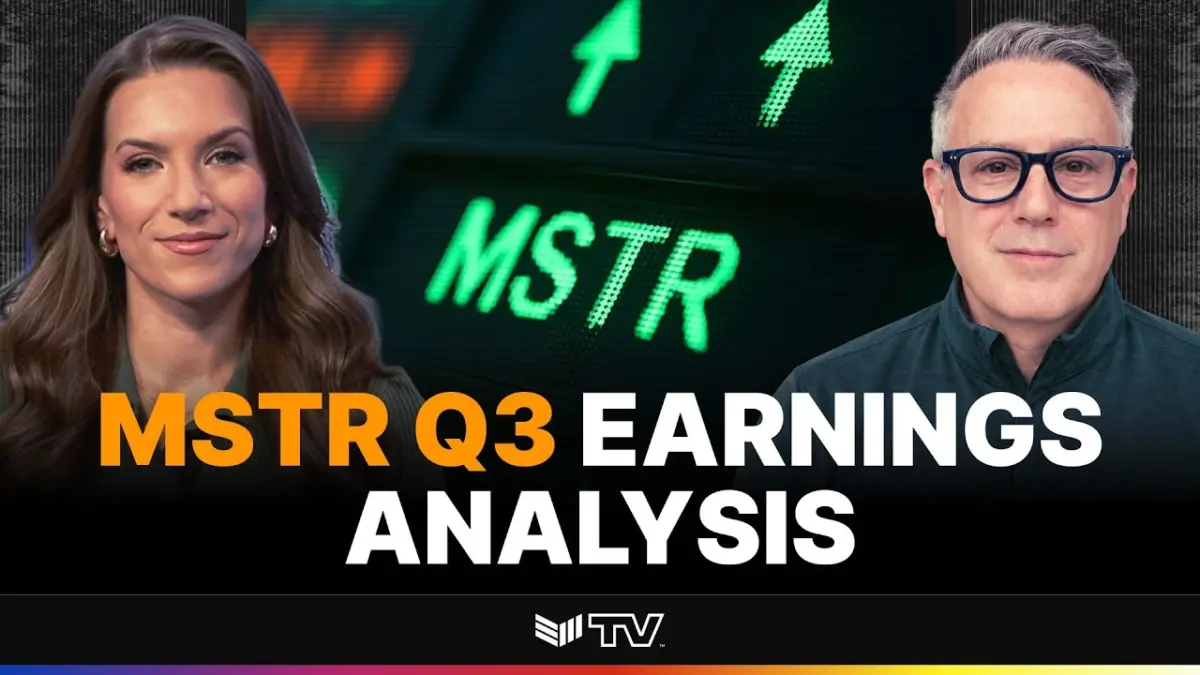
Log Scale Investments CEO Mike Flaum recently sat down with Bitcoin Magazine TV for an extensive discussion covering the shifting landscape of corporate Bitcoin strategies, innovative financial products, and the evolving role of digital assets in modern portfolios. In the wide-ranging interview, Flaum explored critical topics including Strategy’s "Stretch" initiative, the mechanics and market implications of daily dividends, Strive’s SATS, and how Bitcoin-backed preferred securities stack up against traditional U.S. Treasury bonds for retirees.
Throughout the conversation, Flaum emphasized the importance of distinguishing between market volatility and true fundamental risk, offering a deeply bullish long-term perspective on the premier digital asset.
The Discussion on Strategy and Bitcoin Treasury Companies
The interview kicked off with an examination of Strategy and its pioneering role as a corporate Bitcoin treasury company. Flaum and the host discussed what it means for Strategy as the "Stretch" financial instrument gets back to par. According to Flaum, the mechanics of issuing Stretch at $100 serve a vital purpose, effectively restarting and fueling the company’s continuous Bitcoin-buying engine.
As the conversation progressed, the focus shifted toward corporate capital structures and recent shareholder approvals regarding daily dividends. Flaum analyzed why Strategy shareholders recently approved daily dividends, comparing their functional mechanics to Bitcoin perpetual futures. He drew a sharp distinction between opportunistic short-term traders looking to capture immediate yield and long-term preferred holders who view these instruments as foundational capital assets.
Examining Capital Stacks, SATS, and Retiree Portfolios
Capital formation and innovative financial structuring formed a major pillar of the interview. Flaum addressed whether the oversubscription of Strive’s SATS represented genuine net new money entering the ecosystem or merely a reallocation of existing capital. He also contrasted the capital stack of Strategy with that of Strive, evaluating how different corporate architectures approach leverage, equity, and digital credit amplification.
A particularly compelling segment of the interview centered on the viability of Bitcoin-backed preferred securities versus traditional U.S. Treasury bonds for retirees. Flaum tackled the risk-reward profile of both asset classes, explaining why fixed-income alternatives backed by hard digital assets could offer superior purchasing power preservation for individuals navigating retirement in an inflationary macroeconomic environment.
Addressing this demographic naturally led to an exploration of valuation metrics and market behavior. Flaum broke down complex market indicators, explaining gross value, enterprise value (EV), and net mNAV (modified Net Asset Value), while shedding light on why Strategy’s stock price has occasionally lagged behind the actual value of its underlying Bitcoin holdings. He also touched upon broader corporate finance strategies, discussing digital credit, amplification effects, and share buybacks.
Challenging the Four-Year Cycle and Long-Term Forecasts
As the interview moved into macroeconomic and cyclical territory, Flaum directly addressed one of the most debated topics in the digital asset community: Is the traditional Bitcoin four-year halving cycle dead? Rather than adhering strictly to historical timing models, Flaum analyzed the shifting market dynamics, institutional adoption curves, and liquidity cycles that influence price action.
He offered insights into why Bitcoin has increasingly demonstrated the tendency to hit new all-time highs prior to the scheduled halving event, defying historical precedents established in earlier, retail-dominated market eras. The conversation concluded with a look at institutional price forecasts, including projections from major financial institutions like JPMorgan, and what these estimates imply for Bitcoin’s long-term risk-adjusted returns.
DISCLAIMER: The views and opinions expressed in this show are those of the participants and do not necessarily reflect the official policy or position of BTC Inc., Bitcoin Magazine, or any affiliated entities. This content is provided for informational and educational purposes only and should not be construed as investment, legal, tax, or accounting advice. Nothing contained in this show constitutes a solicitation, recommendation, endorsement, or offer to buy or sell any securities or financial instruments. Viewers should consult their own advisors before making financial or business decisions.