O1 Pro Smartphone in China
Following a wave of industry leaks and intense speculation across Chinese social media platforms, Huawei has officially pulled back the curtain on OSTA, its newly established sub-brand. The debut device for this fresh venture is the OSTA O1 Pro, a smartphone that immediately stands out in a crowded marketplace thanks to its unconventional, wide-screen form factor. The handset is now officially available for order through Huawei’s VMALL platform in mainland China, giving consumers their very first look at what this new ecosystem branch has to offer.
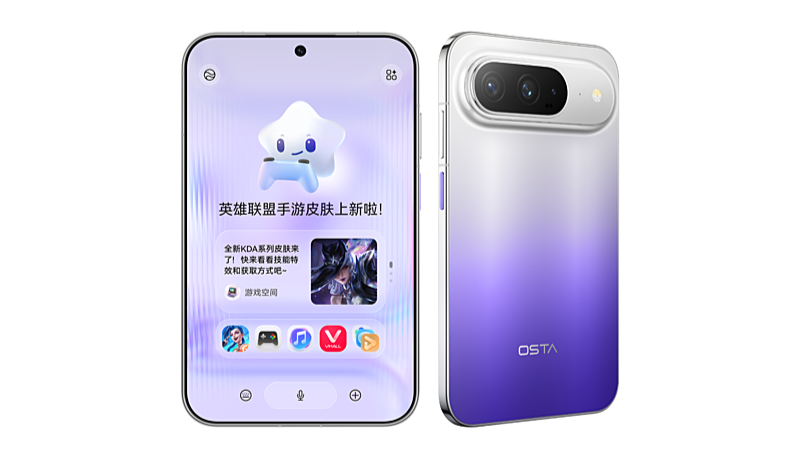
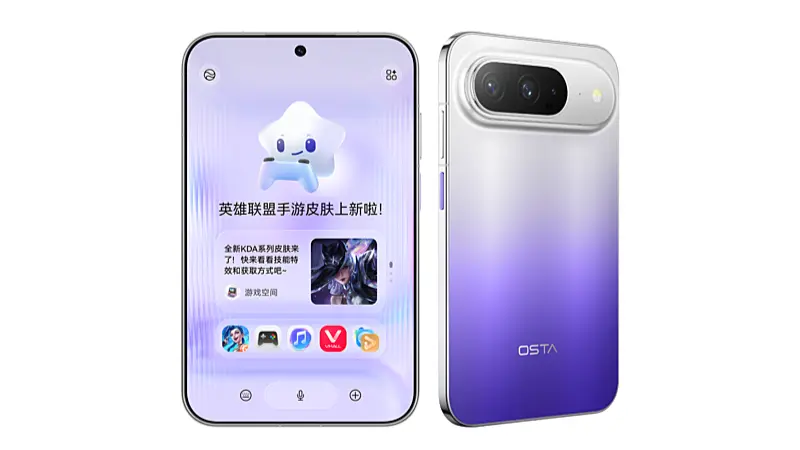
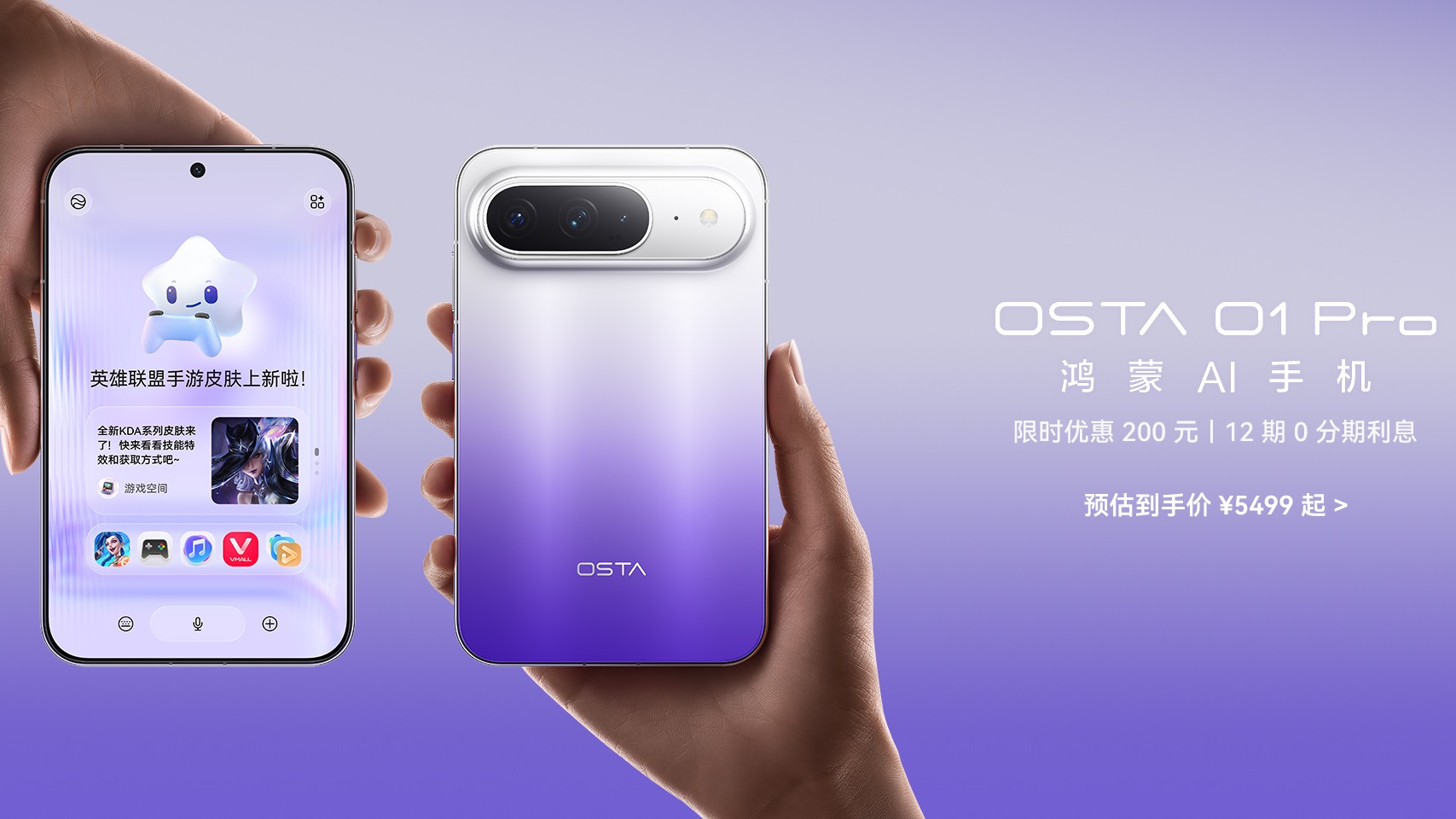
Initial reports from reliable industry insiders on Weibo had previously hinted at the unique design trajectory of the O1 Pro, and official specification sheets published alongside the launch have confirmed those early whispers. The device breaks away from the conventional, tall candy-bar proportions that have dominated the smartphone landscape for years. Instead, it embraces a distinct wide-screen format, measuring in with a 6.39-inch display that supports a smooth 120Hz refresh rate. Under the hood, the OSTA O1 Pro is driven by the Kirin 9030S chipset, the exact same mid-range silicon found powering the standard Huawei Pura 90. Base configurations for the smartphone start at a robust 12GB of RAM paired with 256GB of internal storage, positioning it comfortably in the upper-mid-range tier.
Despite its compact height and expanded width, the OSTA O1 Pro manages to pack an impressively large power source. The device features a substantial 7,000mAh battery, addressing a primary consumer demand for multi-day longevity without drastically increasing the thickness of the handset. To complement the high-capacity battery, OSTA has integrated support for 66W SuperCharge technology, alongside 5W wired reverse charging capabilities. Users who invest in a compatible wireless charger will also be able to take advantage of 50W wireless charging speeds.
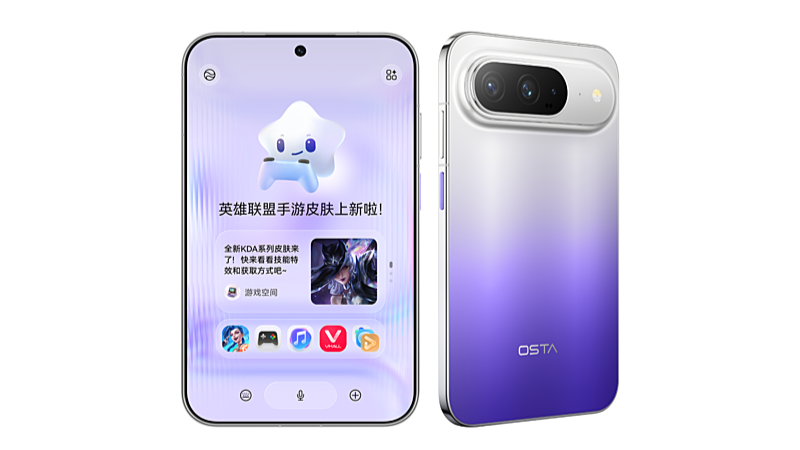
In the photography department, the OSTA O1 Pro takes a streamlined approach rather than packing its rear panel with an endless array of sensors. The primary camera system is anchored by a high-resolution 200MP main shooter, which works in tandem with a dedicated 50MP telephoto lens. Interestingly, the specification sheet omits a traditional ultra-wide-angle lens and a macro sensor, focusing its optical prowess purely on the primary and zoom focal lengths. Meanwhile, front-facing photography and video call duties are handled by a high-capacity 50MP selfie camera housed within the display.
When it comes to aesthetics and color availability, OSTA is offering the O1 Pro in three distinct finishes: Starry Night Black, Nebula White, and Starlight Purple. However, prospective buyers should note that the Starlight Purple option is exclusive to the higher-tier memory configurations, specifically the 16GB+512GB and the maximum 16GB+1TB models. Pricing for the OSTA O1 Pro begins at 5,699 CNY for the entry-level configuration, which translates to roughly $855 or £650 based on current conversion rates.
Will Wide-Screen Phones Come to the West?
Viewed purely through the lens of internal components, the OSTA O1 Pro might read as a relatively standard mid-range Android smartphone. However, its true significance lies entirely in its physical geometry. The device presents a stout, compressed silhouette that brings to mind a wider, more expansive take on alternative compact designs. This departure from the norm is not necessarily a disadvantage; in fact, alternative form factors have carved out a dedicated and enthusiastic following among mobile tech enthusiasts.
The broader consumer interest in unconventional shapes—exemplified by the market persistence of stout, foldable devices like the Samsung Galaxy Fold 8—proves that a significant segment of the Android user base is eager to experiment with designs that step outside traditional manufacturing norms. Beyond aesthetic novelty, the wider chassis of the OSTA O1 Pro offers genuine ergonomic and functional benefits. The phone is designed to sit comfortably within the palm of the hand while easily sliding into standard pockets, avoiding the awkward top-heavy balance of excessively elongated displays. Furthermore, wider aspect ratios provide tangible advantages for multitasking, making it significantly easier to run and view multiple applications side by side when the device is held in a horizontal orientation.

This naturally raises the question of whether international consumers will ever get the opportunity to purchase the OSTA O1 Pro through official channels outside of China. Industry analysts and market watchers suggest that an official Western release remains highly unlikely. Huawei’s operational landscape shifted dramatically following sweeping trade restrictions and a United States government ban implemented in 2022, which effectively forced the company to pull back from the U.S. market. Furthermore, Huawei has significantly scaled down the direct commercial availability of its mainstream smartphones in regions like the United Kingdom, where official online storefront listings are largely restricted to high-end, specialized foldables like the Mate XT Ultimate Design and the Mate X6—neither of which are readily available for direct purchase on the consumer site.
Nevertheless, the launch of the OSTA O1 Pro serves as an intriguing industry bellwether. If the wide-screen form factor resonates strongly with domestic consumers in China, it could pave the way for other manufacturers to experiment with similar proportions. While the OSTA brand itself may remain confined to its domestic market for the foreseeable future, the design philosophies underpinning the O1 Pro could very well influence global smartphone trends in the years to come.