James Talarico, the Democratic Texas senator-elect, has not only managed to flip the historically red state in yesterday’s midterm elections but also emerged victorious in the most expensive Senate election in United States history. More than $573 million was poured into campaign advertisements between Talarico, his Republican opponent Ken Paxton, and their respective aligned political action committees. An enormous chunk of that unprecedented financial backing came from a single individual: billionaire entrepreneur Elon Musk.
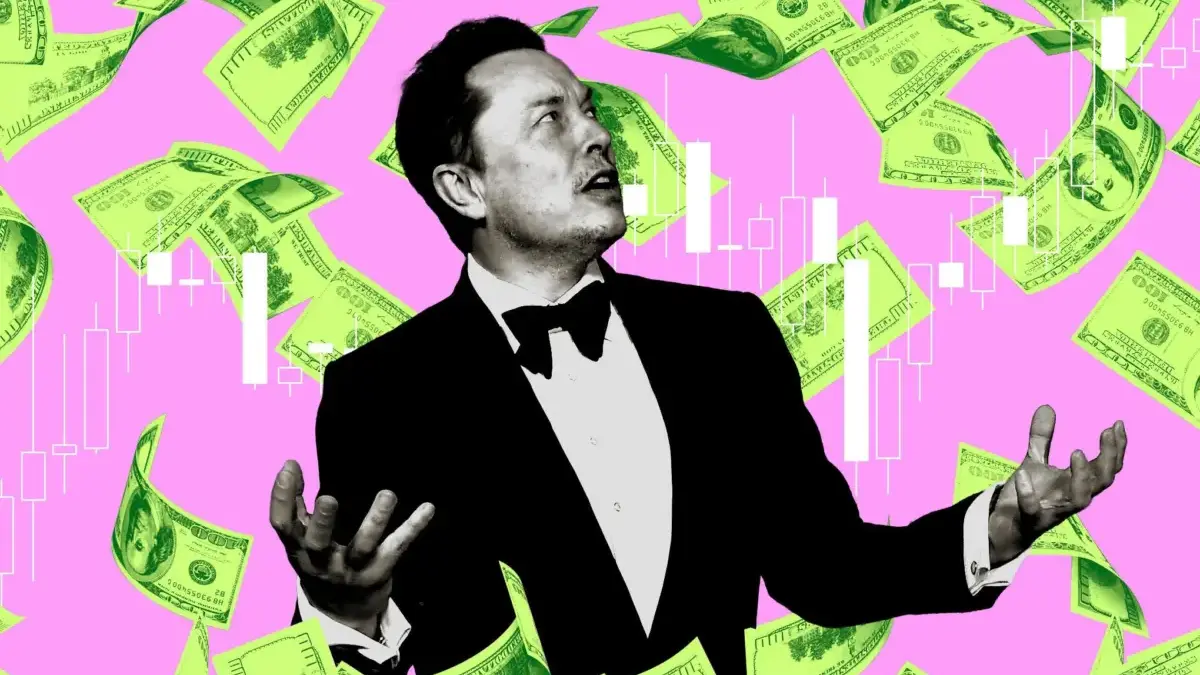
Musk reportedly spent more than $445 million supporting Republican candidates across the nation in the midterms, making him by far the single biggest donor in the 2026 election cycle as well as the largest political contributor in American history. The vast majority of his staggering capital was deployed directly in Texas, which serves as his home state and the corporate headquarters for both Tesla and SpaceX. Musk funneled more than $168 million into super PACs explicitly supporting Paxton. Furthermore, Musk’s own America PAC—to which he personally contributed $216 million—spent $34.7 million of those funds within the Lone Star State. All told, more than $200 million was funneled into a single state’s electoral contests.
Yet, despite this monumental financial onslaught, Musk’s millions could not buy him an election victory. Talarico soundly defeated Paxton by a margin of more than 12 points, securing his place as Texas’s first Democratic United States senator since 1988. The state’s powerful governor’s seat flipped as well, with Democrat Gina Hinojosa ousting Republican incumbent Greg Abbott, who had also been a major beneficiary of Musk’s financial generosity. The long-held Democratic aspiration of achieving a politically blue Texas finally materialized, and it occurred directly in the face of resistance from the world’s first trillionaire.
The midterms proved to be a severe reckoning for Republicans nationally, underperforming even in conservative strongholds they ultimately managed to retain. While Democratic victories across the country frequently relied on substantial campaign financing, the dynamic in Texas unfolded differently than Musk had anticipated. Talarico effectively framed the entire contest as a "top versus bottom" struggle pitting the ultra-rich against everyday working citizens. Musk’s high-profile donations to both Abbott and Paxton sharply underscored America’s escalating wealth inequality at a delicate economic moment when millions of Americans are struggling to make ends meet amid an ongoing cost-of-living crisis driven by inflation, tariffs, and geopolitical conflicts—all consequences of policy decisions stemming from the current federal administration.
It remains difficult to gauge just how poorly Paxton would have performed without the immense cushion of Musk’s financial intervention. Paxton’s official campaign committee received a paltry $22.3 million in direct donations, a stark contrast to the $146 million that Talarico successfully raised directly from everyday voters. Paxton received a vital lifeline from Musk, who ensured that the Texas electorate was inundated with negative advertisements targeting Talarico. However, those ads largely bypassed the bread-and-butter economic issues that mattered most to everyday voters, instead focusing heavily on culture war topics, particularly transgender rights, which have long been a personal fixation for Musk.
Musk’s focus on cultural grievances is widely understood to stem from his estrangement from his oldest daughter, who is transgender, a relationship dynamic that Musk has previously characterized by claiming she was "killed" by the "woke mind virus." One notable Facebook advertisement, costing between $15,000 and $20,000, explicitly urged voters to "defeat Talarico and his radical trans agenda." According to a comprehensive analysis of America PAC’s expenditure reports conducted by 19th News, that advertisement was merely one of dozens of anti-transgender commercials financed directly by Musk’s political organization.
At the same time, Musk’s immense financial footprint quickly became a political liability for Paxton, which likely explains why the tech magnate chose to operate largely from behind the scenes during this election cycle. While Musk officially endorsed Paxton on X—proclaiming that the "fate of Texas and America is at stake" in the showdown—he notably refrained from adopting an active surrogate role, avoiding the sort of high-energy public spectacles seen in past cycles. There were no Musk-led rallies, no onstage jumping, and no theatrical props in sight. Instead, Talarico repeatedly drew the public’s attention to the symbiotic relationship tying Paxton and Musk together, arguing that supporting one meant empowering the other.
"Elon Musk is trying to buy this Senate seat," Talarico declared to an enthusiastic crowd at a campaign rally in El Paso in late October. "In all likelihood, if you’ve seen an attack ad on your television screen, that was Elon. If you’ve gotten lies in your mailbox, that was Elon. If you’ve received a text message saying scary things about me with scary black-and-white photos, that was Elon too."
Talarico’s pointed rhetoric likely drew intense scrutiny to the cozy alliance between Musk and Paxton, a relationship characterized by clear mutual benefits. Paxton, who has served as Texas attorney general since 2015—with the brief exception of a temporary suspension during his 2023 impeachment trial—has launched multiple formal state investigations targeting organizations that openly criticized or antagonized Musk, according to a recent investigative report by Wired. Records indicate that Paxton has repeatedly followed Musk’s lead; after Musk filed a lawsuit against the progressive media watchdog site Media Matters, Paxton initiated his own state probe into the organization, and a similar Paxton investigation followed when Musk launched antitrust litigation against an advertising federation.
"Elon Musk wants our land," Talarico told supporters during his El Paso rally speech. "He wants our water. He wants our tax dollars. He wants his very own personal United States senator."
Beyond his heavy investment in the Senate race, Musk also attempted to secure influence over the governor’s office. Although the lion’s share of his Texas spending went toward Paxton, Musk also directed several million dollars to support Abbott, with whom he shares an equally close working relationship—so much so that Hinojosa filed a lawsuit seeking public access to all 1,400 pages of official correspondence exchanged between the two men. Musk was not the only prominent tech executive to back Abbott, either. The Republican incumbent, who campaigned on a promise to establish Texas as the national "epicenter" of artificial intelligence development, also received a $300,000 contribution from Anthropic cofounder Tom Brown, alongside substantial financial backing from various major data center developers.
As election night unfolded, Musk appeared acutely aware that the political tides had shifted against him. Known as a prolific poster on social media, Musk abruptly deleted a "Vote red early!" post from his X account on Election Day and offered virtually no public commentary throughout the evening, save for a brief, offhand quip regarding the placement of data centers in outer space. Other states where Musk deployed substantial financial resources fared little better for his preferred candidates. Democrats secured victories in Ohio, where Musk’s America PAC invested $10.4 million, and in Michigan, where he spent an additional $9.8 million. The Republican Party’s sole remaining bright spot was in Florida, where they managed to narrowly eke out a win.
The sheer volume of capital that Musk funneled into this election cycle remains staggering and historically unprecedented, yet the financial loss is practically negligible to his personal fortune. Dropping half a billion dollars in a failed bid to purchase influence across the midterms amounts to less than half a percent of his total net worth. While this resounding defeat may signal to political observers that even the world’s wealthiest individual cannot easily bend a resistant electorate to his individual will, political analysts note that it is equally probable he will return to bankroll even larger operations in future election cycles.