
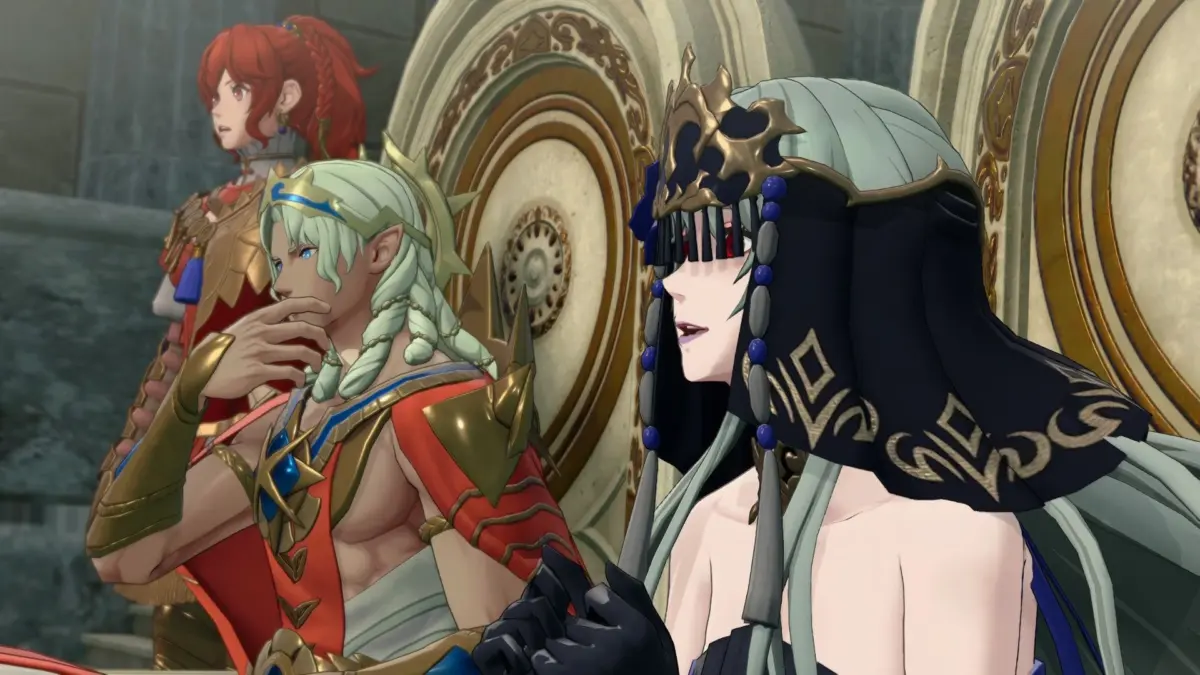
When players think of Nintendo’s expansive software catalog, direct and adroit political commentary is rarely the first thing that comes to mind. It is not an approach the company frequently, or really ever, engages in as a core pillar of its design philosophy. Even Monolith Soft’s famously grand and sweeping Xenoblade series tends to lean far more heavily toward abstract philosophy rather than grounded political critique. Up to this point, developer Intelligent Systems has generally limited the overarching political messaging within its long-running Fire Emblem franchise to broader cautionary themes, such as warning players against getting too closely involved with dragons—both literally and metaphorically—or reminding leaders that when a king starts laughing maniacally, it is probably time to strip him of his power.
That final sentiment is an eternal truth of leadership, but Fire Emblem: Fortune’s Weave, the latest entry in the tactical role-playing series released on September 17 for the Nintendo Switch 2, takes that concept with absolute seriousness. Instead of a standard fantasy tale of good versus evil, the entire narrative serves as a scathing and intricate commentary on nationalism, imperialism, and the systemic dangers of failing to confront the horrific truths of the past, no matter how uncomfortable or devastating those realities might be.
The Myth of Divine Conquest and Manifest Destiny
The backstory of Dagda’s empire mirrors the foundational myths of empires throughout recorded human history. Centuries of relentless warfare, bloodshed, and territorial expansion steadily widened its borders, eventually giving rise to a fervent, unquestioned belief in the inherent divinity of that conquest. When a nation’s supreme ruler is viewed as a living god and the direct offspring of the world’s ultimate deity, the common populace can be surprisingly easily convinced of their righteous superiority. In Part 2 of Fortune’s Weave, Dagda justifies his latest military campaigns by reminding his royal court—or at least the members he hasn’t executed for dissent—that Sothis, his mother and the progenitor god, personally tasked him with bringing the entire continent under his absolute control.
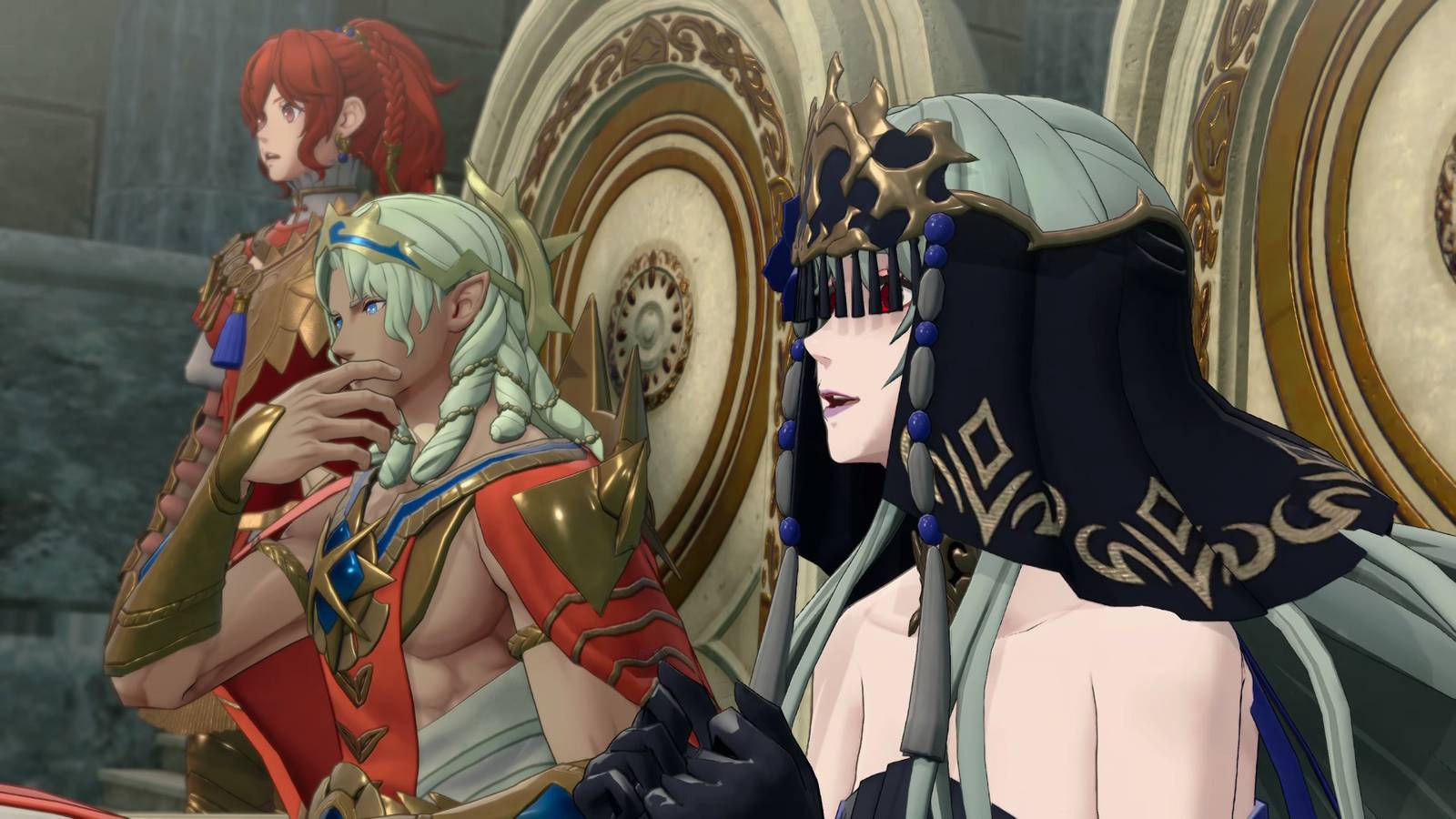
This narrative framework carries clear echoes of the historical Mandate of Heaven, the ancient Chinese philosophical concept holding that emperors ruled through divine favor and risked losing that legitimacy if they misbehaved. However, after spending the opening hours of the game learning about the empire’s glorious heritage through the in-game Heroic Games, it is difficult not to draw parallels to Manifest Destiny, the 19th-century doctrine espoused by U.S. presidents to justify westward territorial expansion. Under that doctrine, God supposedly ordained a continental future for the nation, automatically marking everyone who disagreed or stood in the way as hostile obstacles destined to be swept aside.
As the plot unfolds, players discover that this exact fate befell the smaller tribes and indigenous nations scattered across the continent. Dagda’s imperial history is essentially a centuries-long ledger of subjugating smaller nations and systematically erasing their distinct cultural identities, with the notable exception of his first failed war against Brigid. To maintain control, the emperor routinely installs a relative as a regional ruler or manufactured local deity within the conquered territories. Over time, successive generations of the subjugated population begin to view themselves as loyal Dagdans, revering their emperor and maintaining blind devotion to gods who ultimately serve imperial interests rather than the welfare of the people.
Erasure, Genocide, and the Sanitization of History
As Fortune’s Weave progresses deeper into its narrative, players learn that Dagda either viewed the peaceful People of the White Egg as expendable resources or feared their cultural autonomy, leading him to execute 100,000 of them, ruthlessly hunt down their fleeing descendants, and confine the survivors to a barren corner of the continent. The historical parallels to how various federal and state governments treated indigenous populations are striking, though echoes can be found across global history—from the treatment of the Ainu by imperial Japan to historical conflicts involving the Mongols in China, or modern geopolitical struggles.

Yet, much like real-world instances of genocide and state-sponsored oppression, the contemporary citizens of Dagda remember these dark chapters only as paeans to their empire’s glorious history. Atrocities are whitewashed and repackaged into popular entertainment and folklore. The People of the White Egg were reduced to the stuff of children’s fairytales, though the threat remained tangible enough that anyone walking the streets dressed in white risked immediate arrest. The official state-sanctioned version of history fosters a deep sense of national pride and unity among the populace. During Leda’s route, when Anatolia joins the party as a guest, the character Sha Lan expresses profound surprise and sadness upon learning the sanitized version of her people’s true history, realizing that virtually no one outside her immediate community understands what actually happened. That willful ignorance and blind faith ultimately form the bedrock of the empire’s undoing.
Following his campaign against the People of the White Egg, Dagda turned his military ambitions toward the children of Damascar, intending to slaughter them as well. When Yu Phas—the daughter of Balor and wife of Dagda’s son Solel—intervened to rescue as many innocents as possible, Dagda had her brutally murdered as punishment for her defiance.
Because divine beings exist outside the constraints of mortal time, their priorities rarely align with ordinary people who walk the earth for a mere span of decades. While Dagda’s wife Jurah and several of his children privately expressed horror at his actions during the Damascar incident, no one took meaningful action until the emperor’s cruelty directly threatened their own safety and status. Driven to a breaking point by Yu Phas’ death, Solel finally took up his axe and struck his father down, initiating the 500-year slumber that precedes the events of Fortune’s Weave.

The Politics of Status Quo and the Return of Tyranny
The narrative draws clear thematic parallels between the detached divine elite and modern socioeconomic structures. From their insulated positions of supreme privilege, ruling classes often view the economy as thriving even while ordinary workers struggle to afford basic necessities, champions of emerging technologies praise innovations that generate massive wealth for the few regardless of societal disruption. Yet, the moment their own personal comfort, safety, or status is brought under direct threat, swift action is suddenly taken.
Upon assuming the mantle of Divine Sovereign, Solel chooses to perpetuate his father’s foundational lies rather than dismantle them. He embodies the archetype of the entrenched politician desperate to preserve the existing power hierarchy at any human cost. He permits the public denigration of his deceased wife Yu Phas, allowing her to be falsely branded as an unholy goddess of death. While he grants the Children of Damascar the land that would eventually become Saramis, the move is calculated; they serve as a convenient geographical buffer between Dagda and its hostile southern neighbors. Furthermore, he allows the shadowy Order of Mithras—a cult founded by his father that ultimately facilitates the tyrant’s eventual madness—to operate unchecked. He also unquestioningly accepts corrupt testimonies that justify Arago’s brutal, politically motivated massacre in Cydonia, largely because the deaths of Cydonian citizens have no direct bearing on his luxurious lifestyle, and investigating the truth would only destabilize the political status quo.
This systemic apathy sets the stage for the revival of the Heroic Games. Modeled effectively as a brutal, high-stakes tournament reminiscent of modern dystopian fiction with a divine stamp of approval, the games force desperate people to fight for the amusement of the ruling class under the guise of winning empty promises. Solel promises Leda that he will reinvestigate the devastating Cydonian Massacre if she wins the tournaments, treating a horrific historical atrocity as a bargaining chip rather than a moral imperative. Temples assure the citizenry that these bloody spectacles serve to honor the empire’s glorious past and will finally awaken Dagda from his centuries-long slumber. The public believes it because they have been conditioned to worship an idealized, fictionalized version of Dagda’s past.

Despite fully understanding the immense harm his father caused and the obvious danger of waking him, Solel ultimately does nothing to prevent the catastrophe. He and the royal family gamble on giving a genocidal tyrant a second chance, operating under the naive assumption that a 500-year nap might have mellowed a ruthless dictator. Unsurprisingly, the gamble fails entirely. Upon reclaiming power, Dagda immediately launches a new war against Saramis, executes Solel, turns on his own children, and eventually orders the annihilation of everyone in Dagsion. The tyrant proves just as destructive upon his return as he was centuries prior.
Playing through Fortune’s Weave, it is difficult to avoid drawing contemporary real-world comparisons. The narrative reflects patterns seen in modern politics where leaders whose legacies involve systemic failure and crisis manage to claw their way back to power, utilizing distorted historical grievances, weaponized nostalgia, and xenophobic fear to convince the populace that they alone have the nation’s best interests at heart. These parallels extend far beyond any single nation, echoing broader international shifts toward right-wing nationalism, the rise of far-right political movements across Europe, and political landscapes increasingly defined by a fear of outsiders and a collective determination to ignore historical truths.
Across all these contexts, a recurring theme remains the pervasive sense of surprise—shock that history is repeating itself, astonishment that populations failed to recognize warning signs, and disbelief that those in positions of authority did nothing to prevent the collapse. These thematic undercurrents explain why complex fan theories continue to circulate online regarding characters like Eshmel and their suspected reincarnation ties to Solel, as players search for narrative paths toward redemption and historical accountability in a world struggling to break free from the cycles of its own violent past.


Leave a Reply