The high-stakes arrest was first reported by The New York Times, which confirmed that federal authorities had taken a Canadian man into custody in Pennsylvania on suspicion of providing illicit assistance to the ShinyHunters hacking collective. While neither the initial newspaper reports nor an official social media statement released by FBI Director Kash Patel explicitly named the individual in custody, parallel investigative reporting and legal filings have shed substantial light on the unfolding operation.
According to sources close to the unfolding federal probe, the Canadian executive had traveled to Pennsylvania to attend a prominent cyber insurance industry gathering. Investigators learned that the suspect’s professional background heavily involved the specialized, high-stakes sector of handling corporate ransomware negotiations and dealing directly with cybercrime actors. Furthermore, sources indicated that the overarching control and coordination of the federal investigation into ShinyHunters has recently been centralized at a dedicated FBI field office in Texas, signaling a concentrated and expanded prosecutorial push.
Publicly available conference records show that the annual Cyber Risk Summit was held at the Loews Philadelphia Hotel. While the event featured a variety of sponsors from across the insurance and security sectors, the summit’s official website identified its premier, top-tier sponsor as a prominent Canadian security firm named Cypfer.
Digital footprints and professional network profiles indicate that Edward Dubrovsky previously held a prominent role with Cypfer. According to his LinkedIn profile, Dubrovsky was listed as an ex-founder of the firm, though a corporate spokesperson subsequently clarified that he never served as a founder or co-founder, but rather functioned as a managing director prior to resigning from the company in December 2025. Following his departure, Dubrovsky became associated with another Canadian security firm and conference sponsor, CyberSteward. Approximately one month prior to his arrest, Dubrovsky shared a public post on social media indicating his intention to travel to the Philadelphia summit alongside members of the CyberSteward team.
In that pre-conference social media post, Dubrovsky wrote that he looked forward to continuing professional conversations around corporate strategy, compliance-driven advisory services, and global, agnostic handling of coercive extortion and ransomware settlement negotiations. However, federal court documents filed in Pennsylvania tell a vastly different story about his activities during the trip.

Federal court records show that on October 8, an individual named Edward Dobrovsky—noting a slight spelling variation in the surname—was taken into federal custody in Pennsylvania, facing serious charges related to cyber extortion and criminal conspiracy. While a significant portion of the primary case files, including the core criminal complaint, have been placed under seal by the court, a handful of documents remain accessible and have been indexed on legal research platforms such as CourtListener.
The available court summaries reveal that the defendant faces specific charges of conspiracy to threaten to impair the confidentiality of information with the intent to extort money, alongside charges of interference with commerce by threats. Inmate locator records maintained by the U.S. Bureau of Prisons indicate that a 54-year-old Edward Dubrovsky was initially detained at a federal holding facility in Philadelphia. However, court docket entries show that a transfer notice was filed on October 9, moving the case jurisdiction to the Eastern District of Texas, which sources have identified as the geographic nerve center of the FBI’s comprehensive ShinyHunters investigation. The FBI has consistently declined to comment on the specifics of the ongoing judicial proceedings.
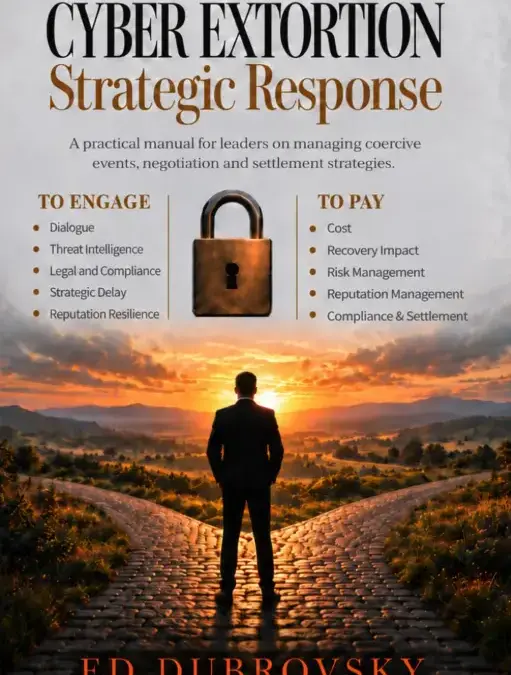
Adding a layer of professional irony to the criminal charges, Dubrovsky’s digital footprint includes his role as the author of a 252-page book titled Cyber Extortion Strategic Response. The publication’s promotional material promises to guide readers beyond the standard ransom note and into the critical decision-making processes that dictate how organizations respond to, recover from, and mitigate cyber extortion threats.
An excerpt from the book’s retail listing emphasizes a core strategic distinction that the author frequently championed: communicating with a cybercriminal is fundamentally distinct from negotiating a financial payment, and engaging in dialogue does not inherently constitute a commitment to pay ransom. The text notes that active engagement can serve alternative tactical objectives, including verifying the veracity of stolen data claims, gathering actionable intelligence, buying critical time, and preserving strategic options while an afflicted enterprise evaluates its next steps.
Despite his extensive published expertise in navigating cyber extortion crises, Dubrovsky could not be immediately reached for comment following his apprehension. Efforts by journalists to reach other executives at CyberSteward yielded no immediate statements. Available court documentation indicates that Dubrovsky has not yet retained private legal counsel, nor has the court formally appointed a public defender to represent him in the early stages of the federal proceedings.
The ShinyHunters hacking collective has established a notorious reputation within the global cybersecurity landscape by systematically employing aggressive phishing tactics and utilizing stolen credentials to siphon proprietary data from corporate accounts hosted by major software-as-a-service providers. Once the data is secured, the group routinely threatens to leak or publicly auction the sensitive information online unless exorbitant cryptocurrency ransom demands are satisfied. According to internal estimates provided by federal law enforcement, the syndicate has successfully extorted more than $70 million from corporate and institutional victims over the course of the year.

Law enforcement pressure on the group has intensified dramatically in recent weeks. Sources indicate that federal investigators have spent considerable time analyzing electronic devices and digital media seized by authorities last month. That seizure occurred when Dutch law enforcement officers apprehended Pepijn van der Stap, a reformed cybercriminal whose arrest was directly tied to the broader international investigation into the ShinyHunters network. Furthermore, sources suggest that federal charges against principals and executives at other specialized corporate entities that offer ransomware negotiation services may be forthcoming as the investigation widens.
The arrest of the Canadian cybersecurity executive follows a chaotic period for the hacking syndicate itself. Immediately following the apprehension of Van der Stap by European authorities, another prominent member of the ShinyHunters group operating under the online moniker "Rey" assumed operational control of the collective. Seeking to project defiance, Rey began publicly taunting the FBI on social media regarding a high-profile security breach in which the group successfully looted sensitive data from the agency’s own online recruitment portal. The stolen files reportedly contained detailed personnel records, including specific unit assignments, professional specializations, and confidential medical and psychiatric histories of prospective and current agents.
International investigative reporting revealed that the individual operating behind the alias Rey was a teenager named Saif Al-din Khader. Law enforcement agencies quickly tracked down the young hacker, detaining him and initiating a cooperative arrangement with federal investigators. Reporting detailed how Khader was apprehended just as the cybercrime unit attempted to execute an extortion campaign against a specialized digital aviation and navigation unit that had been divested by aerospace giant Boeing late last year.
As federal prosecutors in Texas begin to process the sprawling case against Dubrovsky and other figures linked to the cybercrime ecosystem, federal law enforcement officials maintain that the investigation remains active and fluid, with further developments expected as authorities continue to unravel the financial and operational networks underpinning modern ransomware extortion.