
The unprecedented global rush to fund artificial intelligence and build out massive data centre infrastructure has crossed a critical threshold, moving from a niche technological trend into a macroeconomic force of national and international significance. In a recent episode of the APNIC podcast PING, APNIC Chief Scientist Geoff Huston turned his analytical lens toward the massive capital allocation driving the AI boom, warning of substantial economic consequences, widespread supply chain disruptions, and systemic risks quietly embedded in everyday retirement savings.
Planned investments in artificial intelligence and the necessary data centre ecosystems are no longer measured in millions or even billions, but potentially in trillions of dollars on a global scale. According to Huston, this level of capital concentration is becoming large enough to skew national economies. While tech consumers are already acutely familiar with the immediate symptoms—such as soaring prices and severe supply constraints for graphics processing units, RAM, and high-performance storage devices—the broader economic footprint of the AI gold rush reaches far beyond the information technology sector.
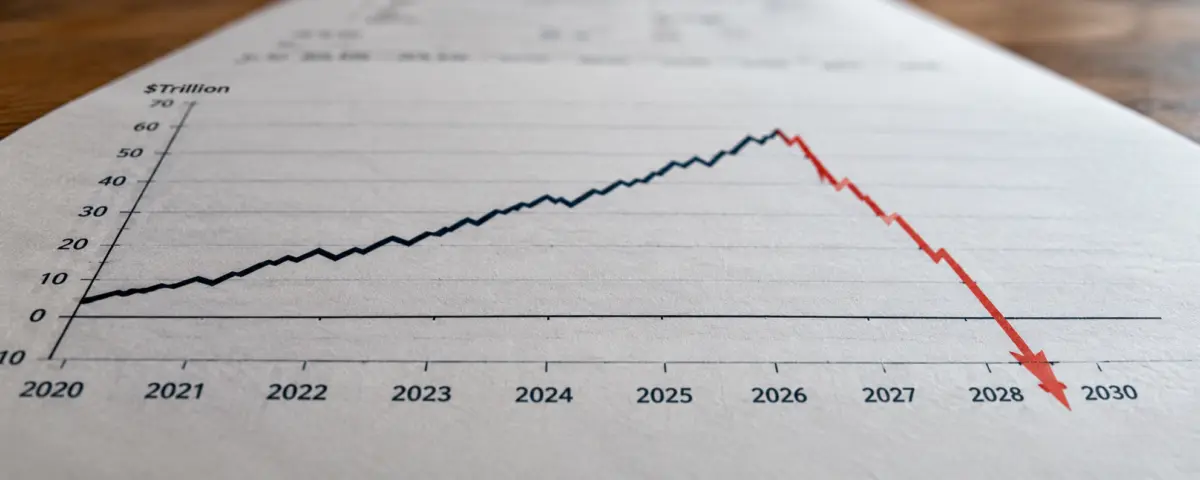
When speculative activity commands such an enormous share of total economic output and capital deployment, any subsequent market correction, slowdown, or sudden collapse poses a profound systemic danger. A sharp downturn could aggressively pull vital capital away from other productive, foundational sectors of the economy, leaving traditional industries starved for investment while technology markets lick their wounds.
The Anatomy of Risk and Unbacked Debt
Much of the current, high-speed momentum behind AI infrastructure investment is predicated on speculative expectations of future returns rather than immediate, guaranteed profitability. As a consequence, a substantial portion of these multi-billion-dollar investments carries an exceptionally high degree of financial risk.
There remains a distinct possibility that the projected returns from these massive computing deployments may never fully materialize. Yet, even if the software models fail to generate the anticipated revenues, the physical debt utilized to finance the construction of massive data centres will still exist. If individual projects or companies fail to weather the storm, investors will be forced to absorb the resulting losses.
In such scenarios, outstanding debt might eventually be recovered through fire sales of specialized assets at severely reduced prices, or the losses will be quietly distributed across the broad portfolios of those who financed the construction in the first place. For the average citizen, the most troubling aspect of this high-stakes financial gamble is that these critical investment decisions are predominantly made far removed from public oversight.
While individual risk tolerance varies wildly from person to person, the actual allocation of capital is driven by commercial banks, asset management firms, and massive institutional investors. These entities make the foundational choices that determine where retirement funds and public savings are ultimately directed.
Hidden Exposure in Global Pension Funds
Although these financial institutions can often feel distant and disconnected from daily life, their aggregate influence on national economies is staggering. Australia’s heavily regulated superannuation sector, for example, currently manages more than four trillion Australian dollars in retirement savings. This makes it the fourth-largest pension investment pool anywhere in the world, a remarkable feat for a nation with a population of only 27 million people.
![[Podcast] The (dismal) economics of AI | APNIC Blog](https://blog.apnic.net/wp-content/uploads/2026/10/Financial-Growth-Chart-Plunging-Downward.png)
Consequently, ordinary Australian workers may possess a much deeper exposure to the speculative risks of the AI boom than they realize. This structural vulnerability is by no means unique to Australia. The exact same systemic exposure applies directly to massive pension funds and retirement pools located in Canada, the United Kingdom, the European Union, and across various vibrant financial markets in Asia.
The issue is especially acute in the United States, where major artificial intelligence corporations and their primary suppliers have rapidly become deeply embedded, standard components of diversified investment portfolios, mutual funds, and passive index funds. Because these tech giants command such large weightings in major stock market indices, millions of workers holding standard retirement accounts are automatically tethered to the long-term financial health of the AI sector, whether they actively chose to invest in it or not.
Real-World Strains on Infrastructure and Supply Chains
The physical realities of the AI boom are exerting heavy pressures far beyond financial markets. Building and operating a modern, high-density AI data centre requires unprecedented capital investments in heavy construction, specialized power infrastructure, advanced cooling systems, and extensive supporting facilities. Because these data centre operators are backed by massive amounts of capital, they can compete aggressively for scarce labour, specialized engineering talent, and essential raw materials, routinely outbidding other sectors of the economy.
This aggressive competition is directly contributing to widespread supply chain constraints across civil engineering and industrial construction. The ripple effects are spilling over into unrelated construction activities, including commercial developments and the residential housing market, where builders struggle to secure necessary materials and skilled labor against deep-pocketed tech infrastructure developers.
Beyond construction sites, the escalating energy demands of these facilities are placing severe pressure on regional electricity transmission networks. The surging appetite for power is contributing directly to higher electricity costs for everyday households and local businesses. Furthermore, the sheer physical footprint of these data centres can profoundly alter surrounding communities, influencing local environmental amenity, water resources, and the long-term viability of rural and suburban areas as sustainable places to live and work.
As Huston notes, modern AI data centres have expanded in physical and electrical scale to such an unprecedented degree that, in places like the United States, two competing projects of similar magnitude often cannot even be supported within the exact same state. They must be deliberately segregated and located far apart to avoid completely overwhelming local utility grids and municipal power infrastructure.
Navigating an Unplanned Economic Shift
This complex scenario was never the result of a deliberate, coordinated global economic strategy or master plan. Instead, it has emerged with dizzying speed and continues to gather massive commercial momentum driven by competitive corporate pressures. The underlying challenge is inherently global, and as total investment continues to swell, anxieties regarding systemic risk exposure are steadily mounting, particularly as structural weaknesses and operational bottlenecks in current business models become more apparent.
Ultimately, the question of who will emerge as winners or losers extends far beyond individual artificial intelligence startups or specialized data centre operators. If the current capital investment boom proves to be structurally unsustainable, the resulting economic shockwaves will inevitably ripple outward, impacting everyday investors, consumers, and local communities long after the immediate technology frenzy has subsided.


Leave a Reply