
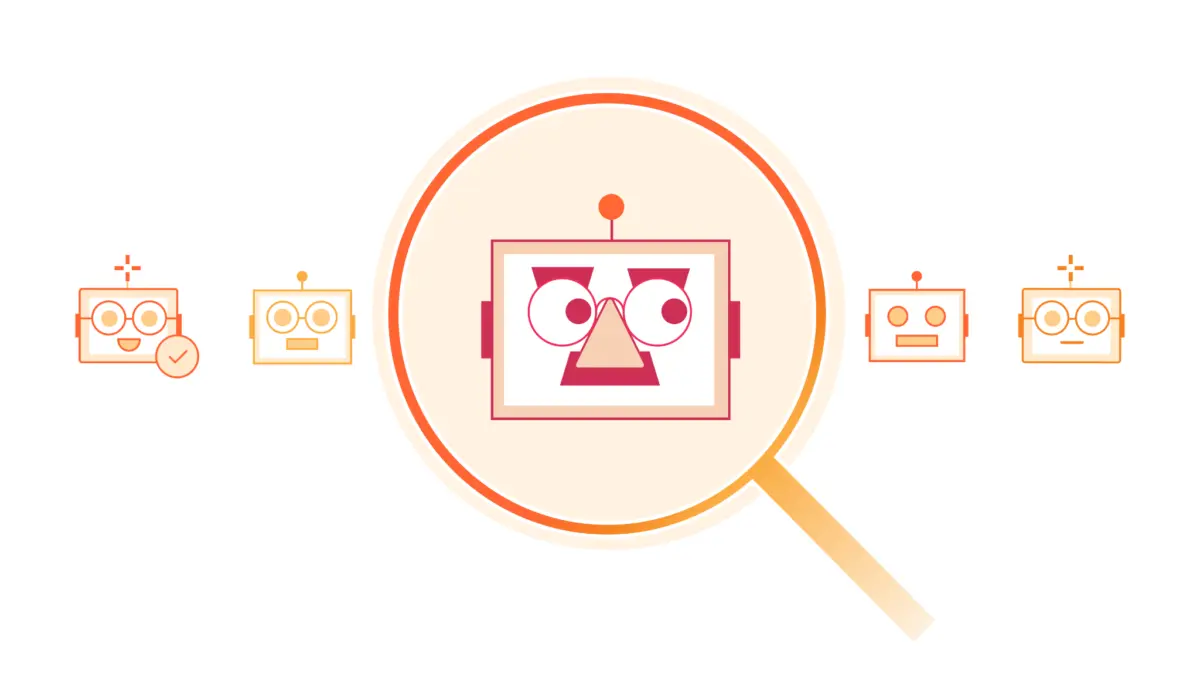
Just as possessing a valid driver’s license proves identity and basic competence rather than guaranteeing responsible driving habits on the road, verifying the digital identity of an automated bot only establishes who is operating it. It does not automatically ensure that the bot will behave responsibly over time. Recognizing this critical gap in internet infrastructure, Cloudflare has introduced a new evaluation and reporting system designed to track whether "Verified Bots" live up to their digital credentials, ensuring that identity is continually matched with trustworthy behavior.
In the modern digital landscape, knowing a bot’s identity is only half the battle. A known bot can still ignore a website’s expressed preferences, overwhelm origin servers, or attempt to evade traffic controls. While these infractions are not always malicious—frequently stemming from misconfigurations, software bugs, or poorly managed scripts—the impact on website owners remains disruptive. Cloudflare’s approach centers around two fundamental questions: "Are you who you say you are?" and "Can we trust you?" While mechanisms like Web Bot Auth and BotBase handle identification in an open format, the broader challenge has always been enforcing the second cardinal rule of automated traffic: doing no harm.
The distinction between risk and trust sits at the heart of Cloudflare’s updated framework. A high-profile example of this dynamic occurred in 2025, when Cloudflare de-listed Perplexity’s bot from its Verified Bot directory after the crawler attempted to access resources on websites that had explicitly opted out of scraping. When those initial requests were blocked, the bot subsequently attempted to circumvent established controls. Incidents like these underscore why static verification is no longer sufficient in an era dominated by heavy automated traffic and advanced AI agents.
Do Not Engage in Abusive Behavior
The baseline requirement for any automated system interacting with the web is remarkably straightforward: do not engage in abusive behavior. However, putting that principle into practice involves considerable nuance. When automated crawlers and agents ignore site preferences—such as requests to cease crawling or to slow down the rate of data collection—they directly undermine trust between website administrators and bot operators.
To address this, Cloudflare has developed a measurement system designed to quantify how consistently a crawler respects site preferences. Rather than issuing a permanent judgment about a bot or its operator, the system translates these ongoing observations into an explainable trust band. This sliding scale reflects how consistently a bot respects site policies and outlines the specific observed behaviors that informed the assessment. By evaluating common-sense rules that act as a basic courtesy to the content providers whose information bots seek, the system provides responsible operators with a concrete way to demonstrate that trust is being upheld over time. Cloudflare plans to publish these scores publicly on its Radar platform, expanding its measurement techniques as the digital ecosystem evolves. The guiding philosophy is simple: verify, but continuously re-verify.
When in Rome, Do as the Romans Do
The traditional standard for communicating site owner preferences has long been the robots.txt file, which outlines specific instructions regarding which parts of a website bots are permitted to access. Cloudflare’s evaluation system continuously analyzes whether an individual bot’s observed traffic remains consistent with these published preferences over time, aligning with the standards set forth in RFC 9309.

Isolated violations and one-off anomalies do not automatically trigger a negative assessment. Instead, the system looks for repeated patterns of behavior that disregard site preferences over an extended period. Furthermore, Cloudflare emphasizes that a robots.txt file establishes only the baseline rules of what bots should not do; it does not imply that any behavior not explicitly forbidden is automatically allowed. For instance, a robots.txt file is not required to state that a bot must stop crawling when a website communicates through other technical signals that continued access is unwelcome.
Beyond respecting path restrictions, automated agents must also be mindful of the operational strain they place on target servers. Even when bots remain entirely within allowed directory paths, high-frequency requests can place a substantial load on the websites they visit. One of the most common and direct mechanisms for a website to push back against excessive traffic is an HTTP 429 status code, which signals "Too Many Requests." This response serves as a direct instruction for the visitor to reduce its request rate, occasionally accompanied by guidance on how long to wait before attempting to reconnect.
Cloudflare’s system actively evaluates whether a bot’s traffic adapts appropriately after receiving this signal. Does the automated visitor slow down and pause its requests, or does it continue hammering the server at the exact same pace? Over time, this adaptive behavior is incorporated directly into the bot’s trust band. Consistently slowing down or pausing upon receiving rate-limit signals increases trust, while repeatedly ignoring the warning degrades it.
Building Trust Over Time
Observing these behavioral signals represents an essential first step toward making automated traffic fully accountable. By pairing verified bot identity with ongoing evidence of actual behavior, Cloudflare aims to provide website owners with greater confidence that permitted bots are respecting their boundaries. At the same time, it offers responsible bot operators a transparent mechanism to prove their reliability while giving site administrators vital context regarding the automated traffic reaching their infrastructure.
This evaluation capability integrates directly into a broader ecosystem alongside tools like Bot Preference Sync and Cloudflare’s existing Bot Management suite. Bot Preference Sync allows website owners to clearly publish their preferences, while observation systems determine whether Verified bots consistently honor them. Meanwhile, Bot Management empowers site administrators to decide precisely how that traffic is handled based on these insights. Together, these components form an accountability loop designed to ensure that trust is earned through transparent, predictable behavior rather than assumed purely on the basis of a verified digital identity.
Cloudflare is already utilizing this system internally to assess how consistently Verified bots honor website preferences. Because true trust takes time to establish, the company evaluates sustained behavioral patterns rather than reacting to isolated events. This initial phase is being used to build a reliable historical record and refine how raw observations are translated into actionable guidance. Building upon this foundation, Cloudflare plans to roll out the system to all customers, granting them the ability to choose the specific trust thresholds used to govern how Verified bot traffic is managed across their properties.
Customers looking to take immediate control of automated traffic can leverage Cloudflare’s existing Bot Management solutions and align their published preferences using Bot Preference Sync. Those interested in tracking the broader evolution of automated web agents can monitor trends and statistics through the Cloudflare Radar bot directory.

Leave a Reply