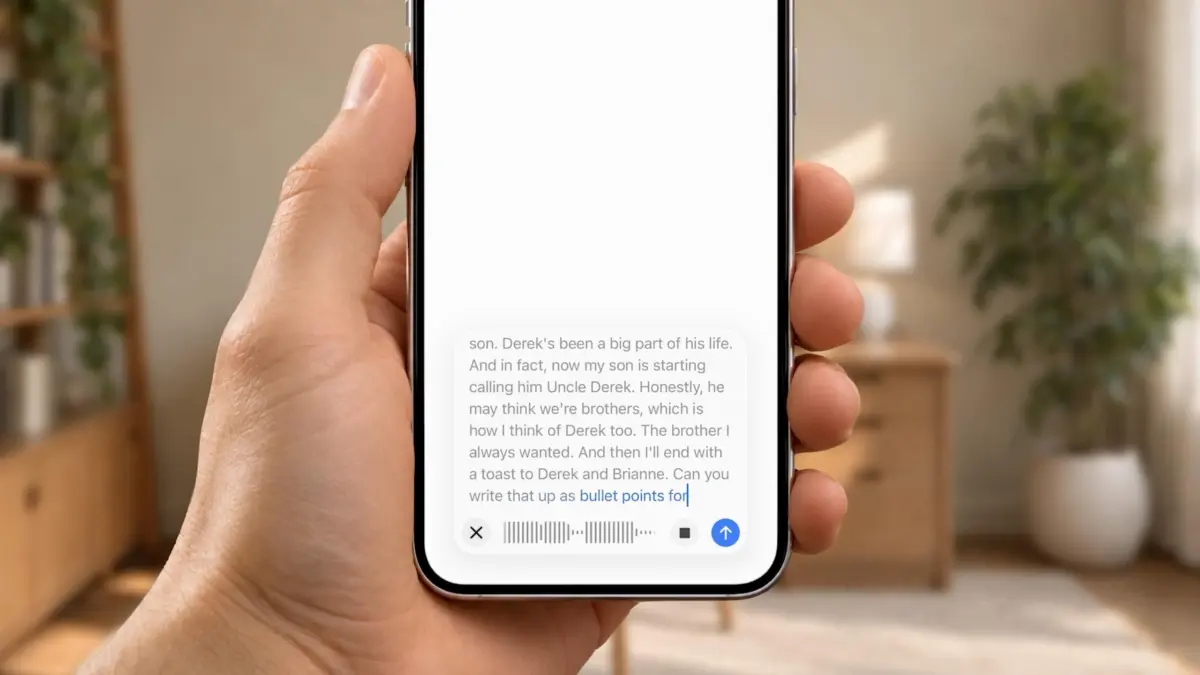
According to OpenAI, the Live Dictation feature is rolling out globally starting immediately. It is accessible across all ChatGPT subscription plans and is supported on multiple platforms, including the web interface, the dedicated desktop application, and the official mobile apps for both iOS and Android devices. This widespread availability ensures that the vast majority of ChatGPT users can immediately take advantage of the speed improvements, regardless of whether they are interacting with the AI from a smartphone on the go or a computer at a desk.
The mechanics of the new dictation tool are straightforward yet designed for transparency and control. While using dictation within ChatGPT, users can tap or click on the visible audio waveform to bring up a live text transcript that the artificial intelligence is generating in real time. This allows individuals to monitor what the system is capturing as they speak. Once the recording is complete and the user has finished talking, the transcribed text appears directly in the prompt box, where it can be reviewed and manually edited just like any standard text input before the message is finally submitted to the AI.
Alongside the introduction of real-time transcription, OpenAI has announced another major quality-of-life improvement for voice users: the complete removal of the previous 10-minute recording limit on voice dictation. By lifting this restriction, OpenAI is allowing users to dictate much longer passages, continuous thoughts, or extended reflections without having to worry about being cut off mid-sentence. Additionally, the company notes that the underlying dictation infrastructure is receiving general reliability enhancements to ensure more accurate transcriptions and fewer interruptions during use.

This latest update arrives on the heels of a broader push by OpenAI into voice and audio technologies. Earlier this year, the company introduced a major overhaul to ChatGPT’s two-way conversational voice mode, which dramatically improved the natural cadence, responsiveness, and expressiveness of spoken interactions with the AI. That upgrade allowed users to have fluid, back-and-forth verbal conversations with ChatGPT that felt closer to speaking with a human assistant than interacting with a traditional software program.
Furthermore, OpenAI previously introduced a dedicated record mode designed specifically for transcribing voice notes and meetings, signaling a deeper ambition to compete in the productivity and transcription software space. While that specific record mode remains in beta testing and is currently restricted to higher-tier workspaces—including ChatGPT Plus, Enterprise, Edu, Business, and Pro subscriptions—users have continued to find versatile ways to leverage voice features. Even without the beta record mode enabled on every tier, individuals can use the standard prompt box dictation feature to ask ChatGPT to process raw voice messages, clean up rambling thoughts, or condense spoken notes into organized bullet points.
As OpenAI continues to refine its ecosystem of consumer and enterprise tools, enhancements like Live Dictation and the removal of recording length caps demonstrate a clear focus on reducing friction in human-computer interaction. By making voice input faster, more reliable, and less restrictive, the company is bridging the gap between spoken language and digital processing, allowing users to communicate their ideas to artificial intelligence as naturally as they would to a person sitting across from them.