
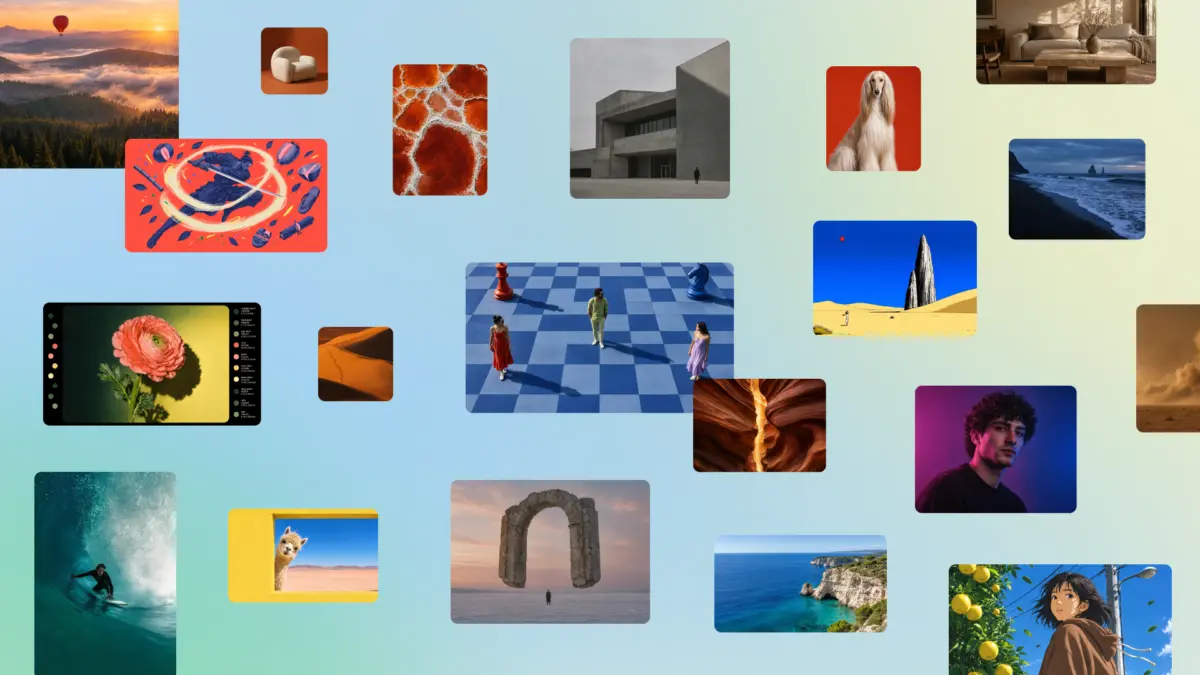
Popular visual design platform Canva is taking its artificial intelligence initiatives a step further with the launch of a brand-new image generation model designed to compete directly with offerings from industry heavyweights such as OpenAI, Microsoft, and Google. Announced on Thursday, the proprietary model is called Canva Craft and introduces a sophisticated two-stage architecture that fundamentally changes how digital graphics are created on the platform by allowing the system to plan a design before actually generating the final image.
According to the official announcement from the company, this innovative two-stage planning approach delivers greater precision, consistency, and control compared to traditional single-pass text-to-image generators. While conventional models often struggle with complex prompts, fine details, legible typography, and exact spatial arrangements, Canva Craft’s preliminary planning phase aims to overcome these historical hurdles, making it a powerful tool for professional designers, marketers, and casual creators alike.
The technical capabilities of Canva Craft position it as a versatile asset within the rapidly evolving generative AI landscape. The model is capable of producing high-definition images at up to 2K resolution while supporting more than 30 distinct aspect ratios. Beyond standard social media posts and digital marketing collateral, Canva envisions the tool being utilized to craft realistic photographic scenes, intricate digital art, expansive environmental imagery, and various other visual mediums. By separating the conceptualization phase from the rendering phase, the system can more accurately handle complex multi-element compositions that traditionally required tedious manual editing or advanced prompt engineering.
This major release builds directly upon Canva’s broader, aggressive push into artificial intelligence over the past year. In April, the platform rolled out advanced prompt-based editing capabilities that gave users the ability to create new elements or modify existing designs simply by describing the desired changes in natural language. Furthermore, the design software introduced innovative features like AI magic layers, which successfully brought layer-based editing workflows to AI-generated imagery. This functionality allows users to isolate and alter specific parts of an AI-generated image while leaving the rest of the composition completely untouched, bridging the gap between generative creation and traditional graphic design flexibility.
What sets Canva Craft apart from many competitors is the unique dataset used to train the model. Canva revealed that Craft was trained extensively on millions of human-made templates sourced directly from the platform’s expansive content library. Because this library encompasses a wide array of professionally designed assets—ranging from social media graphics and corporate presentations to detailed infographics and restaurant menus—the AI model has an intrinsic understanding of practical commercial design principles, typography placement, and layout balance.
The early performance of Canva Craft has already turned heads within the artificial intelligence community. The model currently holds the fourth position on Design Arena’s competitive leaderboard for the best AI image generation models, serving as a prominent crowdsourced benchmark for evaluating design-oriented artificial intelligence. On this leaderboard, Canva Craft sits closely behind formidable competitors, trailing only OpenAI’s GPT-Image-2.5 Sunburst, GPT-Image-2.5 Flare, and GPT-Image-2, demonstrating that Canva’s proprietary technology can hold its own against dedicated foundational models developed by premier AI research laboratories.
As generative AI continues to face scrutiny regarding safety, copyright, and ethical deployment, Canva has emphasized that its new model incorporates robust input and output moderation systems. The platform includes comprehensive privacy and safety controls alongside dedicated reporting tools designed to mitigate potential misuse. Looking toward the future, Canva has laid out an ambitious roadmap for the technology. The company intends to allow external AI agents to plug directly into Canva Craft through the open Model Context Protocol, an open standard for connecting AI models to external data sources and tools. Additionally, Canva plans to introduce more computationally efficient iterations of the technology, dubbed Craft-fast and Craft-ultrafast models, in subsequent updates to further streamline the creative workflow for its global user base.
Canva Craft is rolling out and is available now to all users globally. Creators looking to experiment with the new model can access it by navigating to the three-dot option located on Canva’s left-hand menu interface and subsequently selecting the Dream Lab option, marking a new chapter in how millions of people around the world generate visual content.


Leave a Reply