
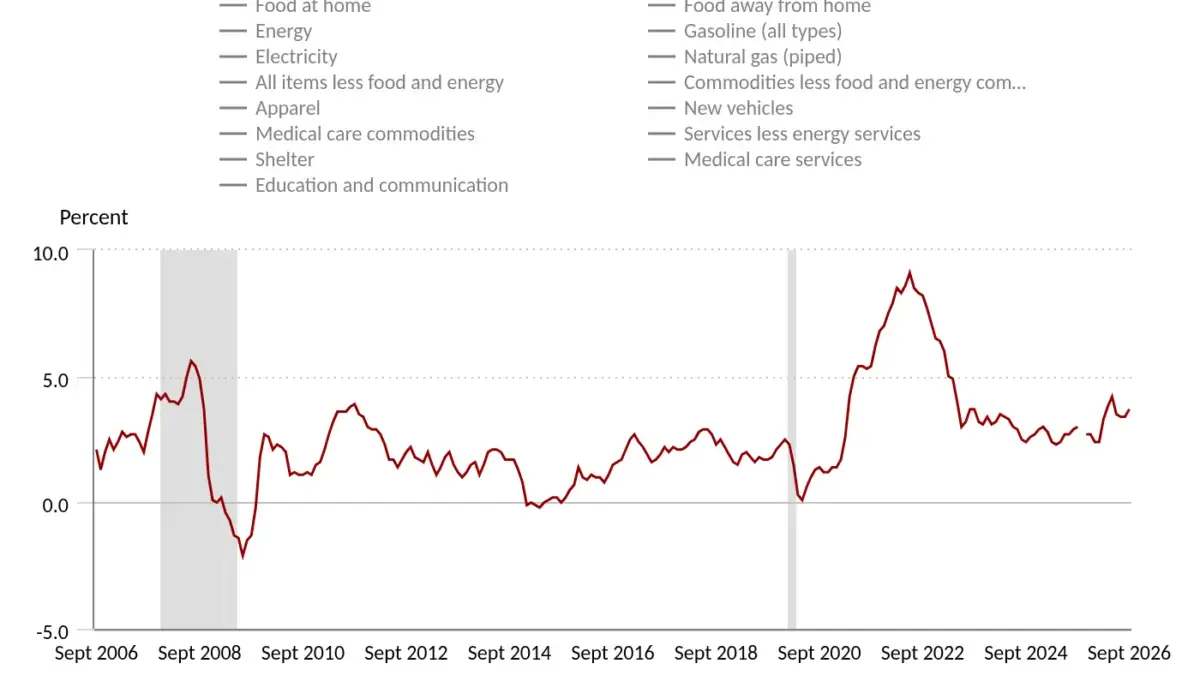
Bitcoin (BTC) dropped below the $82,000 threshold following Wednesday’s opening bell on Wall Street, reacting sharply to a US consumer inflation report that exceeded expectations across multiple categories.
Data compiled by TradingView captured an immediate downward wave across the broader financial landscape, pulling cryptocurrencies, precious metals, and stock-market futures lower within moments of the Consumer Price Index (CPI) release for September.
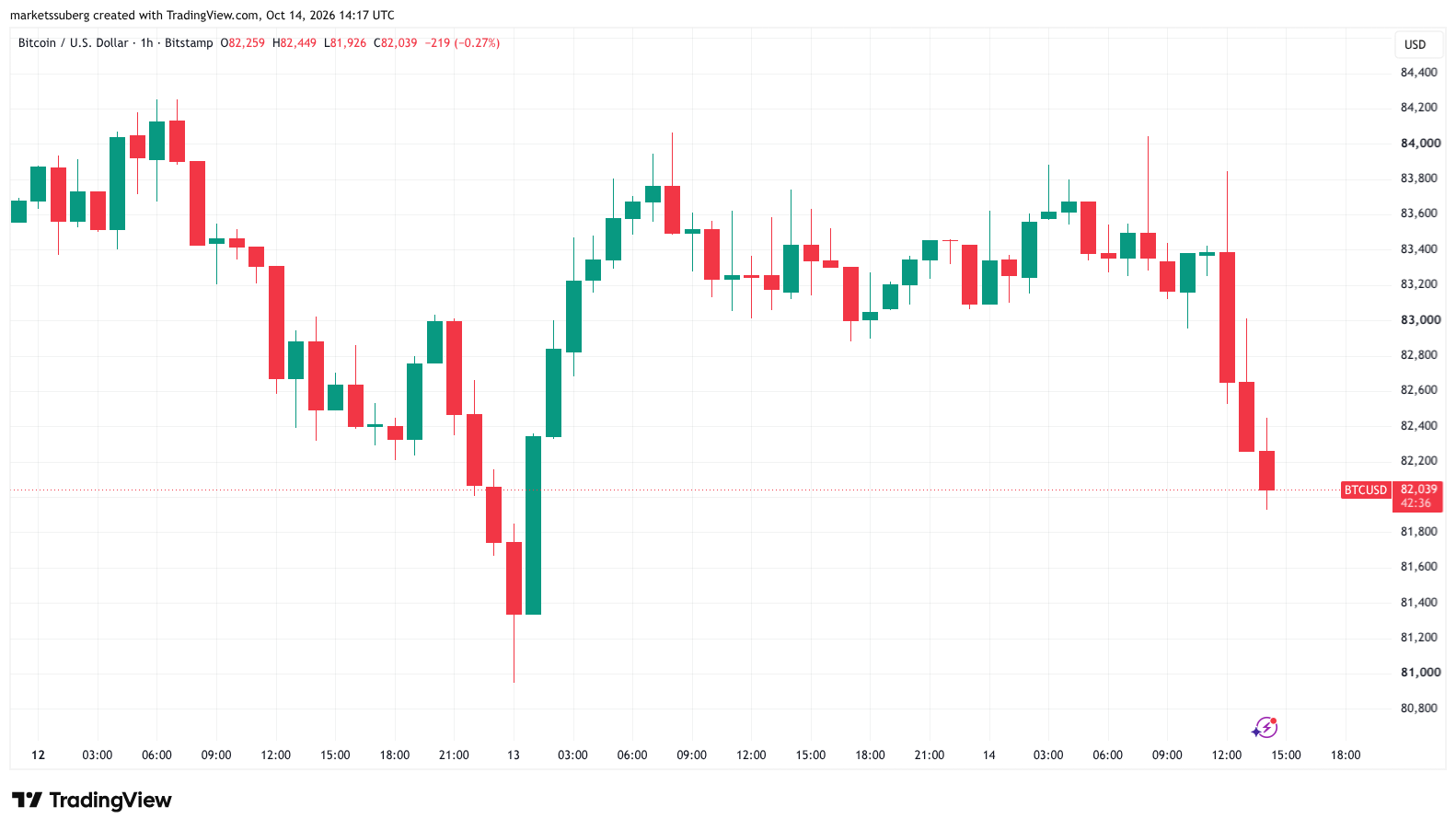
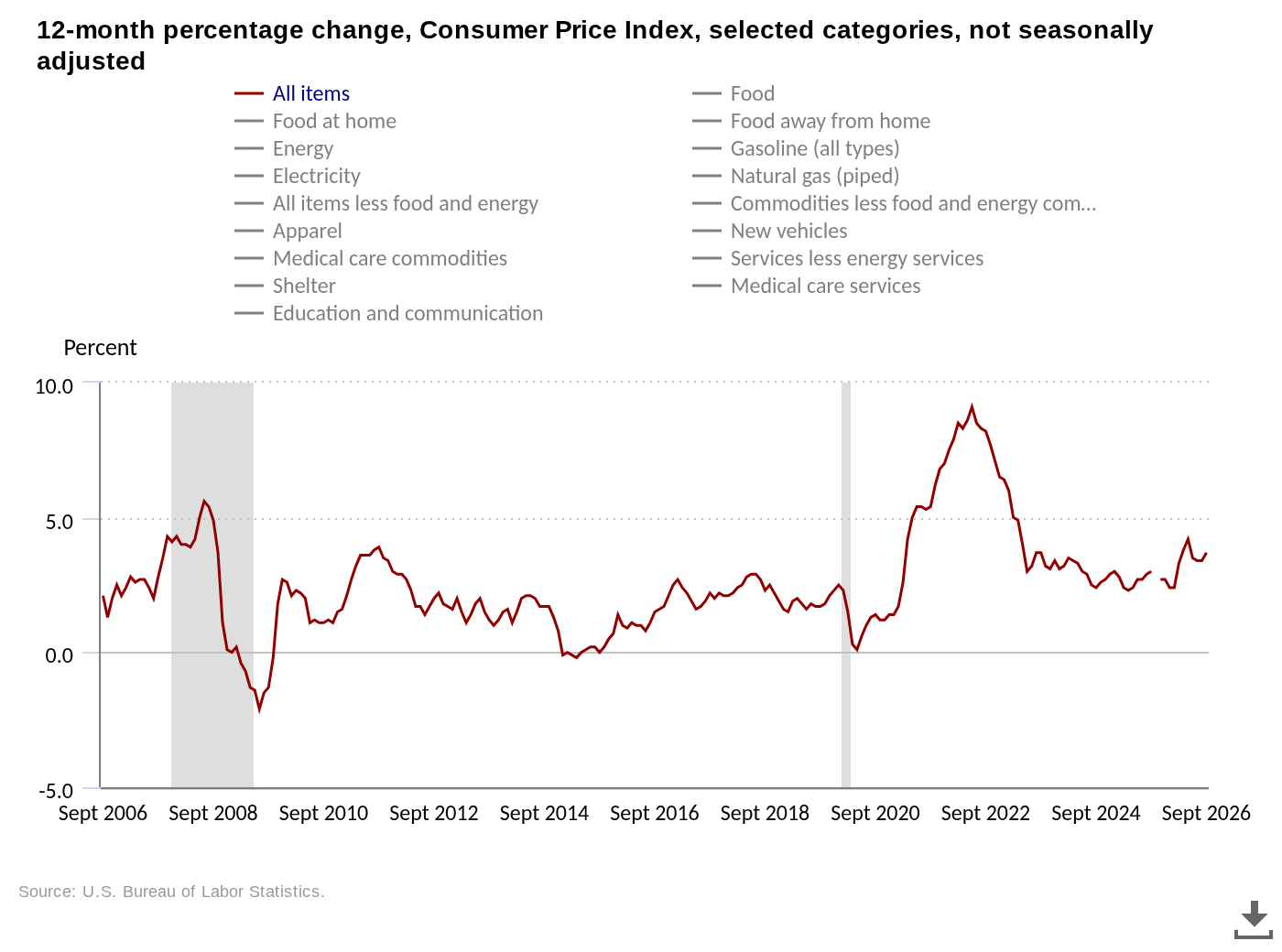
According to official figures confirmed by the Bureau of Labor Statistics (BLS), the headline inflation rate came in at 3.7% year-on-year. This reading outpaced the majority market consensus by 0.1 percentage points. A primary driver behind the acceleration was the conspicuous surge in fuel prices, heavily influenced by mounting geopolitical tensions in the Middle East and a concurrent oil-supply crisis.

"The index for gasoline rose 9.1 percent in September, accounting for over half of the monthly all items increase. The energy index increased 5.2 percent over the month following a 2.1-percent increase in August," an official BLS release stated, highlighting the vulnerability of consumer costs to energy market volatility.
The inflationary pressure, however, was not confined to the energy sector alone. Core CPI—a vital measure that strips out volatile food and energy prices—also printed 0.1% higher than anticipated, registering a 3.7% increase compared to the same period twelve months prior.
Reacting to the data, Sonu Varghese, chief macro strategist at Carson Group, pointed out that persistent inflationary pressures should arguably no longer catch investors by surprise. Speaking to CNBC, Varghese noted that the underlying momentum of broad-based price increases continues to catch markets off guard, while noting that secondary effects, such as higher diesel prices and the surging demand driven by the artificial intelligence boom, have yet to fully manifest in the data.
The higher-than-expected inflation metrics forced an immediate recalibration of market expectations regarding upcoming monetary policy decisions by the Federal Reserve. CME Group’s FedWatch Tool reflected a swift shift in trader sentiment following the BLS publication.
The majority of market participants adjusted their forecasts to favor a 25-basis-point interest-rate hike at the central bank’s upcoming policy meeting scheduled for October 28. The probability of this outcome spiked to 53.7%, a substantial leap from just 22.1% recorded the previous day. Furthermore, market pricing indicated a 50% probability of a second consecutive 25-basis-point rate hike hitting by December.
Theresa Sheehan, an economic analyst at Econoday, provided further perspective on the policy dilemma facing central bankers. Commenting on the broader economic picture, Sheehan noted that when these persistent inflation readings are taken in combination with softer payroll figures from the September employment report, the Federal Open Market Committee (FOMC) will likely remain on hold for any immediate rate movements during the October 27–28 meeting, though a distinct bias toward a December hike remains on the table.
As market participants digested the September figures, attention quickly turned to the pipeline of upcoming economic releases. Financial analysts and traders are now bracing for the release of the Producer Price Index (PPI) for September, which is scheduled to provide additional insight into wholesale inflationary pressures later in the week.
High CPI "Last Thing Global Bond Markets Needed"
The broader financial repercussions of the hot inflation report extended far beyond the digital asset ecosystem. Gold prices tumbled sharply, falling as low as $4,079 per ounce as the greenback and Treasury yields strengthened in tandem.
In the fixed-income market, US bond yields experienced a notable spike. The 10-year Treasury yield, which is traditionally highly sensitive to energy-price triggers and inflation expectations, climbed to 5.329%. This put the benchmark yield just three basis points away from establishing fresh 24-year highs, adding renewed stress to sovereign debt markets.
Prominent economist Robin Brooks did not mince words regarding the market reaction, taking to social media to express concern over the deteriorating debt market conditions. In a published note, Brooks wrote that the hot CPI print was quite literally the last thing global bond markets needed. Prior to the release, he observed, there were tentative signs that the global bond sell-off might be calming down, but the latest inflation numbers have effectively reignited the fire across bond markets.
Meanwhile, Bitcoin’s immediate price action remained constrained, hovering around a closely monitored technical area between $82,500 and $83,400. Technical analysts and market participants continue to watch these levels closely to determine whether the asset can successfully defend its current price band as a reliable macro support level or if further downside correction lies ahead in the wake of shifting macroeconomic conditions.


Leave a Reply