Bitcoin headed higher at Tuesday’s Wall Street open, showing resilience as a tech-stock rebound took shape under the shadow of mounting uncertainty surrounding the United States midterm elections. While broader financial markets wrestled with conflicting macroeconomic signals, shifting political landscapes, and fluctuating energy commodities, the leading cryptocurrency managed to steady its trajectory following a period of heightened local volatility.
BTC Price Volatility Cools as Stocks Rise
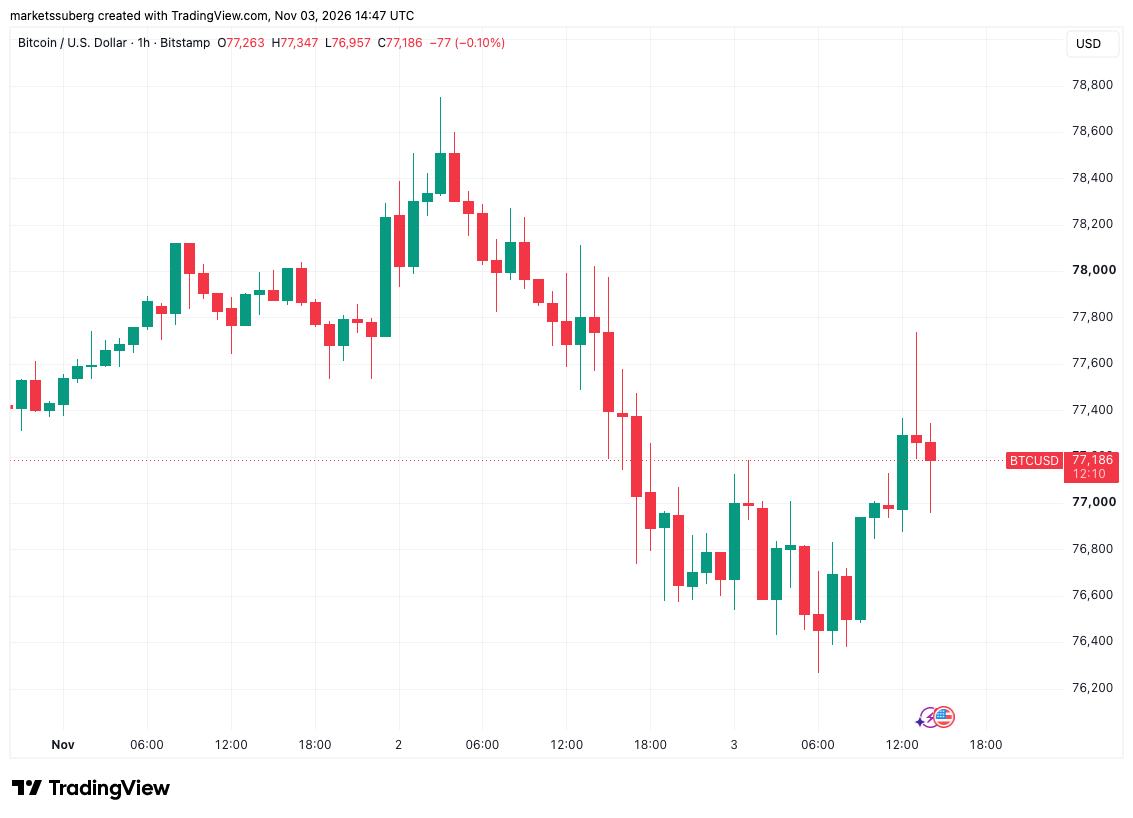
Data from TradingView showed the BTC/USD trading pair circling the $77,000 mark as trading commenced, continuing to retain local lows near $76,300 that were initially established late last week. The digital asset’s ability to hold these crucial levels offered a degree of relief to market participants following a challenging stretch that saw broader crypto and traditional asset correlations tested by macroeconomic headwinds.
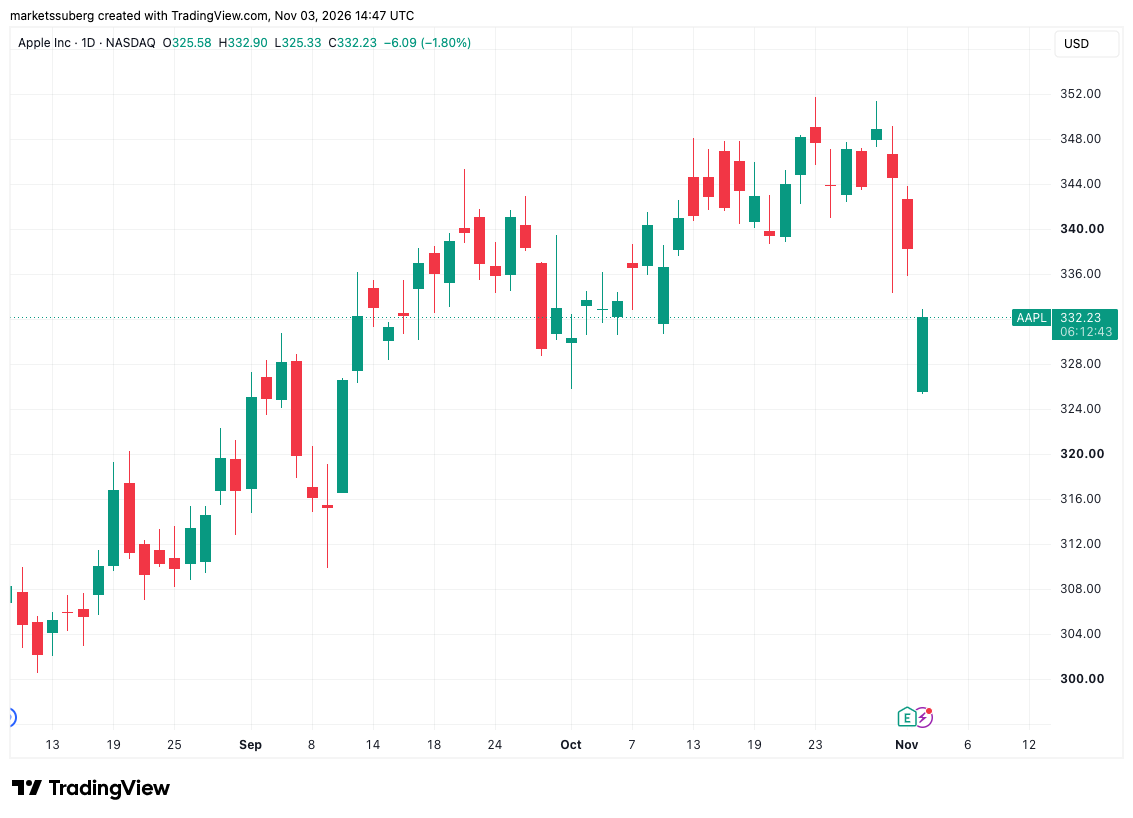
Traditional equities faced conflicting forces at the very start of the US trading session. Prominent mega-cap technology names, notably Apple, sought to pare losses after enduring a steep 4% drop in premarket trading. The downward pressure on Apple shares was triggered by the company’s forward-looking guidance, wherein it forecast gross margins of 45% to 46% for the upcoming December quarter. This projection marked a noticeable decline from the 47.9% gross margin reported in the previous quarter, with corporate leadership explicitly citing rising memory-chip costs as a primary driver of the margin compression.
Simultaneously, financial markets were forced to weigh the potential economic and regulatory impact of the US midterm elections on the shifting balance of power in Congress. Although early public opinion polls suggested the likelihood of significant Democratic gains, a number of political analysts and research institutions cautioned that the final election results could prove considerably less decisive than headline polling implied.
"Investors seem to have a significant dose of skepticism about whether the final outcome is going to be quite as favorable to Democrats as the polling suggests," Tobin Marcus, the head of US policy and politics at equity research company Wolfe Research, told CNBC. Wolfe added in its assessment that prevailing polls were "likely overstating Democratic strength," introducing a layer of unpredictability that financial institutions hate to price in.
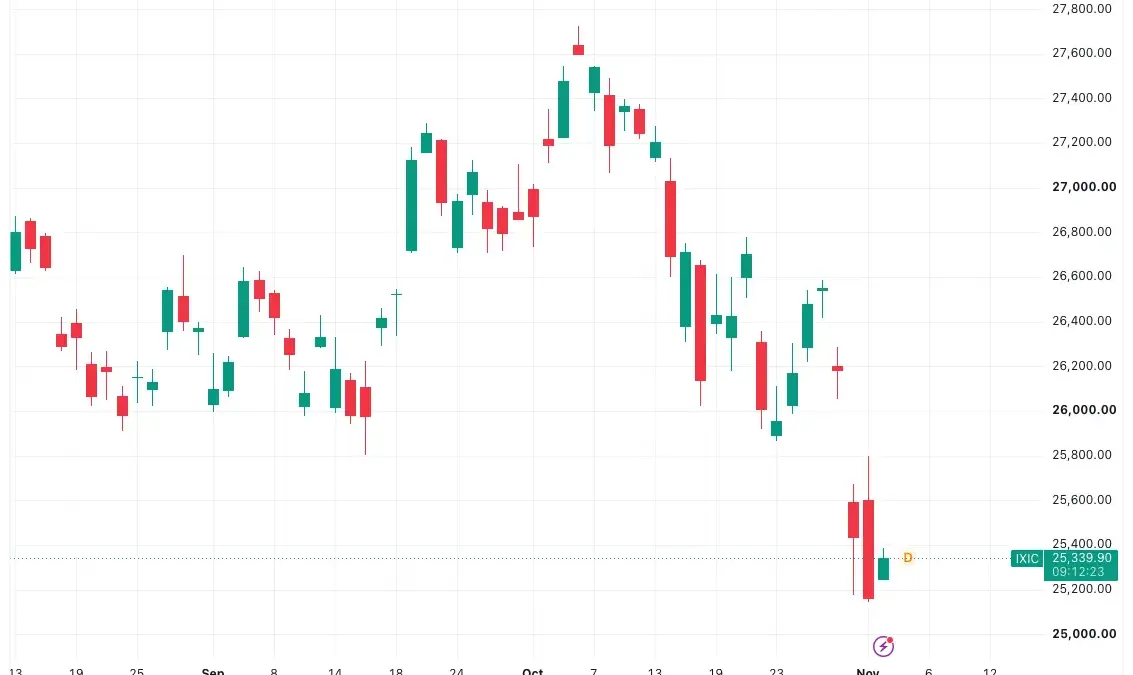
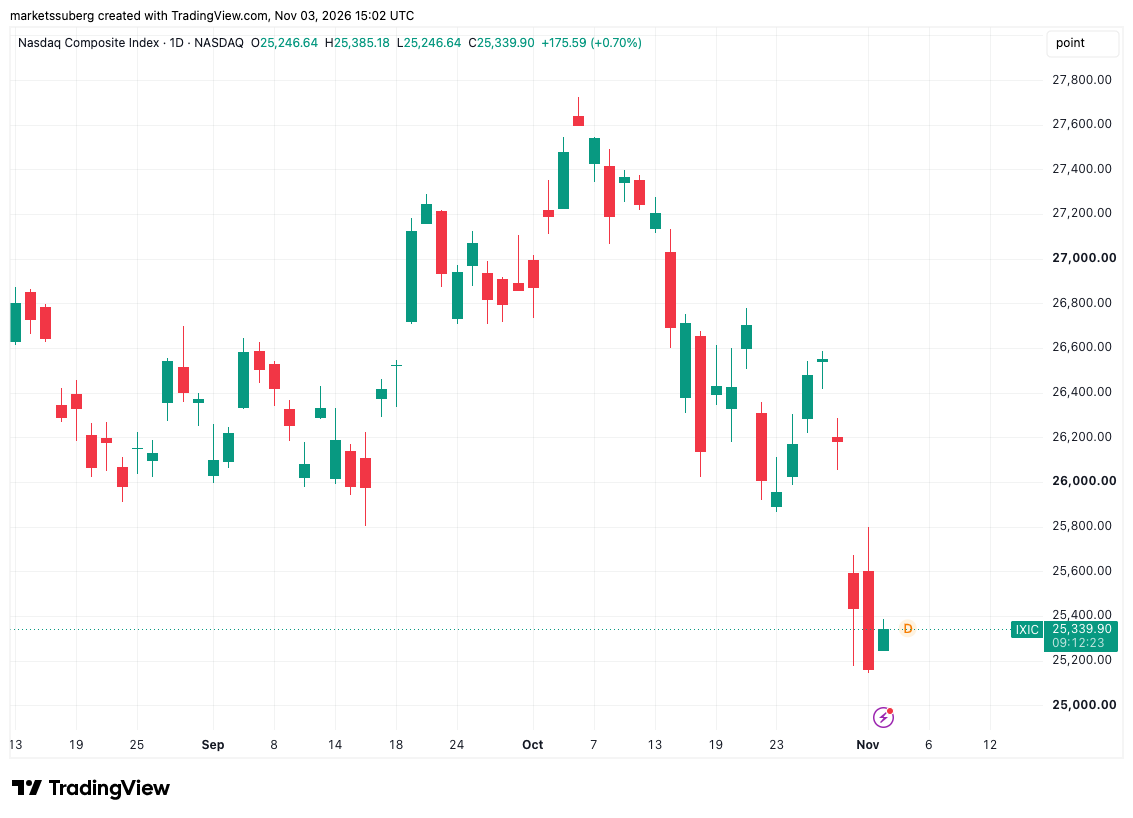
The broader stock market had already reflected this unease at the start of the week. Both the benchmark S&P 500 and the tech-heavy Nasdaq Composite Index finished Monday’s session down, registering losses of 0.5% and 1.1%, respectively. Analysts at the prominent trading resource The Kobeissi Letter argued forcefully that underlying US political uncertainty—rather than narrow concerns over artificial intelligence spending alone—was driving the persistent market weakness.
"The reality is that the market is pricing-in a major shift in the political landscape of the US," The Kobeissi Letter wrote in a commentary shared on the social media platform X.
The analytical breakdown suggested that a newly divided Congress could easily lead to frequent legislative impasses. Such political gridlock would naturally create operating conditions in which federal policy decisions and fiscal measures become markedly less predictable for corporate America and institutional investors alike.
"A change in the political landscape always comes with uncertainty; markets hate uncertainty," the commentary continued, emphasizing the gravity of the shifting political currents. "Objectively, the market is in the process of pricing-in two years of political gridlock."
This prevailing sentiment underscored why risk assets, including both equities and digital currencies, have been closely scrutinizing legislative dynamics alongside standard monetary policy updates from the Federal Reserve.
Oil Digests Latest Iran Strike After 7% Drop
Away from the equity and digital asset exchanges, the global commodities market was busy digesting major geopolitical developments in the Middle East. Oil prices managed to brush off a targeted US military strike on Iran’s Qeshm Island, a strategically vital military control outpost that oversees the critical Strait of Hormuz oil transit route.
The military action unfolded just days after US Secretary of State Marco Rubio publicly stated that President Donald Trump remained open to resolving the ongoing US-Iran conflict through diplomatic channels. Those diplomatic overtures and commentary had triggered a sharp, immediate response across global energy markets, culminating in a notable 7% drop in West Texas Intermediate (WTI) crude oil prices on Monday.
Following the initial shockwaves, WTI crude futures had initially spiked toward $98.80 per barrel before experiencing a sharp downward correction that carried prices below the $94 threshold by Tuesday. This movement pushed crude oil to its lowest valuation observed since October 15, demonstrating that energy traders were weighing the prospects of renewed diplomatic engagement just as heavily as localized military escalations in the Persian Gulf region.
As traders continued to parse the intersection of political gridlock in Washington, evolving corporate earnings realities, and volatile geopolitical flashpoints, Bitcoin’s ability to maintain its footing near the $77,000 threshold highlighted the complex interplay driving global market sentiment at the onset of November.