The cryptocurrency markets experienced a severe shock on Thursday as leading digital asset exchange Binance confirmed it was the target of a massive security breach, with total estimated impacts reaching an unprecedented $6.3 billion. The staggering figure instantly positions the incident among the largest cryptocurrency thefts in the history of the industry, sending immediate shockwaves through the broader digital asset economy.
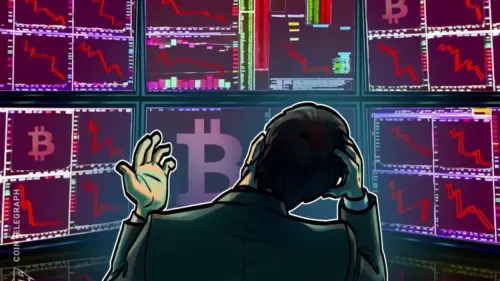
As news of the exploit broke across social media and financial tracking channels, market volatility intensified dramatically. Bitcoin, which had reached a robust 24-hour high of $81,890 earlier in the trading session, suffered a sharp and rapid selloff. Millions of dollars in leveraged long positions were systematically liquidated across major derivatives exchanges as panic gripped traders. The premier cryptocurrency initially plummeted to a low of $76,301 before stabilizing slightly to trade within the $76,300 to $77,800 range as market participants attempted to digest the rapidly evolving situation.
The emergency unfolded after onchain sleuths and vigilant community members noticed suspicious transaction patterns originating from official Binance wallets. More than $2.7 billion in digital assets—encompassing Ethereum and major stablecoins issued by prominent industry players like Tether and Circle—were observed moving abruptly from exchange reserves to unknown external accounts under highly irregular circumstances.
Initial Findings Point to Compromised DevOps Infrastructure
In an official statement published on the social media platform X, Binance management provided early insights into how the security perimeter was breached. According to the exchange’s preliminary forensic investigation, the attack vector is believed to have originated from a compromised laptop belonging to a DevOps engineer. The malicious actor reportedly leveraged this unauthorized access to infiltrate a service container, subsequently executing unauthorized withdrawal transactions that drained significant capital from the platform.
Crucially, Binance emphasized that its extensive internal audits and blockchain tracing have yielded no evidence whatsoever to suggest that wallet private keys were compromised during the incident. The breach appears to have exploited operational infrastructure rather than core cryptographic security keys.
The estimated total financial impact of the breach was revised upward as forensic teams gained deeper visibility into the scope of the exploit. While early industry estimates and initial reports pegged the stolen and moved assets between $2.7 billion and $5.8 billion, Binance’s updated figures place the total impact at approximately $6.3 billion.
Despite the sheer scale of the incident, exchange executives moved swiftly to reassure the global user base regarding the safety of customer assets. In their official communications, representatives confirmed that user funds remain secure and that the company will fully absorb all losses associated with the hack.
"The estimated total impact sits at around 6.3B. We have worked with blockchain partners to freeze affected assets, with ~3 billion frozen on-chain so far. Binance will cover all losses from the SAFU fund and the company’s funds. User funds are safe. We will also publish an updated Proof of Reserves once the remediation is complete," Binance stated publicly on X.
The Secure Asset Fund for Users (SAFU), an emergency insurance fund established by Binance to protect customer assets in extreme scenarios, alongside corporate capital reserves, will be utilized to cover the entirety of the shortfall. The exchange also committed to releasing an updated Proof of Reserves audit once the comprehensive remediation process has been successfully finalized.
Industry-Wide Collaboration and Swift Asset Freezes
The aftermath of the breach witnessed a coordinated, industry-wide response designed to thwart the attacker’s ability to liquidate or launder the stolen capital. Major stablecoin issuers and decentralized finance protocols mobilized rapidly upon detecting the anomalous fund movements.
Paolo Ardoino, CEO of Tether, announced that his company had successfully frozen more than 1.567 billion USDT connected to the suspected attacker addresses. Simultaneously, Circle intervened to freeze significant amounts of USDC tied to the illicit activity. These swift freezing mechanisms proved crucial in rendering a large portion of the stolen funds unusable for the perpetrator.
Blockchain analytics firms and layer-one partners collaborated closely with Binance security teams to track the flow of capital across various networks. According to official updates, approximately $3 billion of the affected assets have been successfully frozen directly on-chain through coordinated smart contract blacklisting and validator cooperation.
In the decentralized finance sector, protocols also took preemptive defensive measures. The popular lending market Aave reportedly froze specific lending pools to prevent the suspected attacker from leveraging the stolen tokens as collateral to borrow additional funds or execute complex debt-based exploits within the decentralized ecosystem.
Binance.US, the independently operated American affiliate of the global exchange, issued statements confirming that its platform, infrastructure, and user funds were entirely unaffected by the security breach impacting the international entity.
Binance Suspends Transactions and Revokes Authorization
In response to the unfolding emergency, Binance instituted immediate operational halts. Deposits and withdrawals across multiple networks were temporarily suspended while the exchange conducted exhaustive security sweeps, executed asset freezes, and coordinated directly with international law enforcement agencies.
Security engineers successfully revoked the authorization of the primary compromised addresses involved in the exploit. The exchange indicated that ongoing efforts are dedicated to confirming the definitive identities of the malicious actors behind the operation, though law enforcement investigations remain in their preliminary stages.
Prominent figures within the global cryptocurrency community weighed in on the crisis as it developed. Changpeng Zhao, the founder and former CEO of Binance, took to social media to voice his perspective on the emergency while reinforcing confidence in the platform’s financial resilience.
"User funds are safe! It does look like a hack on Binance. Appreciate the quick freeze from [Tether and Circle]. I don’t manage Binance (.com) anymore, but as a shareholder, I expect all user funds will be fully covered," Zhao tweeted during the height of the exploit.
Similarly, Binance co-founder Yi He addressed concerned users on X, reiterating that client capital faces no structural risk and affirming the leadership team’s absolute commitment to covering every dollar lost through company reserves and the SAFU mechanism.
As the situation remains fluid, Binance has not yet established a definitive timeline for the release of a comprehensive technical post-mortem report. Company representatives have stressed that a meticulous investigation must be completed and all operational facts fully verified before a detailed breakdown is published. In the interim, exchange officials have strongly urged users and market observers to rely exclusively on official Binance communication channels for verified updates, warning against unverified rumors and speculative reports circulating across social media platforms.