
Purchasing a physical book for an avid reader is notoriously fraught with subtle emotional hazards. Even when armed with good intentions, gift-givers face a minefield of potential pitfalls. Has the recipient already read the title? Will the narrative suit their precise taste, or will the choice feel misaligned with their literary interests? Is there a risk of quiet disappointment if a cherished personal favorite is gifted, only to collect dust indefinitely on a bedside table?
For those shopping for readers who have embraced digital formats—whether through an Amazon Kindle, a Kobo, or an open-ecosystem Android device—the gifting dynamic changes entirely. Gifting within the e-reading space shifts the focus from literary guessing games to practical enhancements. Instead of chancing a specific novel, selecting hardware novelties, ergonomic upgrades, and customized peripheral accessories offers a thoughtful way to elevate an individual’s daily reading habit.
As digital reading hardware evolves beyond basic monochrome displays, a distinct ecosystem of specialized devices and comfort-focused accessories has emerged. From pocket-sized secondary displays to hands-free page turners, the current market offers numerous ways to enhance the e-reading experience.
A Truly Pocketable Travel E-Reader: The Xteink X4 Pro
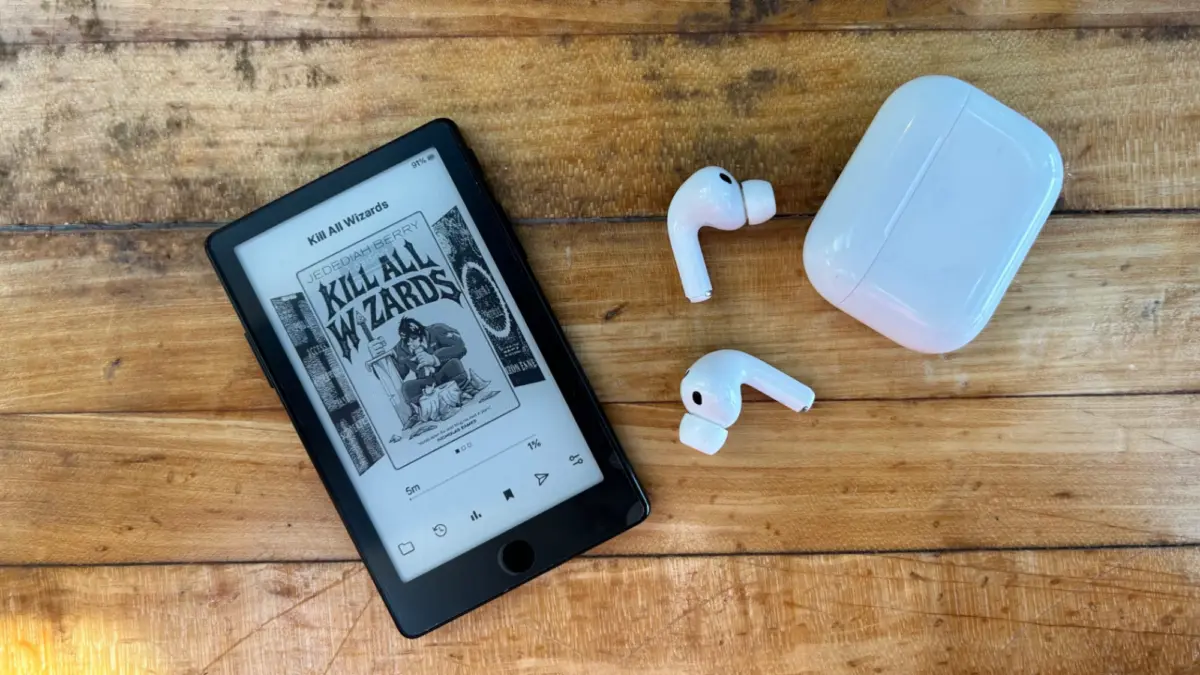
While many dedicated readers already own a primary desktop or bedside device like a Kindle Paperwhite or Kobo Libra, there is an increasingly popular niche for secondary, ultra-portable e-readers designed strictly for mobility. Retailing at $99, the Xteink X4 Pro has captured significant attention across online reading communities, viral TikTok clips, and hardware forums on Reddit. Manufactured by an emerging Chinese technology startup, the pocket-sized device addresses a persistent dilemma for readers on the go: how to carry a dedicated e-ink screen without needing a bag or large jacket pocket.
Measuring small enough to fit comfortably within a palm, the single-purpose e-ink screen is engineered to disappear effortlessly into standard pant pockets or small pouches. Promotional materials even demonstrate the hardware magnetically tethered to the rear casing of a standard smartphone, emphasizing its role as a constant companion.
The X4 Pro represents a noticeable technical evolution over its predecessor, which faced criticism for an unrefined user interface and cumbersome navigation. The updated iteration resolves early performance bottlenecks by introducing a faster processor, expanded RAM, an integrated front light for low-light environments, and a fully responsive touchscreen interface. While its diminutive screen size prevents it from replacing a standard 6- to 7-inch device for extended evening reading sessions at home, its port-friendly design makes it a highly functional secondary option for commutes, travel, and impromptu reading moments throughout the day.

An E-Reader That Can Curb Any Smartphone Addiction: The Boox Palma 2 Pro
At the higher end of the specialized hardware spectrum lies the Boox Palma 2 Pro, priced at $399.99. Positioned as a premium hybrid device, the Palma 2 Pro belongs to a category of smartphone-shaped e-readers created to address digital fatigue and smartphone overuse. By replicating the physical form factor of a modern mobile phone while swapping out bright, radiant screens for eye-friendly electronic paper, the device offers a dedicated alternative to impulsive social media browsing and doomscrolling.
Equipped with a 6.13-inch color e-ink display, the Palma 2 Pro runs on a complete, open Android operating system. Unlike closed environments that tie users to a single digital storefront, this open architecture allows direct access to the Google Play Store. Users can install and sync virtually any reading application, including Kindle, Barnes & Noble Nook, Kobo, Libby, or Pocket, consolidating fragmented digital libraries into a single handheld device.
Beyond basic book consumption, the hardware offers features typically reserved for small tablets. It supports mobile SIM connectivity for data access on the move and offers stylus compatibility for precise digital note-taking, highlighting, and light productivity work. The key benefit remains its screen technology: by utilizing reflective e-paper rather than backlit OLED or LCD panels, the device reduces visual strain during prolonged use while offering a significantly less distracting interface than a conventional smartphone.
A Remote Page Turner: The Boox Tappy
Traditional e-reader interaction relies almost entirely on physical inputs—either depressing side-mounted buttons or tapping directly on the optical touch matrix of the screen. While functional, this requirement forces the reader to maintain direct physical contact with the device casing at all times. Bluetooth page-turning remotes eliminate this requirement, allowing readers to advance text wirelessly from a distance.
Accessories such as the Boox Tappy ($30) provide tangible ergonomic benefits. For individuals living with motor control challenges, arthritis, or repetitive strain injuries, eliminating the need to pinch or hold a tablet casing offers immediate physical relief. However, the appeal of wireless page turners extends well into casual everyday use. Paired with a tablet stand, a remote allows readers to keep their hands resting under warm blankets in cold environments, maintain comfortable posture while sitting, or enjoy snacks without transferring oils or residue onto the display surface.
However, hardware compatibility remains a critical factor when choosing a page-turning accessory. Amazon’s proprietary Kindle operating system does not support standard third-party Bluetooth page-turning remotes. The Boox Tappy and similar Bluetooth controllers function seamlessly across open Android e-readers—such as the Boox Go 6—as well as Bluetooth-enabled Kobo devices like the Clara Colour. For users who rely exclusively on Amazon Kindle hardware, page-turning functionality requires an alternative accessory type: a radio-frequency (RF) remote system that utilizes a physical, motorized clip attached directly to the edge of the screen to simulate a physical touch.

A Pillow Stand That Doubles as a Snack Bowl: The SupeDesk Tablet Pillow Stand
To maximize the utility of a remote page turner, combining the wireless clicker with a stable, hands-free mounting platform creates a fully automated reading layout. While industrial metal stands featuring articulating goosenecks offer rigid positioning, soft-foam pillow mounts provide a far cozier alternative for bed or couch use.
Priced around $45, the SupeDesk Tablet Pillow Stand combines functional tablet support with casual lounging features. Covered in a soft plush fabric, the stand features an adjustable angled tray capable of holding various hardware sizes, from compact 6-inch e-readers to full-sized 11-inch tablets.
In addition to its primary structural role, the pillow stand features a recessed central compartment engineered to function as an integrated snack bowl or storage pocket for remotes, reading glasses, and cables. By holding the weight of the device securely across uneven surfaces like lap blankets, cushions, or mattress tops, the stand allows users to maintain an upright, strain-free viewing angle during long reading marathons.
A Strap to Make Long Reading Sessions More Comfortable: The Strapsicle
Although modern electronic readers are manufactured using lightweight plastics and slim lithium batteries, holding a rigid flat rectangular object in a fixed position for hours inevitably induces finger and wrist fatigue. The physical tension required to balance a sleek device can interrupt an otherwise immersive reading experience.
To mitigate hand strain without adding significant weight or bulk, elastic and silicone hand straps offer a minimalist solution. The Strapsicle ($20) utilizes high-grade silicone bands that stretch diagonally across the top and bottom corners of an e-reader’s outer bezel. By creating a secure physical harness over the back of the hand, the device stays attached to the palm without requiring a active grip.
This tension-based design allows the user’s hand and fingers to remain completely relaxed, dramatically reducing grip strain during extended sessions. The Strapsicle is precision-molded to fit specific generations of Amazon Kindle and Kobo hardware, ensuring that the mounting bands do not obscure visible screen text or obstruct power buttons. For non-standard device dimensions or older legacy hardware, universal fabric and elastic alternatives operate on similar mechanical principles.

An Easily Personalized Case: CoBak Clear Plastic Case With Magnetic Ring
Selecting a pre-patterned or graphic protective case for someone else can be challenging, as personal aesthetic preferences vary widely. A practical solution gaining popularity among e-reader enthusiasts is the clear protective shell, which provides drop protection while acting as a blank canvas for personal customization.
Transparent cases, such as the seven-inch compatible clear shell from CoBak, feature durable shock-absorbing corners paired with a fully transparent back plate. Readers frequently customize these clear cases by slipping personal photos, printed art cards, or stickers between the reader’s back panel and the inner surface of the case. Because the decorative elements are held in place by compression rather than adhesive, users can rearrange or swap their custom designs at any time without leaving sticky residue on their hardware.
Additionally, modern iterations of these clear cases incorporate an embedded metallic or magnetic ring aligned with the back panel. This inclusion brings MagSafe-style accessory compatibility to e-readers. By pairing a magnetically enabled clear case with a pop-out magnetic grip—such as a PopSocket kickstand grip ($14)—users gain both a secure finger hold for one-handed reading and an instant kickstand for resting the device horizontally on flat surfaces.


Leave a Reply