Smartphone screen sizes have steadily expanded over the past decade, turning what were once compact handheld communications devices into pocket-sized media slates. Today, multi-inch phablets dominate consumer electronics shelves. Industry leaders have largely standardized displays around six inches or larger, catering to a market optimized for video streaming, high-frame-rate mobile gaming, and intensive multitasking. Even Apple, long considered a holdout for ergonomic form factors, has effectively scaled up its baseline lineup. The smallest mainstream smartphone in Apple’s current ecosystem features a 6.1-inch display, a noticeable departure from the 5.4-inch screen offered by the now-discontinued iPhone mini series.
While hardware manufacturers have gravitated toward massive screens, a persistent segment of smartphone users remains underserved. For these consumers, the priority is not immersive media consumption, but comfort, true single-handed operation, and portability. The enthusiasm surrounding the small smartphone form factor did not disappear when major brand pipelines dried up. Many users continue to hold onto aging hardware simply because modern alternatives do not fit comfortably in a hand or pocket.
Recognizing this market vacuum, a new hardware initiative called the "Enough Phone" has emerged with a focused proposition: to design and ship a compact, fully featured smartphone built around the principle of offering just enough device without unnecessary physical scale.
The Vanishing Market for Compact Smartphones
The industry-wide shift toward larger displays left many enthusiasts of small form factors with few options. When Apple introduced the iPhone 12 mini and followed it with the iPhone 13 mini, it briefly answered the call of users demanding high-end internal components packed into a chassis measuring just 5.18 by 2.53 inches with a thickness of 0.3 inches. However, mass-market sales volume ultimately drove corporate strategy away from the "mini" format, leading major manufacturers to consolidate around larger footprints.
Despite the commercial pivot by mainstream original equipment manufacturers (OEMs), demand for compact mobile hardware has endured in niche communities. Users who prefer smaller phones often cite physical ergonomics, reduced pocket bulk, and a desire to minimize screen-induced distraction as primary reasons for avoiding giant display panels.
For dedicated Apple customers who prefer small devices, the current landscape offers limited paths forward. Users must either stick with older hardware like a refurbished iPhone 13 mini—accepting the reality that software updates and long-term OS support will eventually sunset—or transition to larger baseline models such as the iPhone 17e. While older compact iPhones continue to run current operating systems, they lack the hardware support needed for modern system capabilities, and their long-term lifecycle remains inherently capped as future updates loom.
This structural gap in the market has created an opportunity for independent hardware developers. The Enough Phone enters this environment not as an attempt to compete directly with flagship devices on raw display area, but as an alternative designed specifically for users seeking smaller dimensions without falling back on severely underpowered components.
Enough Phone Specs: A Small Footprint with Modern Hardware
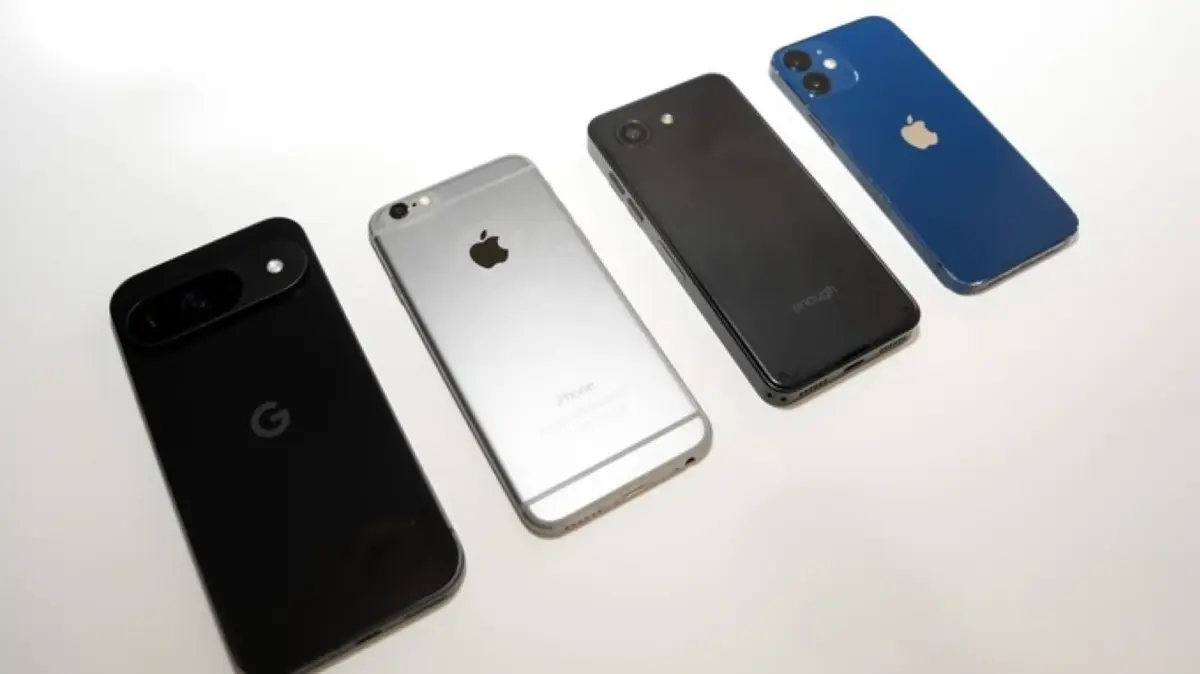
The primary drawing card of the Enough Phone is its physical footprint. Engineered specifically for single-handed usability, the device measures 133mm in height by 64mm in width, with a total thickness under 12mm. Translated to imperial measurements, that equals approximately 5.24 inches by 2.52 inches, with a depth of under 0.47 inches.

This sizing places the Enough Phone in direct proximity to the dimensions of the classic iPhone 13 mini. While the Enough Phone carries a slightly thicker profile—measuring just under 0.47 inches compared to the iPhone 13 mini’s 0.3 inches—the overall height and width closely match the classic "mini" baseline that compact phone enthusiasts favor.
To accommodate this footprint, the device centers around a 5.3-inch display panel. The screen operates at a resolution of 1520 x 720 pixels. While this resolution is lower than the 2340 x 1080 panel found on legacy devices like the iPhone 13 mini, the compromise is intended to align with the core philosophy of the hardware. The target audience for a compact, intentional smartphone is typically less focused on dense pixel counts for media playback and more focused on functional clarity, battery efficiency, and form factor.
Underneath the exterior, the Enough Phone incorporates a functional hardware package intended to handle contemporary mobile workloads:
- Processor: Powered by a 2.4GHz MediaTek Dimensity 7500 system-on-chip, providing modern processing capabilities and integrated 5G networking.
- Memory & Storage: Equipped with 8GB of RAM paired with 128GB of internal flash storage.
- Expandable Memory: Includes a microSD card slot for expandable storage—a legacy feature largely phased out by major mainstream smartphone manufacturers.
- Camera System: Features a single 50MP Sony IMX766 primary sensor on the rear cover. The front of the phone houses a 32MP selfie camera, placing its front-facing sensor resolution among the higher tiers available in standard smartphone designs.
- Connectivity: Supports 5G cellular networks, Wi-Fi 6 wireless standards, and offers dual-SIM functionality via eSIM and a physical SIM card slot.
In addition to core performance hardware, the developers of the Enough Phone have placed an emphasis on long-term sustainability and repairability. While major mobile OEMs have made gradual adjustments to serviceability, modern smartphones remain notoriously difficult for end users to disassemble and maintain.
The Enough Phone diverges from standard unibody construction by utilizing accessible casing screws that allow straightforward disassembly. It features a user-replaceable 3,500 mAh battery, enabling owners to swap out degrading power cells over time rather than replacing the entire device. Coupled with a planned software support window extending through 2032, the manufacturers are positioning the phone as a long-term device meant to operate functionally well into the next decade.
Even small auditory design elements have been given attention: the company commissioned composer Brian Squillance of LAANDS to author dedicated original ringtones and notification jingles for the device, providing a distinct identity out of the box.
Because the Enough Phone remains in the prototype stage of development, the engineering team notes that final hardware specifications and exact component choices may undergo minor revisions during real-world testing prior to full manufacturing.
Software Versatility: Android 17 vs. De-Googled OdysseyOS
Operating system compatibility represents a critical factor for any device aiming to bridge the gap left by major manufacturers. Because Apple’s iOS remains strictly locked to proprietary hardware, third-party projects like the Enough Phone cannot native-boot Apple’s platform. However, the Enough Phone addresses user software preferences by offering choice at the operating system level.

Buyers will have the option to order the device pre-loaded with standard Android 17, providing access to mainstream mobile application ecosystems, contemporary background service frameworks, and familiar interface navigation.
Alternatively, for users seeking to reduce digital distraction or enhance data privacy, the device can be configured with OdysseyOS. Developed by SLEKE, OdysseyOS is a minimalist, "de-Googled" operating system engineered specifically for intentional phone use. By removing background tracking services, heavy application frameworks, and engagement-driven notification loops, OdysseyOS effectively transforms the hardware into a hybrid between a modern connected device and a traditional "dumb phone."
This dual-OS strategy allows the Enough Phone to target two distinct groups: software-agnostic users who simply want a small physical device running standard modern apps, and digital-wellness advocates who prefer a streamlined, non-intrusive mobile interface.
Crowdfunding Tiers, Pricing, and Launch Roadmap
To bring the device from functional prototype to full-scale production, the team behind the Enough Phone launched a crowdfunding campaign on Kickstarter.
Early interest in the project quickly exhausted the initial funding tiers. The campaign’s "Super Early Bird" tier, priced at $399, sold out rapidly following launch. However, backing options remain available through the "Early Bird" tier at $449.
The $449 reward package includes:
- The Enough Phone handset
- A pre-installed glass screen protector
- A protective outer case
- A USB-C charging cable
- A USB-C to 3.5mm headphone jack adapter
- A dedicated hex screwdriver for hardware disassembly
- Green "Founders’ Edition" backplate screws
Following the conclusion of the crowdfunding campaign and the fulfillment of initial backer orders, the company anticipates setting the standard retail price for the Enough Phone at $599. Backers participating in the active Kickstarter campaign receive a $150 discount off the proposed retail baseline.
According to the manufacturer’s project timeline, the Enough Phone is targeted for official release and shipment to backers in May 2027. If successful, the device will provide a dedicated alternative for consumers who have long resisted the industry-wide expansion of smartphone display sizes.