
The unprecedented surge in global artificial intelligence (AI) investment and the parallel race to build out massive data centre infrastructure is drawing heightened scrutiny from economic and technical analysts. In the latest episode of the APNIC podcast PING, Chief Scientist Geoff Huston takes a critical look at the economic ramifications of this historic capital allocation, warning that the scale of the spending has evolved from a niche technology trend into a macroeconomic force with far-reaching consequences.
Planned investments targeting AI capabilities and their supporting data centre facilities are routinely measured in the hundreds of billions of dollars, with cumulative global projections extending into the trillions. According to Huston, this extraordinary concentration of capital is becoming economically significant at a national scale, introducing systemic risks that extend well beyond the technology sector and into the broader financial and physical infrastructure of modern economies.
The Immediate Toll on Technology Supply Chains
Technology consumers are already experiencing the direct ripples of this capital rush. Prices for foundational hardware components—including random-access memory (RAM), high-capacity storage devices, and specialized graphics processing units (GPUs)—have climbed steeply as global manufacturing struggles to keep pace with demand. Supply constraints have become the norm rather than the exception, creating cost pressures for enterprise IT departments and individual consumers alike.
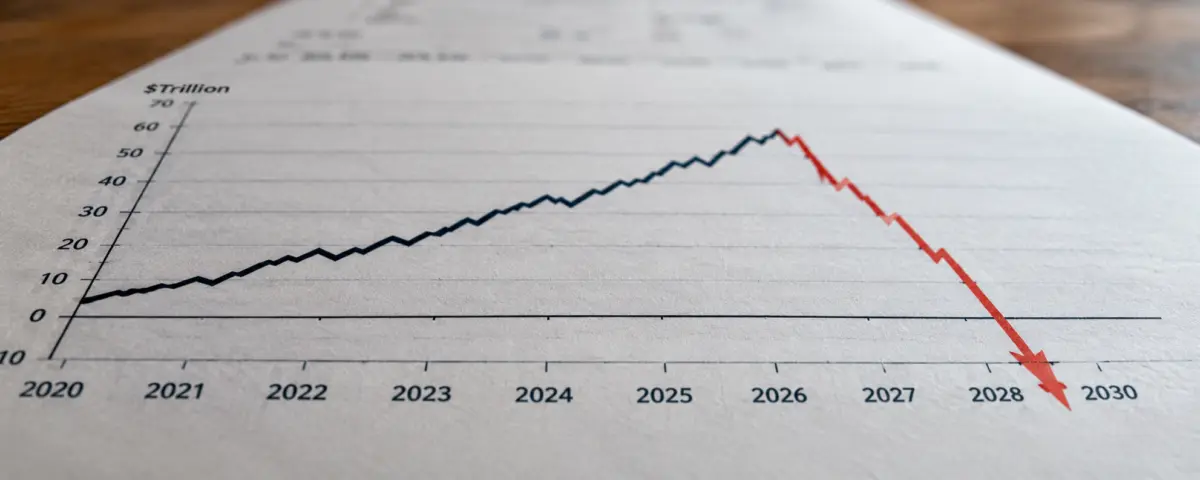
However, Huston emphasizes that the ramifications of the AI investment boom reach far past the traditional boundaries of the information technology industry. When speculative and growth-oriented activities account for such a monumental share of economic transactions, any subsequent market correction, slowdown, or structural collapse threatens to divert vital capital away from productive, long-term investments in other sectors of the economy.
Financing Risk and the Burden of Unrecoverable Debt
A central pillar of the current AI expansion relies heavily on anticipated future returns and projected productivity gains. Because much of the capital fueling data centre construction and silicon manufacturing is debt-financed, a significant degree of financial risk is baked into the foundation of the boom.
If projected revenue streams fail to materialize or market demand stabilizes below expectations, the original lenders and investors will be forced to absorb the losses. While corporate debt can theoretically be restructured or recovered through the liquidation and sale of data centre assets at heavily discounted prices, the underlying economic friction will inevitably impact those who financed the projects in the first place. This dynamic transforms what is marketed as a technological revolution into a high-stakes financial gamble with systemic undertones.
Exposure Through Institutional Retirement Funds
For the average citizen, one of the most concerning aspects of the current investment cycle is that these high-risk capital allocation decisions are largely being made on their behalf. Individual risk tolerance varies wildly from person to person, yet the vast majority of everyday workers have little direct say in how their long-term savings are deployed by institutional financial entities.
Commercial banks, major investment firms, and institutional asset managers dictate the flow of trillions of dollars into global markets. These entities may operate out of corporate towers far removed from daily life, but their investment strategies have a profound and direct bearing on public financial health.
As a case in point, Australia’s superannuation retirement sector currently manages more than AUD 4 trillion in assets. This massive accumulation of wealth makes the Australian pension pool the fourth-largest in the world, despite serving a domestic population of just 27 million people. Consequently, everyday Australians carry a much deeper financial exposure to the fortunes and misfortunes of the global technology sector than many citizens realize.
![[Podcast] The (dismal) economics of AI | APNIC Blog](https://blog.apnic.net/wp-content/uploads/2026/10/Financial-Growth-Chart-Plunging-Downward.png)
This structural exposure is not unique to Australia. Similar dynamics play out across pension funds in Canada, the United Kingdom, the European Union, and throughout dynamic Asian economies. The phenomenon is particularly pronounced in the United States, where major AI and cloud infrastructure companies have become entrenched as standard, unavoidable components of diversified retirement portfolios and index funds. When technology giants fluctuate in value, millions of retirement portfolios experience the shockwaves.
Strain on Physical Infrastructure and Supply Chains
Beyond financial markets, the physical footprint of the AI boom is reshaping local landscapes and straining industrial supply chains. Constructing and operating a modern, high-density AI data centre requires immense inputs of structural materials, specialized electrical components, advanced cooling systems, and dedicated power infrastructure.
Because data centre operators are backed by massive venture capital and corporate balance sheets, they can compete aggressively for scarce labour and raw materials. They frequently outbid other sectors, contributing directly to supply chain bottlenecks across civil engineering and public works. These pressures inevitably spill over into unrelated construction activities, including residential housing development, where rising costs and labour shortages complicate efforts to address housing affordability.
The operational phase of these facilities introduces even greater challenges. The sheer electricity consumption of modern AI workloads is placing unprecedented pressure on electrical grids, ultimately contributing to rising power costs for residential households and local businesses. Furthermore, the geographic siting of these massive computing hubs has profound implications for surrounding communities, altering local amenities, municipal planning priorities, and the long-term economic viability of the regions hosting them.
Huston notes that modern AI facilities have expanded to such an extraordinary scale that, in the United States, utility networks in a single state often struggle to accommodate two competing projects of similar magnitude. To prevent total destabilization of local power utilities and transmission lines, developers are increasingly forced to scatter these facilities across separate geographic regions.
A Decentralized Boom with Global Repercussions
This rapid expansion was not engineered through deliberate, coordinated global economic planning. Instead, it has erupted organically from competitive corporate pressures, catching regulators, urban planners, and financial watchdogs by surprise as it continues to gather momentum.
The resulting challenge is inherently global. As capital deployment accelerates, anxieties regarding systemic risk exposure are multiplying, particularly as foundational economic weaknesses and profitability questions within current AI business models become more apparent to market observers.
Ultimately, the question of who emerges as a winner or a loser in this high-stakes environment extends far beyond individual artificial intelligence startups or cloud infrastructure operators. If the current investment wave proves unsustainable over the long term, the resulting economic corrections and financial shocks have the potential to reverberate through the portfolios of everyday investors, consumers, and local communities worldwide.



Leave a Reply