
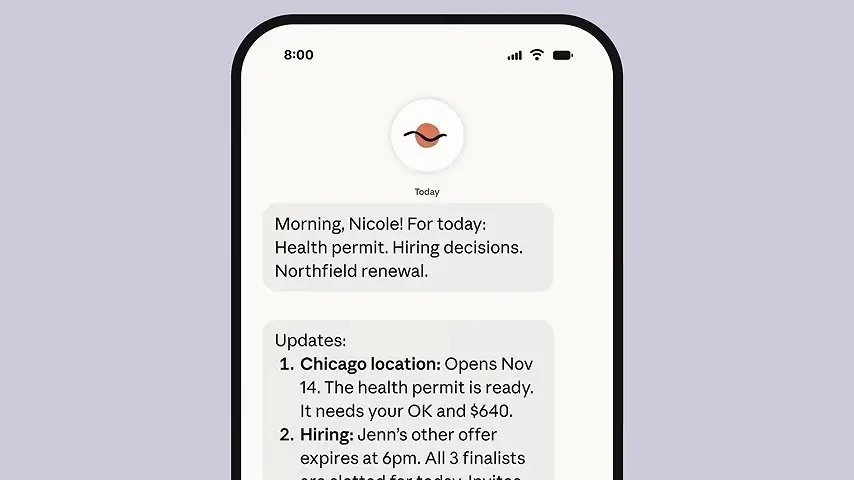
Anthropic is taking a major step toward deeply integrating artificial intelligence into the modern workplace with the introduction of Claude Duet. Moving beyond the traditional paradigm of interactive chatbots that rely on constant human prompting, Claude Duet functions as a proactive AI agent designed to operate independently in the background, handling complex assignments and only interrupting professionals when critical decisions demand their attention.
Available initially as a research preview across Android, iOS, and web platforms, Claude Duet is tailored specifically for professionals, independent workers, and small business owners who constantly find themselves juggling multiple projects simultaneously. The system is powered by Anthropic’s advanced Claude Opus 5.5 model, providing it with the computational depth required to handle sophisticated professional workflows ranging from data analysis to software prototyping.
The launch of Claude Duet represents a significant shift in how users interact with productivity software. Traditional conversational AI tools require continuous user engagement to maintain context and generate outputs. In contrast, Claude Duet breaks this mold by running inside its own dedicated virtual machine. This architectural choice allows the agent to continue executing workflows, monitoring connected applications, and processing information even when the user is completely offline or focused on other priorities.
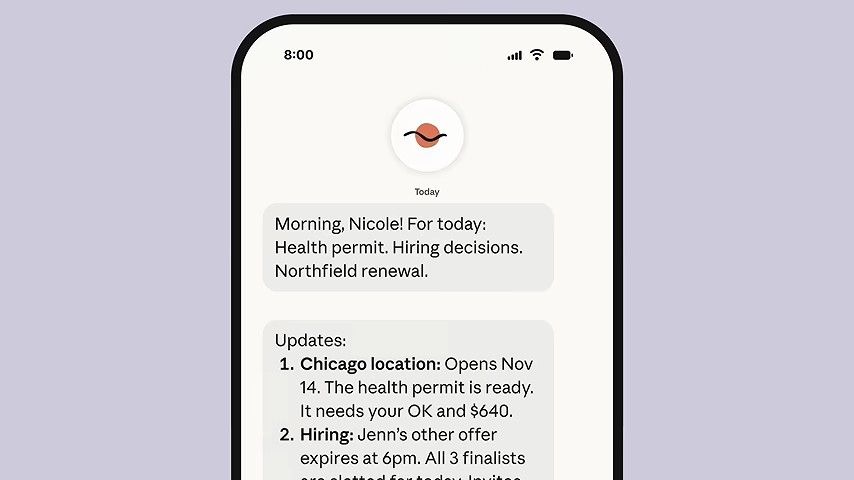
Every morning, Duet initiates its workflow by compiling a comprehensive briefing for the user, summarizing important updates, communications, and relevant data from the various applications linked to the service. Throughout the day, the agent continuously monitors these connected platforms for changes, evaluating whether incoming information requires immediate notification or can be safely handled autonomously.
Beyond passive monitoring and summarization, professionals can assign the AI agent a wide variety of active tasks. These capabilities extend from routine administrative duties, such as scheduling meetings and coordinating calendars, to complex technical assignments like building interactive dashboards, preparing detailed financial and sales forecasts, and even prototyping and developing functional web applications.
By functioning as an autonomous background worker, Duet aims to reduce the cognitive load associated with context-switching and digital noise. However, Anthropic has built the system to exercise independent judgment regarding when it should act autonomously and when it must pause to seek explicit user permission before executing sensitive actions.
While autonomous agents offer immense productivity benefits, granting an AI system access to work-related communications and sensitive operational data naturally raises significant privacy and security concerns. Addressing these challenges has been a central focus for Anthropic during the development of Claude Duet.
According to the company, Duet is architected so that it does not directly access or store underlying passwords, master accounts, or sign-in tokens. Furthermore, Anthropic has implemented rigorous data safeguards designed to prevent the unauthorized exposure or sharing of highly sensitive information, such as credit card numbers, government identification numbers, and other regulated personal data. The company notes that the system has undergone extensive internal security testing to evaluate its resilience against potential vulnerabilities before making it available to the public.
Despite its advanced capabilities, Anthropic acknowledges that Claude Duet is still in an early research preview stage and is not yet ready to completely automate every aspect of a professional or personal life. The company admits that the initial version of the software can occasionally be overly enthusiastic in its operations, and it notes that everyday personal tasks—such as booking travel tickets or managing personal reservations—do not represent the optimal use case for this particular model architecture.
Additionally, the current iteration of Duet lacks a user-facing browser visualization feature, meaning that users cannot easily observe the agent’s real-time actions as it navigates behind the scenes. This lack of visual transparency can occasionally make it difficult to audit the exact steps the agent took to arrive at a particular outcome, an area that Anthropic will likely need to refine in future updates.
The introduction of Claude Duet places Anthropic directly into an increasingly crowded and competitive market segment focused on autonomous AI agents. Major technology competitors are pursuing similar visions where artificial intelligence tools act independently to execute complex workflows rather than merely answering text-based queries. This broader industry shift highlights a transition from conversational interfaces to action-oriented software agents capable of executing multi-step business processes across diverse digital environments.
At present, access to Claude Duet is restricted to users in the United States who sign up via an online waitlist. Furthermore, utilizing the agent requires an active Claude Pro or Max subscription. Anthropic has also clarified that background tasks performed by Duet consume the same usage allocations as standard interactions with Claude, meaning that users cannot leverage the background agent as a source of unlimited, free artificial intelligence labor.


Leave a Reply