A teenager from Amman, Jordan, suspected of acting as a principal leader behind the prolific data theft and extortion syndicate known as ShinyHunters, has been detained and is reportedly cooperating with the FBI to identify other members of the hacking collective.
According to investigative reporting by KrebsOnSecurity, the suspect—who operates online under the hacker handle "Rey"—was apprehended just as the cybercrime cell was actively working to extort a business unit recently divested by the global aerospace giant Boeing. Coincidentally, the young suspect’s father is employed by Royal Jordanian Airlines, a carrier that operates a fleet of passenger aircraft manufactured by Boeing.
The Capture of "Rey" and Global Investigations
The first public reports of the arrest emerged on October 3, when Reuters cited three unnamed sources confirming that a suspected ShinyHunters member in Amman, identified as Saif Al-din Khader, had been detained by Jordanian authorities and was actively cooperating with federal investigators. KrebsOnSecurity had previously identified Rey as Khader in a November profile, during which the young man openly admitted to collaborating with multiple ransomware operations.
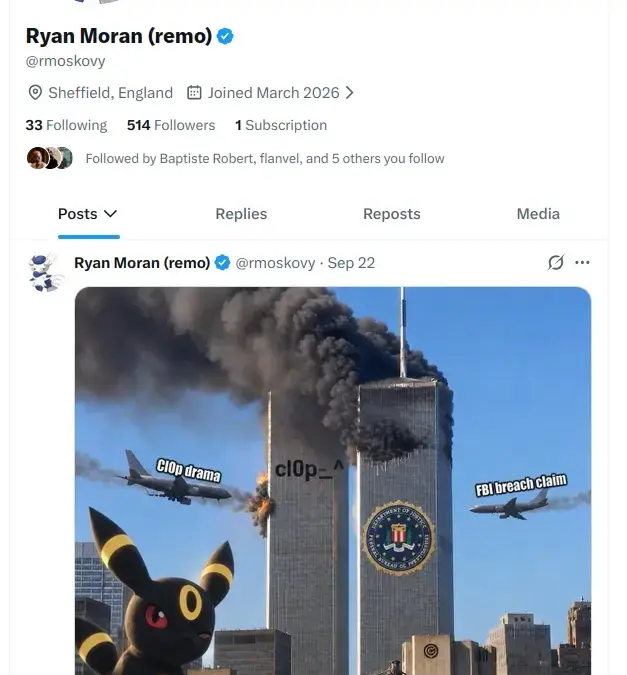
Rey’s name surfaced again in late September during an exclusive report regarding the Dutch police’s arrest of 24-year-old convicted cybercriminal Pepijn van der Stap. Authorities suspect Van der Stap of assisting in data thefts and extortions orchestrated by ShinyHunters. Immediately following the Dutchman’s dramatic arrest on the evening of September 15, Rey seized control of the ShinyHunters brand, taking to social media to publicly boast about stealing highly sensitive data from the FBI and attempting to extort the notorious ransomware group Cl0p.

Using his long-standing account on Twitter/X, Rey taunted both the FBI and Cl0p by publishing a series of internet memes. Simultaneously, he embedded images of the avatar utilized by Van der Stap’s former hacker alias, "Umbreon," in an apparent, calculated attempt to frame the Dutch national for both high-profile breaches.
Exploiting the Oracle PeopleSoft Flaw
The broader wave of attacks tied to these operations stems from the mass exploitation of a critical vulnerability, tracked as CVE-2026-35273, affecting PeopleSoft—a software-as-a-service platform developed by Oracle and widely deployed by major corporations to manage human resources, payroll, benefits, and hiring processes. Oracle moved swiftly to issue a patch after ShinyHunters began weaponizing the vulnerability as a zero-day exploit in June. Cybersecurity firm Mandiant also released web application firewall (WAF) rules to assist organizations unable to immediately apply the software updates.
While initial communications from the hackers to industry media indicated that their primary target was the FBI’s internal PeopleSoft database—an effort that allegedly fell short—the group later pivoted. In subsequent weeks, ShinyHunters bypassed Mandiant’s recommended WAF protections by utilizing a well-documented URL-encoding trick.
By late September, security researchers at Mandiant and the Google Threat Intelligence Group (GTIG) confirmed that the group had mass-exploited the PeopleSoft vulnerability, compromising dozens of systems across diverse economic sectors, including technology, healthcare, higher education, agriculture, transportation, and government agencies. Subsequent reports revealed that the FBI was forced to remove an Accenture contractor following a security failure that left the bureau’s recruitment website vulnerable. That breach exposed sensitive personal data belonging to more than 5,000 FBI personnel, including psychiatric records, medical files, and specific unit specializations.

"Rey" Means King, as in Royal
Investigators familiar with the ShinyHunters probe noted that a digital aviation and navigation unit recently divested by Boeing was directly targeted in an active extortion attempt when Jordanian authorities apprehended Rey. The FBI’s investigation into the network gained intense momentum following this specific attack, largely due to the sensitive nature of the proprietary navigation data, which security officials warned could present operational safety and security risks.
In statements provided to security researchers, Boeing acknowledged the extortion claims, clarifying that the incident involved data linked to Jeppesen ForeFlight, a subsidiary that Boeing sold to private equity firm Thoma Bravo for $10.55 billion. While Boeing officials confirmed they were actively reviewing the situation with the Jeppesen ForeFlight team, representatives for the subsidiary maintained that their ongoing investigation revealed no adverse impact on their operational environment or products.
Rey’s alleged involvement in the Jeppesen ForeFlight extortion plot drew heightened scrutiny given his family connections. Evidence recovered from password-stealing malware that infected his family’s shared computer revealed that Rey’s father utilized identical login credentials across multiple administrative portals for Royal Jordanian Airlines employees.
Following inquiries sent to the Khader family prior to a late-September publication, Rey systematically scrubbed his social media footprint, deleting the accounts he had used to taunt federal law enforcement and corporate victims. Despite purging his social media accounts, Rey’s cybersecurity blog hosted on GitHub remained active, featuring an analytical post published in March that unmasked two Russian nationals allegedly serving as the core developers and operators behind the Cl0p ransomware platform.

Murder-for-Hire Allegations in the Netherlands
Meanwhile, Dutch media outlets brought to light severe criminal allegations against Pepijn van der Stap, whose narrative of personal rehabilitation and transition into a legitimate cybersecurity professional had previously garnered media attention. The Dutch daily publication RTL reported that investigators suspect Van der Stap attempted to orchestrate at least two murders to be carried out abroad.
Van der Stap had earlier served the majority of a four-year prison sentence for previous extortion and data theft activities, which prosecutors estimated generated between 1.5 million and 2.7 million euros. Following his release, he secured a position as an offensive security lead at Neo Security, an Amsterdam-based cybersecurity firm.
Benjamin Korper, the owner of Neo Security, stated that he engaged an independent third-party firm to audit Van der Stap’s activities within the company. Thus far, investigators have found no evidence that Van der Stap compromised his employer or clients. However, the investigation into his activities culminated in a high-profile police raid on September 15, during which tactical units reportedly utilized flash-bang grenades at his residence.
Franchising and Burning a Brand
While cybercriminals operating under the ShinyHunters banner have been linked to massive corporate data breaches spanning several years, security experts emphasize that the current operators bear little relation to the group’s original French core members, many of whom have faced arrest and imprisonment.

Instead, ShinyHunters has evolved into an informal franchise model—operating similarly to the legendary "Dread Pirate Roberts" persona, where succession is dictated by law enforcement arrests rather than death. Modern iterations of the group rely heavily on freelance affiliates who harvest and trade credentials to major corporate SaaS platforms in exchange for a percentage of any successful extortion payouts.
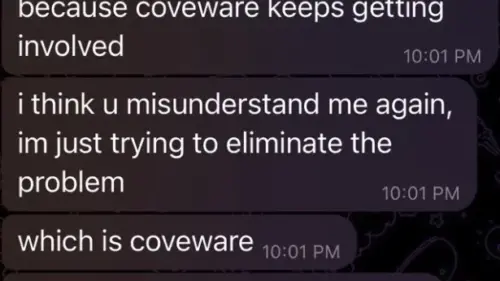
Within underground Telegram channels, Rey faced widespread ridicule from peers after his threats against the FBI dissolved and the primary ShinyHunters darknet portal abruptly went offline. Commentators accused the teenager of hijacking an established cybercrime brand to launch ad-hoc extortion schemes, managing negotiations, and attempting to monetize stolen data for personal gain.
Administrators of a specialized Telegram tracking channel noted that Rey’s decision to adopt the ShinyHunters moniker exposed him to intense scrutiny. They estimated that his network of associates had attempted to leverage the famous group name to negotiate ransoms and extract percentage cuts across various enterprise targets over a period of several months.
The group’s public posturing culminated in mid-2026 when hackers claiming to represent ShinyHunters spoke with technology journalists to argue that their cyberattacks were executed, in part, to challenge public advisories issued by the FBI. While the FBI’s public flash notices warned victims against paying ransoms and highlighted the group’s aggressive harassment tactics—ranging from harassing phone calls to swatting incidents—the hackers maintained that their digital incursions were designed to counteract what they viewed as inaccurate public narratives disseminated by law enforcement and security researchers alike.