What is today’s Moon phase?
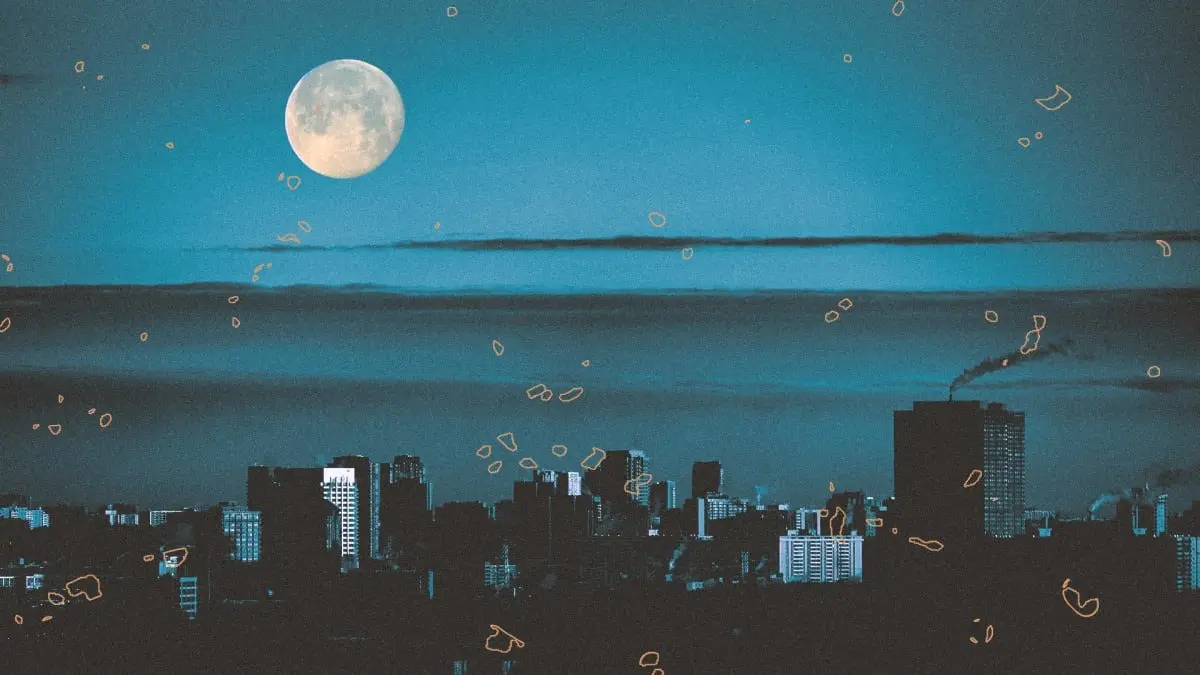
As of Monday, November 23, data provided by NASA’s Daily Moon Guide tracker indicates that the Moon is securely positioned within the Waxing Gibbous phase. During this advanced stage of the cycle, an impressive 97 percent of the lunar surface is directly visible from Earth, catching the light of the sun just moments before achieving maximum illumination.
For observers gazing up without the benefit of optical instruments, the near-full disk offers a striking view of some of the most prominent dark volcanic plains and highland features on the lunar surface. Unaided eyes can readily pick out the vast expanses of Mare Tranquillitatis—the Sea of Tranquility—and Mare Fecunditatis, the Sea of Fecundity, alongside the brilliant expanse of the Aristarchus Plateau.
Those equipped with standard binoculars gain an even deeper look into the rugged lunar topography, unlocking the ability to clearly spot the sprawling Grimaldi Basin, the prominent Endymion Crater, and the dark basaltic plains of Mare Nectaris. Meanwhile, amateur astronomers utilizing telescopes are treated to a comprehensive panorama that includes all of these geological formations, plus the historic landing sites of the Apollo 11, 15, and 16 missions, where human footprints remain preserved in the lunar dust.
When is the next Full Moon?
The anticipation for tonight’s near-full appearance will soon give way to the official peak of the lunar cycle. The next Full Moon is scheduled to take place on November 24, completing a rhythmic progression that has captivated scientists, poets, and skywatchers throughout human history. This upcoming event represents the exact moment when the Moon sits opposite the sun relative to the Earth, causing its entire visible face to shine brightly in the night sky.
What are Moon phases?
To understand why the lunar disk transforms from a razor-thin sliver to a brilliant orb and back again, astronomers look to the mechanics of our solar system. According to NASA, the Moon goes through a complete cycle of phases roughly every 29.5 days, a duration often referred to as a synodic month. As the Moon continuously orbits our planet, the perspective from Earth shifts, altering the portion of the sunlit lunar surface that remains visible to us. This celestial geometry gives rise to the familiar sequence of lunar phases, beginning anew with a pristine New Moon, building steadily toward a brilliant Full Moon, and then gradually waning back into darkness before the cycle repeats.
This monthly journey is traditionally broken down into eight distinct phases, each representing a different stage of illumination and positioning relative to the Earth and the sun.
The sequence begins with the New Moon, a period during which the lunar body positions itself directly between the Earth and the sun. Because the illuminated half of the Moon is facing away from our planet, the side facing us remains entirely in shadow, rendering the satellite virtually invisible to the naked eye against the backdrop of space.
As the Moon moves along its orbital path, a tiny sliver of light begins to emerge on its right side for observers in the Northern Hemisphere, marking the transition into the Waxing Crescent phase. This growing crescent thickens over the following days until exactly half of the lunar disk is lit on the right side, a milestone known as the First Quarter.
Following the First Quarter, the Moon enters the Waxing Gibbous phase—the very state it occupies today—where more than half of the surface is illuminated, though it has not yet reached its maximum fullness. This leads directly into the Full Moon, the high point of the cycle where the entire face of the Moon is fully illuminated and prominently visible throughout the night.
Once the peak has passed, the lunar cycle reverses direction. During the Waning Gibbous phase, the Moon begins losing light progressively from the right side as viewed from the Northern Hemisphere. This is followed by the Third Quarter, also frequently called the Last Quarter, which presents another half-moon appearance, though with the opposite side—the left half—now illuminated by the sun.
Finally, the cycle concludes with the Waning Crescent phase, during which only a thin, fading sliver of light remains visible on the left side of the lunar disk. Shortly after this final stage, the Moon completes its orbit, slips back between the Earth and the sun, and prepares to begin the entire sequence over again.