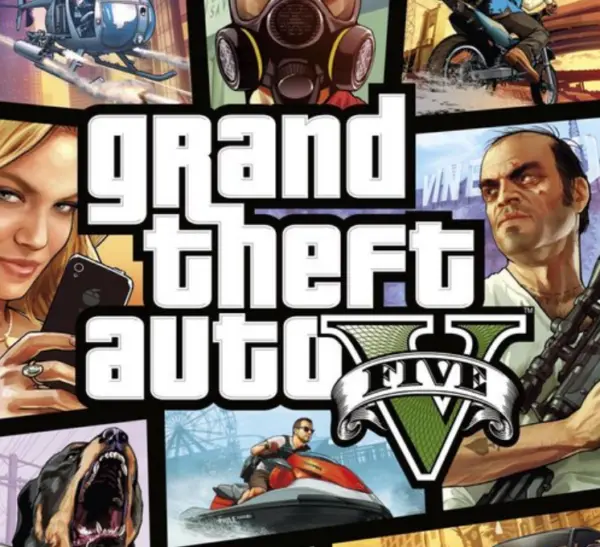
As gaming enthusiasts around the world count down the final hours to a landmark moment in the industry, parent company Take-Two Interactive remains intensely focused on protecting its past intellectual property. Following a series of delays, Grand Theft Auto VI has finally gone on sale, arriving more than thirteen years after its wildly successful predecessor first hit store shelves. Yet, even on the eve of one of the biggest entertainment launches in history, Take-Two’s legal and compliance teams have been busy addressing ongoing security and copyright concerns surrounding Grand Theft Auto V.
GitHub recently published four formal DMCA takedown notices issued by the publisher, targeting a wave of unofficial ports designed to bring the 2013 blockbuster to modern mobile and desktop operating systems. The targeted software includes projects intended to run GTA V on iPhones, Macs, Android smartphones, and Windows PCs. This latest enforcement action underscores the publisher’s long-standing, aggressive stance against unauthorized modifications and ports of its flagship titles, particularly as anticipation for the franchise reaches an all-time high.
The current wave of unofficial ports traces its origins back to early October, when Grand Theft Auto V unexpectedly became playable within a standard web browser. An unofficial port hosted at playgta5.com quickly went viral across various social media platforms, capturing the attention of millions of gamers and tech enthusiasts alike. However, that viral moment was remarkably short-lived, as the website abruptly vanished within hours of gaining widespread notoriety.
At the time, major technology and gaming publications credited Rockstar Games and Take-Two Interactive with orchestrating the rapid removal of the browser-based port. Despite the widespread reports, neither Rockstar nor Take-Two issued an official public statement regarding the takedown. Furthermore, persistent rumors suggesting that the browser port had been constructed using leaked source code from GTA V have never been officially confirmed by any credible sources or legal documents.
Even though the original browser-hosted website was swiftly neutralized, the broader technical achievement could not be easily contained. The WebAssembly build of the game lived on within developer circles. Within a matter of days, enterprising developers transformed the web-based code into native applications tailored for Apple iOS and macOS devices, as well as Android smartphones. These newly minted projects were subsequently uploaded and shared widely on platforms like GitHub, setting the stage for the latest round of copyright enforcement.
Four Notices, Hundreds of Forks
The newly published notices, submitted by Take-Two, specifically target four distinct software projects hosted on GitHub. These include Muguet, an iOS and macOS port; glue5, a multi-platform runtime environment; gta5mobile-android, an Android-focused port; and three separate repositories managed by the developer behind the original PlayGTA5 browser experiment.
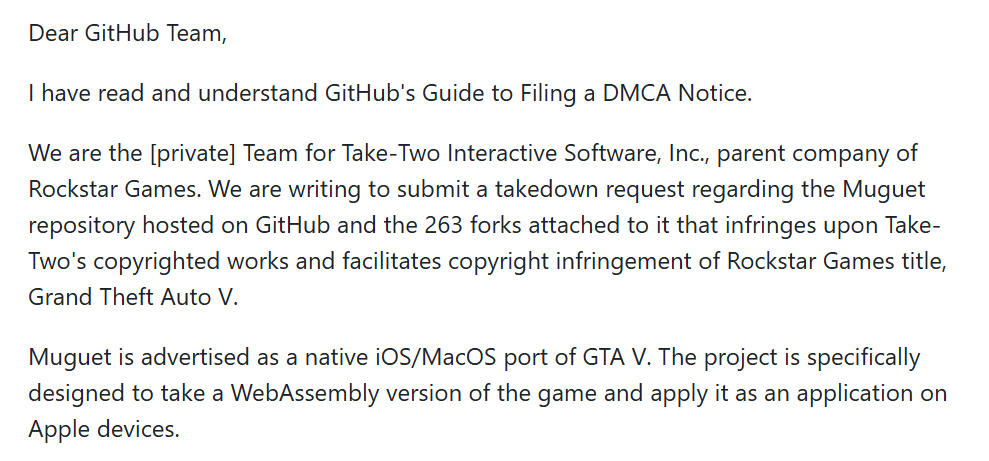
According to the details outlined in Take-Two’s official DMCA notices, the scale of secondary distribution was substantial. The Muguet repository alone accumulated 263 forks, while glue5 drew an even larger following with 349 forks. The gta5mobile-android project was linked to roughly a dozen repositories, and the PlayGTA5 repositories distributed complete build packages.
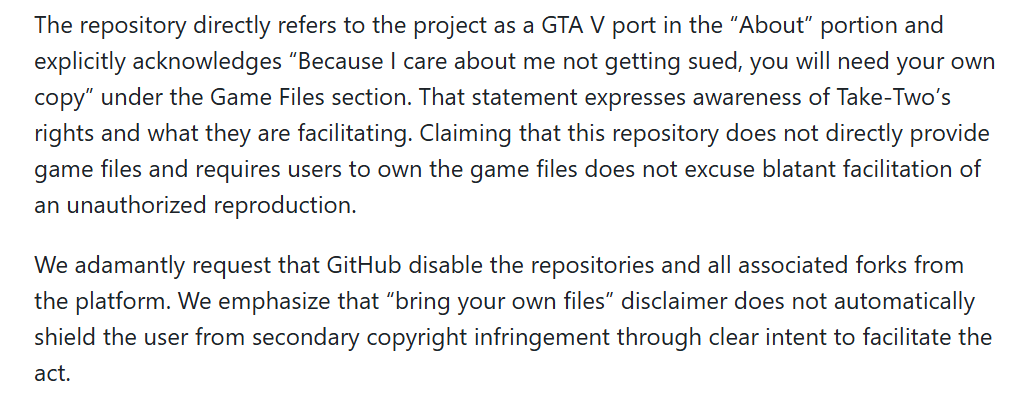
In the specific notice directed at the Muguet project, Take-Two’s legal representatives cited the developer’s own disclaimers and instructions, which directed users to supply their own game files to make the application functional. The notice highlighted a quote from the developer, who wrote that users would need their own copy of the game "because I care about me not getting sued." Take-Two argued that this exact statement serves as clear, undeniable confirmation that the developer was fully aware of potential copyright infringement and the proprietary rights held by the publisher. The notice asserts that such language explicitly demonstrates an awareness of Take-Two’s legal rights and the nature of what the project was facilitating.
The notice concerning PlayGTA5 went into even greater detail regarding direct copyright infringement. According to Take-Two, a release published within the PlayGTA5 repository on October 9 offered users the full game data, totaling approximately 21.2 gigabytes. Prior to the inevitable takedown, the repository’s README file explicitly noted that the game data had to be included directly in the GitHub release downloads because individual files were simply too large for standard commits. Recognizing the mounting pressure, the developer ultimately archived the repository on October 15.
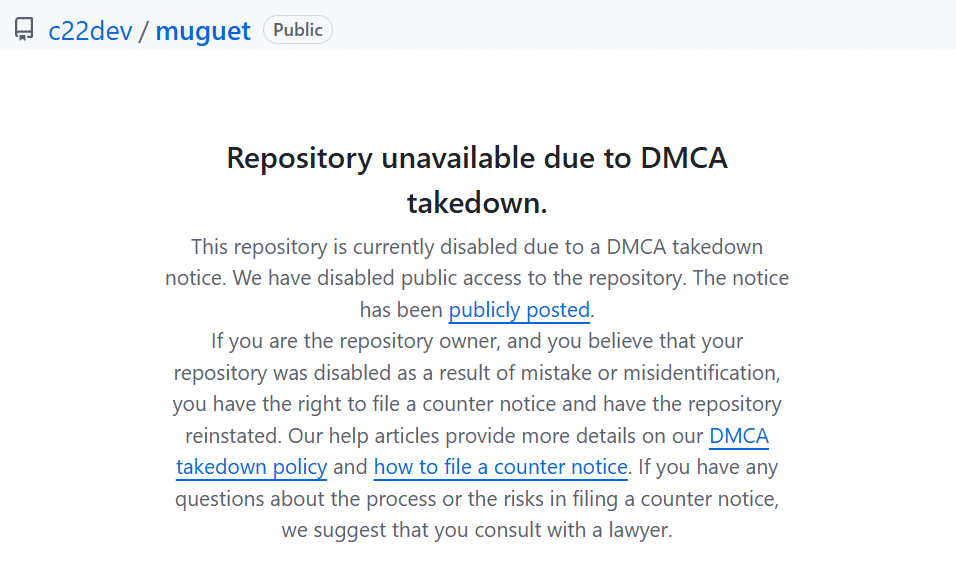
In addition to targeting the primary repositories, Take-Two requested that GitHub disable all associated forks, impacting hundreds of derivative copies across the platform. A review of the affected projects confirmed that the Muguet, glue5, and PlayGTA5 repositories now display standard DMCA takedown notices indicating they are unavailable due to copyright complaints. Meanwhile, the primary gta5mobile-android repository returned a page-not-found error, suggesting the developer proactively took the project offline or switched it to a private status to avoid further scrutiny.
"Bring Your Own" Disclaimers
A central theme across several of the targeted repositories was the reliance on a "bring your own files" approach. Projects like Muguet, glue5, and gta5mobile-android did not initially bundle Take-Two’s original Windows or console game files; instead, they relied on users supplying the data files derived from the unofficial web port that had briefly circulated online weeks prior.
With the notable exception of the PlayGTA5 case, Take-Two’s notices generally did not claim that the primary repositories were directly hosting the publisher’s proprietary code or raw game assets. Instead, the legal complaints argued that the projects constituted direct infringement and actively facilitated secondary copyright infringement by providing the necessary runtime environment to execute stolen or unauthorized game builds on unsupported platforms.
The notice directed at glue5 provided a more comprehensive breakdown of the technical mechanisms involved. It described a specialized GitHub build process designed to transform user-provided web builds into fully functional native applications, alongside a streaming feature capable of transferring approximately 20 gigabytes of game files, including an explicit option to download the entire game.
Take-Two maintained that inserting legal disclaimers regarding user-supplied files is legally insufficient to protect developers from liability. All four notices reiterate this position, with multiple documents utilizing identical phrasing to argue that "bring your own" disclaimers do not automatically shield developers from secondary copyright liability when their conduct knowingly facilitates widespread infringement.
One Port Survives
Despite the sweeping nature of Take-Two’s latest enforcement wave, not every unofficial GTA V port has been removed from public view. The 5ˢᵗ Port, a project that similarly runs the web-based game build on iPhones and Macs, temporarily went offline in late October, according to tracking by PortedGames. However, the project quietly returned in early November and remained accessible, though the developers modified their approach by removing the automated app-building workflow previously facilitated through GitHub’s systems.
Furthermore, the README file for the surviving project includes a direct invitation for copyright holders to contact the development team via email, promising that the repository will be promptly removed should official objections be raised.
For the developers whose repositories were successfully targeted by Take-Two, legal avenues remain available under the Digital Millennium Copyright Act. Developers retain the legal right to file a formal counter-notice with GitHub, which obligates the platform to restore the disabled code unless the copyright holder initiates formal legal proceedings in a court of law within a specified timeframe.
Precedent demonstrates that this system can yield mixed results for independent creators. When the developers of the popular GTA multiplayer modification Multi Theft Auto disputed a previous takedown notice reportedly issued by Take-Two, no subsequent lawsuit was filed, and GitHub ultimately restored the repository.
Conversely, utilizing the counter-notice procedure can sometimes escalate tensions significantly. In 2021, a counter-notice successfully brought the reverse-engineered GTA source code project known as re3 back online, only for Take-Two to file a formal federal lawsuit against the enthusiasts behind the fan projects just months later, citing the counter-notices as part of its legal grievance.
As Take-Two’s latest round of GitHub takedowns unfolded just a day before the long-awaited commercial release of Grand Theft Auto VI, industry observers have noted the strategic timing, though whether the scheduling was entirely deliberate remains unconfirmed. Regardless of the exact motivation, the swift and decisive action highlights Take-Two’s unwavering commitment to policing its intellectual property across all platforms and devices.