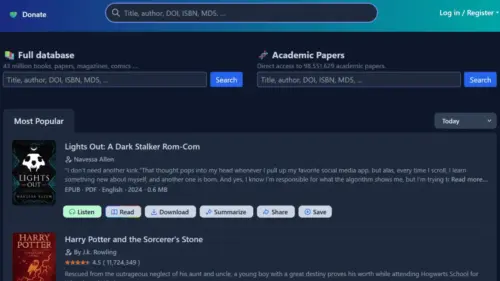
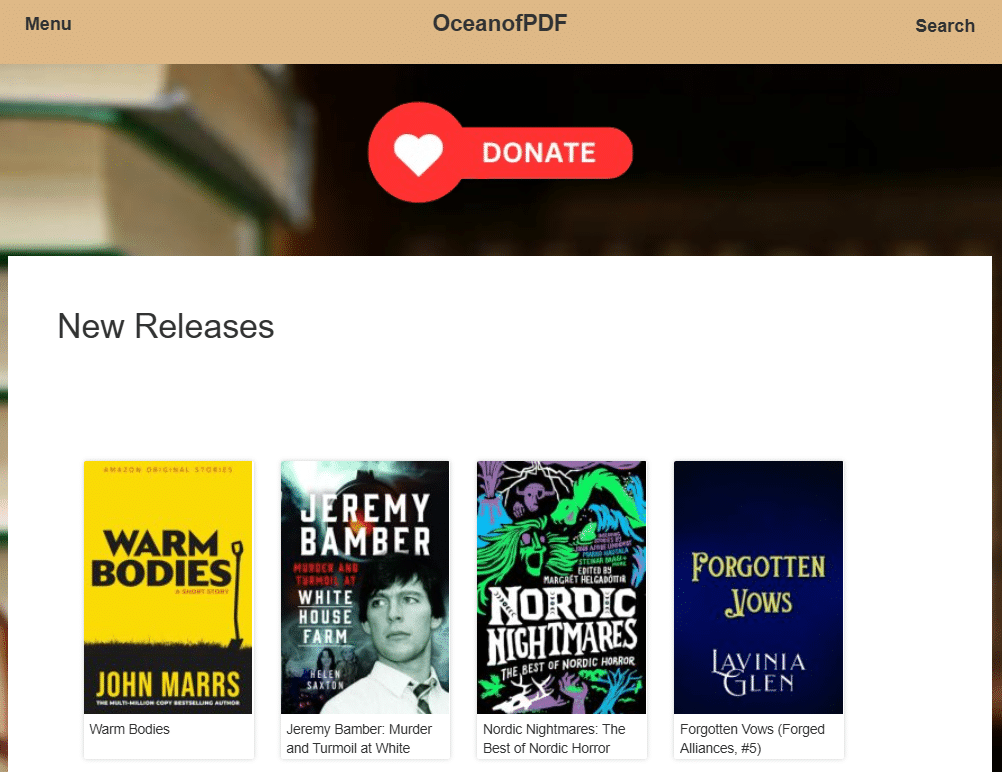
A Dutch court has ordered major internet service provider KPN to implement network-level blocks against two of the internet’s most prominent shadow libraries, Z-Library and OceanofPDF. The dynamic site-blocking injunction, secured by the prominent Dutch anti-piracy foundation BREIN, also encompasses future mirror sites, proxies, and alternative domains utilized by the platforms to evade regulatory enforcement. The legal victory fulfills a long-standing objective outlined by anti-piracy advocates who previously concentrated their judicial efforts elsewhere before turning their attention back to the massive repositories of copyrighted literature.
The ruling marks the latest chapter in an ongoing legal campaign by BREIN to curb digital copyright infringement across the Netherlands. In March 2024, the Rotterdam court ordered local internet providers to block access to Anna’s Archive and Library Genesis (LibGen), adding those massive digital repositories to the country’s growing pirate site blocklist. However, that initial court order notably omitted Z-Library, a giant in the shadow library ecosystem that had only recently weathered a severe global crackdown coordinated by U.S. law enforcement agencies.
When questioned at the time regarding the omission of Z-Library, BREIN representatives explained that their legal resources had been prioritized toward Anna’s Archive and LibGen because those specific platforms were generating higher traffic volumes within the region. Nevertheless, BREIN explicitly stated as early as late 2022 and reiterated in 2024 that it intended to pursue formal blocking measures against Z-Library if the platform successfully reestablished its operations online. Having monitored the site’s continued availability and resilience over the subsequent years, the anti-piracy foundation has officially followed through on that promise.
KPN Must Block Z-Library and OceanofPDF
In a decision handed down last Friday, the Rotterdam court ruled entirely in favor of BREIN in its legal proceedings against KPN, one of the primary telecommunications and internet infrastructure providers in the Netherlands. The judicial mandate directs the ISP to restrict subscriber access to both Z-Library and OceanofPDF. According to assessments provided by BREIN during the proceedings, these two platforms represent the most heavily trafficked book piracy portals operating without active blocking measures in the Dutch jurisdiction.

The specific injunction lists one primary domain for OceanofPDF, namely oceanofpdf.com, alongside five key domains associated with Z-Library: z-library.sk, z-library.la, 1lib.sk, z-lib.gd, and articles.sk.
According to documentation submitted by BREIN, these shadow libraries host an extensive catalog comprising tens of thousands of copyrighted works originating from Dutch rightsholders. The targeted material spans a wide spectrum of written media, including commercial books, consumer magazines, academic and scientific journals, sheet music, and daily newspapers.
Statistical data compiled by the anti-piracy group indicated substantial audience reach within the Netherlands. At the time the formal summons was served to the internet service provider, OceanofPDF was recording in excess of 200,000 monthly visits originating from Dutch internet protocol addresses. Meanwhile, Z-Library captured an even larger audience, drawing more than 300,000 visits per month from users residing in the country.
BREIN initiated the legal challenge against KPN under the legal framework established by the voluntary site-blocking covenant. This formal agreement was signed in October 2021 by BREIN and a coalition of major Dutch internet service providers. Under the operational terms of this covenant, the anti-piracy organization is required to pursue legal remedies against participating providers sequentially in alphabetical order. In the current rotation, it was KPN’s turn to face the targeted enforcement action.
Although KPN stood as the sole defendant named in this specific lawsuit, the structural mechanics of the covenant mean that other major Dutch internet service providers are expected to align with the judicial outcome and implement corresponding restrictions. These coordinated blocking efforts are designed to create significant technical friction, making the targeted shadow libraries virtually inaccessible to standard residential internet users who rely on mainstream providers, barring the use of advanced technical workarounds such as virtual private networks or alternative DNS configurations.
Furthermore, the covenant stipulates that BREIN must first exhaust reasonable attempts to take down the infringing platforms directly at the source before escalating the matter to the civil courts. In July, BREIN officials reached out directly to the site administrators, domain name registrars, central registries, and commercial hosting providers associated with the platforms, demanding the immediate cessation of their activities. Because those direct requests yielded no compliance, the court concluded that BREIN had fulfilled its procedural obligations and could not reasonably be expected to pursue further voluntary takedown efforts.

Dynamic Order Covers Future Mirrors
A crucial element of the Rotterdam court’s ruling is its dynamic provision, which grants BREIN the legal authority to compel KPN to block newly created domains, subdomains, proxy servers, and mirror websites without requiring the foundation to initiate a brand-new lawsuit for each individual iteration. If Z-Library or OceanofPDF attempts to bypass the existing network restrictions by migrating to fresh web addresses, BREIN can seamlessly append those new coordinates to the existing injunction.
During previous legal battles, dynamic blocking orders have faced pushback from the telecommunications sector. In 2023, KPN actively contested a dynamic injunction targeting streaming platforms Lookmovie and Flixtor, arguing before the judiciary that such sweeping orders were excessively broad and placed an unfair administrative burden on infrastructure providers. The court rejected those arguments at the time, establishing a legal precedent for dynamic enforcement. In the recent case involving the book repositories, however, KPN elected not to mount a substantive defense, effectively leaving the final determination to the discretion of the presiding judge.
The necessity of a dynamic enforcement mechanism is underscored by the evolving operational strategies of the platforms themselves. Z-Library, in particular, has actively encouraged its global user base to establish and maintain independent mirror sites. Since early 2025, the platform has permitted users to host mirror installations utilizing their own custom domain names. Moreover, operational updates rolled out mid-year introduced features allowing these decentralized mirrors to feature custom branding and incorporate mandatory password protection protocols.
Security enhancements of this nature present considerable challenges for intellectual property owners and enforcement agencies. Password-protected mirrors that operate entirely independently of recognizable Z-Library branding are difficult for automated monitoring systems to detect. Consequently, identifying these concealed nodes becomes significantly harder for rightsholders, complicating the practical execution of dynamic blocking mandates.
BREIN Points to Libraries
Amid the ongoing enforcement actions, BREIN representatives have emphasized that digital readers have ample access to legitimate, authorized avenues for literary consumption, rendering the use of unauthorized shadow libraries entirely unnecessary.
"There are fantastic legal, user-friendly apps on the market that let consumers read and listen to countless ebooks and audiobooks. You can also borrow ebooks and audiobooks through the library at little cost," BREIN stated in its official commentary on the ruling.
The organization further criticized the economic model underpinning unauthorized repositories, arguing that they divert essential financial compensation away from the creative community. "So there’s no reason at all to get books from illegal sources. Illegal services put all the revenue in their own pockets. Nothing reaches the authors and publishers."
Whether the newly minted dynamic blocking order will prove capable of neutralizing Z-Library’s decentralized network of user-operated mirrors remains to be seen. Nonetheless, the judicial mandate is expected to significantly restrict mainstream discoverability, erecting substantial barriers for casual visitors seeking immediate access to copyrighted texts across the Netherlands.
While the formal text of the blocking ruling issued by the Rotterdam court has not yet been published publicly, a copy has been reviewed by industry monitors, and public announcements detailing the legal victory have been officially published by BREIN on its institutional portal.