In a significant escalation of its long-running anti-piracy campaign, gaming giant Nintendo has expanded its legal and enforcement sights beyond software emulators and hacking tools to target physical hardware modifications. For years, the Japanese multinational corporation has aggressively policed code-sharing platforms like GitHub, issuing Digital Millennium Copyright Act (DMCA) takedown notices against software designed to emulate its consoles or dump encryption keys. Now, however, the company has officially set its sights on the firmware that powers popular Nintendo Switch modchips, signaling a brand-new frontier in its efforts to protect its hardware ecosystem.
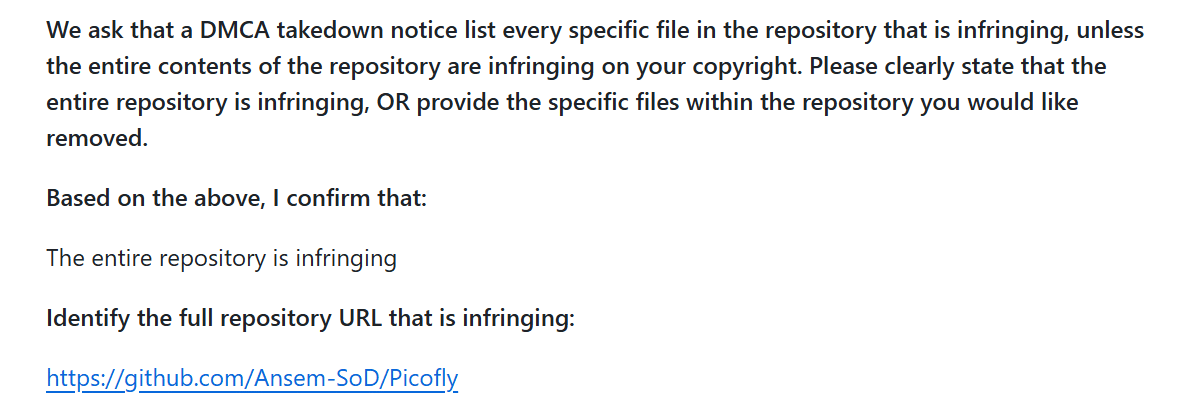
According to documents published by GitHub, Nintendo recently issued a formal DMCA takedown notice targeting repositories hosting firmware for widely used hardware modification chips, including Picofly, SX Core, and HWFLY. The primary target of the November 6 notice was a prominent repository maintained by user Ansem-SoD, which provided critical documentation, information, and firmware for a Switch modchip built around the RP2040-Zero microcontroller board known as Picofly. Because the affected repository had generated an extensive network of forks, GitHub’s automated enforcement protocols resulted in the mass disabling of 144 interconnected repositories in a single sweep.
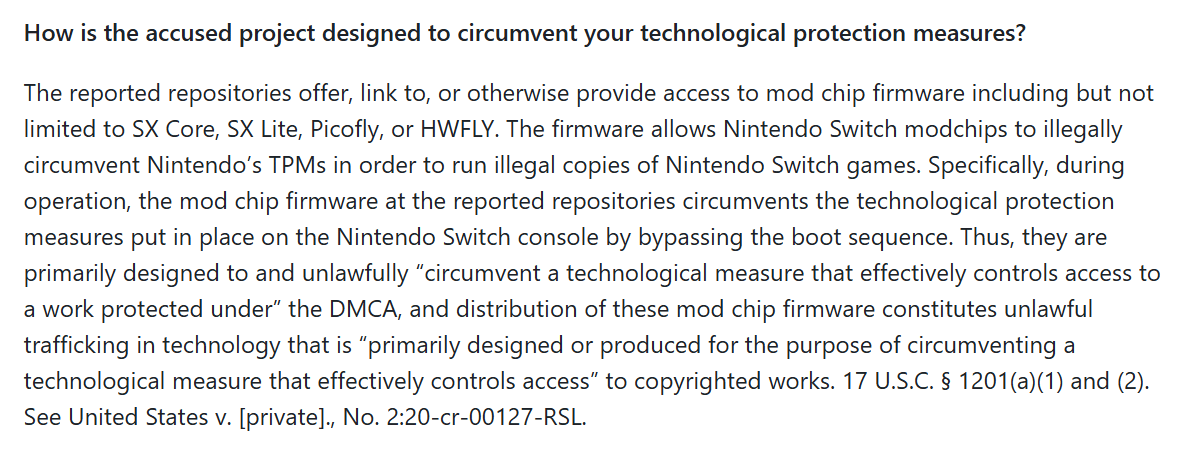
To substantiate its claims of copyright infringement under U.S. law, Nintendo’s legal representatives pointed directly to the high-profile criminal prosecution of alleged members of Team-Xecuter, recorded under case number 2:20-cr-00127-RSL in a U.S. federal court. By invoking the legal precedents and factual background established during the government’s pursuit of the notorious piracy group, Nintendo is attempting to cement the legal argument that distributing modchip firmware constitutes illegal trafficking in circumvention devices under the anti-circumvention provisions of the DMCA.

From Emulators and Key-Dumping Tools to Modchip Firmware
The latest enforcement action marks a distinct tactical shift for Nintendo’s digital policing efforts. Historically, the company’s DMCA notices directed at GitHub and similar code repositories have focused heavily on software emulators, key dumping utilities, and various operational patches designed to bypass system checks. Previous interventions famously targeted tools like Lockpick_RCM, which allowed users to extract cryptographic keys from their own consoles, alongside numerous projects aimed at facilitating unauthorized software execution.
This new wave of enforcement, however, directly addresses the underlying firmware required to operate physical hardware modifications such as the SX Core, SX Lite, Picofly, and HWFLY modchips. In its formal takedown notices, Nintendo argues that the Nintendo Switch’s complex technological protection measures—which encompass the console’s secure boot sequence, hardware-level validations, and intricate cryptographic signatures—are systematically undermined by these third-party firmware packages.
According to the text of the notice filed by the company, the offending firmware directly bypasses the console’s built-in boot sequence, enabling unauthorized modifications to bypass hardware security layers. "The firmware allows Nintendo Switch modchips to illegally circumvent Nintendo’s TPMs in order to run illegal copies of Nintendo Switch games," the notice asserts, framing the code as an active instrument of copyright infringement.

To the best of public knowledge, this represents the very first instance in which Nintendo has formally targeted modchip firmware within GitHub’s extensive public archive. A review of nearly a hundred prior takedown notices issued by the company reveals no previous attempts to suppress modchip code directly on the platform, making this November enforcement blitz a watershed moment for the developer’s antipiracy strategy.
Drawing on the Team-Xecuter Legal Precedent
To reinforce its legal standing under the DMCA, Nintendo’s notice leans heavily upon the extensive federal criminal case against the alleged operators and associates of Team-Xecuter. Back in 2020, the United States Department of Justice indicted multiple key figures associated with the prominent piracy and modchip syndicate, initiating a sprawling international investigation that effectively crippled the group’s commercial operations.
Among the defendants was Gary Bowser, a veteran hacker whose subsequent guilty plea to charges of conspiring to circumvent technological protection measures and trafficking in circumvention devices captured international headlines. Bowser was later sentenced to 40 months in federal prison, becoming one of the most visible casualties of the modern gaming industry’s legal retaliation against hardware hacking enterprises. Meanwhile, other high-profile co-defendants, including alleged group leader Max Louarn, have remained at large and outside the direct reach of U.S. courts.
While a defendant’s guilty plea in a criminal proceeding does not formally constitute a binding civil ruling regarding the specific status of every independent modchip firmware repository, the distinction matters little in the context of standard DMCA notice-and-takedown procedures. Under the statutory framework of the law, platform operators like GitHub are generally obligated to disable or remove allegedly infringing content upon receipt of a compliant notification, leaving the burden of legal dispute to the affected repository owners through formal counter-notices.
The Persistence of Alternative Repositories and Ongoing Emulator Takedowns
Despite the immediate impact on the targeted Picofly network, the broader ecosystem of hardware modification code has not been entirely eradicated. Following the removal of the primary Ansem-SoD repository, independent checks revealed that several alternative repositories hosting Picofly and HWFLY firmware remained fully accessible to the public. Among them was a repository housing what community members on enthusiast forums such as GBAtemp identified as the original source code. Because these secondary locations were omitted from Nintendo’s specific takedown notice, they continue to persist online.
Simultaneously, Nintendo’s November 6 enforcement sweep extended beyond hardware firmware to include traditional software targets. On the exact same day it moved against the Picofly network, the company submitted three additional DMCA notices targeting software emulators. One notice targeted the Citron Neo emulator project, resulting in GitHub disabling a network of 71 associated repositories. Two separate notices targeted individual forks of the discontinued yuzu emulator, specifically focusing on repositories maintaining master and Android branches.
Unlike the complete disabling seen with larger networks, the targeted yuzu repositories remained technically hosted on GitHub, though their administrator deliberately wiped the source code and cleared the entire commit history in response to the legal pressure. In place of the original code, the affected pages now feature only a basic README file directing interested parties to alternative preservation platforms such as the Internet Archive.
As the dust settles on GitHub, the primary Picofly repository remains offline, replaced by standard administrative notices informing the account holder of their right to submit a formal counter-notice. To date, public logs show no indication that a counter-notice has been filed, leaving the future status of the repository uncertain as Nintendo continues to tighten its grip across both software and hardware fronts.