"We’re not anti-AI, we’re pro-human."
A personal essay, a technical tutorial, or an argument that has been knocking around in someone’s head for weeks can all find a home on Medium. Now, the long-form publishing platform wants to become an active participant in what happens before those pieces are ready to publish—during the messy, formative stages when a writer is still sorting through disjointed notes, drafting early paragraphs, or sharing raw ideas with a trusted circle of friends.
On November 9, Medium officially launched TK, a free writing and note-taking application designed specifically for individuals with a Medium account. The newly introduced software features a built-in artificial intelligence assistant directly integrated into the editor. This assistant is capable of answering quick questions, offering editorial feedback, and helping writers navigate their thoughts as they draft. Additionally, TK allows users to share their ongoing work within small, private groups where peers can leave comments, swap notes, or contribute collaborative writing of their own.

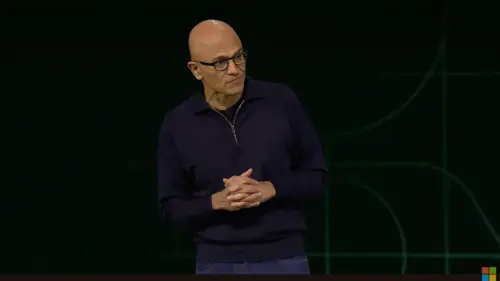
According to Medium CEO Tony Stubblebine, the overarching goal of the platform is to help people craft writing that compounds into deep thinking, which in turn creates influence across their entire world. While the exact shape of that influence is something the company is still figuring out, Stubblebine emphasizes that it fundamentally begins with humans writing more. The company designed TK around three core principles: making it easy to write, easy to think, and easy to feel like your writing genuinely matters.
This strategic rollout arrives during a period of profound transformation across the internet. Historically, Medium has relied heavily on search engines like Google to drive readers to its hosted articles, with referral traffic from Google specifically accounting for roughly 44 percent of the platform’s overall visits. However, Stubblebine noted that those critical referrals have declined sharply as Google and other search engines began altering their traffic delivery mechanisms. Speaking with industry publications, he warned that the shift hurts publishing platforms, though it ultimately affects independent writers just as much.
Even though Medium has successfully maintained profitability since 2024, the company recognizes that continuous evolution is essential to remain competitive against rival publishing ecosystems such as Substack, as well as the ever-expanding gravity of mainstream social media. Stubblebine’s direct response to these digital headwinds is to provide writers with alternative pathways to reach audiences without depending entirely on traditional search engine optimization. With TK, creators can bypass open web discovery by sharing rough drafts directly with targeted groups of readers in private spaces. As Stubblebine bluntly described the strategy to industry press, the platform is aiming to take a substantial portion of its workflow underground.
The broader digital landscape underscores the urgency behind Medium’s pivot. An analysis of browsing data published by the Pew Research Center revealed a stark decline in how often users interact with traditional web links when generative artificial intelligence summaries appear in search results. The research indicated that users clicked on a traditional search result on only eight percent of Google visits that featured an AI summary, compared to fifteen percent of visits without one. As search engines increasingly keep users on their own pages through automated summaries, traditional content platforms are forced to rethink how they capture and retain audience attention.

For those unfamiliar with internal newsroom terminology, the moniker "TK" is a traditional journalism abbreviation used by writers and editors to mark a place in a manuscript where material is "to come"—such as a date that needs verifying or a quotation that needs inserting. In Medium’s new application, typing the symbol "@TK" instantly summons an assistant capable of answering quick inquiries or locating a specific paragraph saved days prior. Furthermore, the assistant can provide headline and editorial feedback, compare drafts against the specific style guides of various Medium publications, and compile related notes into concise summaries that link back to the original source material.
Writers migrating to the application can easily import their existing Medium archives or transfer notes from popular applications like Bear and Obsidian. For advanced users, an optional Claude integration allows an external AI agent to work directly within the notebook interface.
The human-centric counterpart to this digital assistance takes place within features that TK calls Libraries. A Library can function as a dedicated space for a small group of friends to share works in progress. At the same time, Medium is opening structured groups tailored for specific activities, such as daily journaling, receiving peer critiques on drafts, and working collaboratively toward publishing a complete book. Under this framework, a draft can remain entirely private, circulate among a select handful of readers, or eventually graduate to Medium’s public publishing platform. In Stubblebine’s phrasing, TK serves as the gym, while Medium serves as the stage.
This structural division introduces an inevitable tension: the company is actively encouraging people to do more of their own writing while simultaneously placing generative artificial intelligence just a few keystrokes away from every unfinished sentence. Looking up a verified historical date is one thing, but asking an AI model for structural feedback on a personal paragraph can quickly blur the line toward outsourcing core writing capabilities. To address these concerns, Medium notes that TK allows writers to explicitly disclose which material originated from AI, complete with the corresponding prompts and source materials. The company maintains that the service is not anti-AI, but rather staunchly pro-human.

As leadership frames it, much of the wider artificial intelligence industry is currently betting that machines will do human thinking for them, with some tech leaders even suggesting that human writing no longer matters. Medium is deliberately betting the opposite. The company insists that remaining pro-human is precisely why they invested in building TK.
Rival publishing platforms are also navigating the complex integration of artificial intelligence into their daily workflows. Substack, for instance, offers tools that can automatically transform a recorded podcast into an editable transcript or suggest short video clips for creators to share across social feeds. At the same time, platforms are grappling with verification tools; some services have begun offering readers features to scan published posts and estimate whether a given text was written by a human, generated entirely by AI, or created with AI assistance.
This app launch arrives in a literary ecosystem that has been increasingly saturated by generative technologies. In a survey conducted by Medium in partnership with The Harris Poll, 71 percent of responding writers acknowledged that they had utilized AI in some capacity during their writing process over the preceding three months. However, the survey also highlighted a deep underlying skepticism, with 69 percent of those same writers admitting they distrusted AI-assisted writing produced by others.
By bringing artificial intelligence closer to the raw writing process than ever before, TK walks a fine line. Having an intelligent assistant within arm’s reach could theoretically make it easier for bad actors to churn out low-quality automated content. Conversely, the application could fulfill Stubblebine’s optimistic vision by encouraging writers to share rough drafts, refine their arguments, and collaborate authentically on the mechanics of storytelling. For readers and writers navigating an increasingly automated media landscape, the ultimate outcome will depend entirely on how creators choose to wield the tools at their disposal.