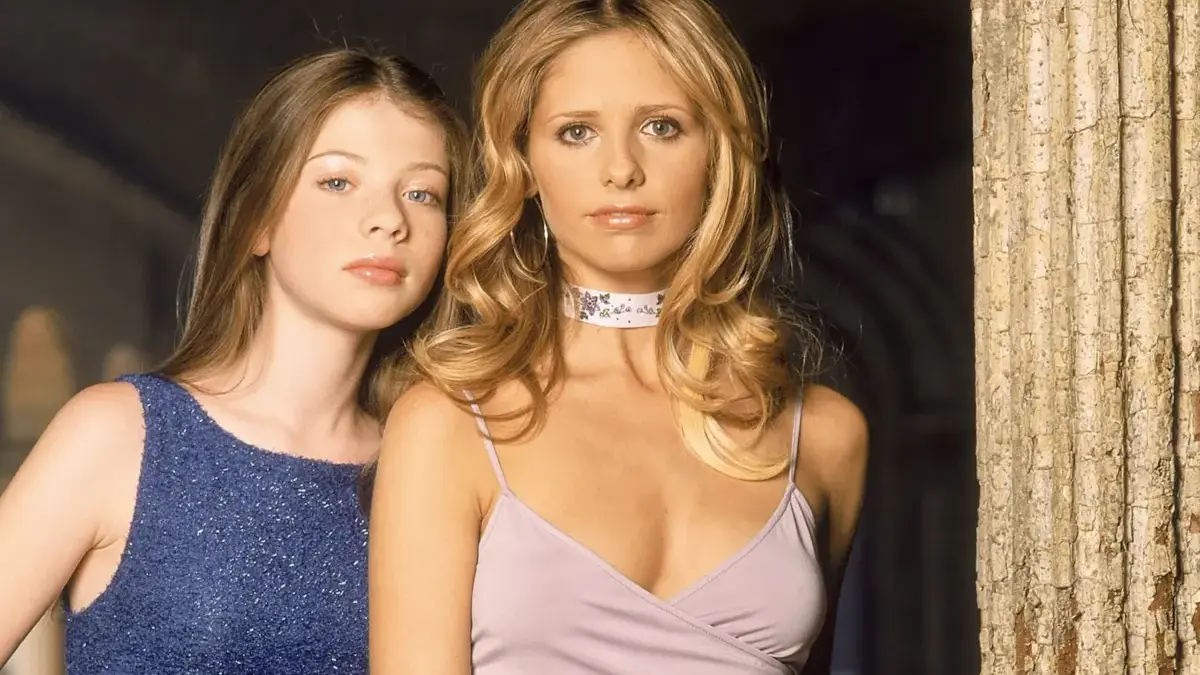
For seven turbulent seasons on television, the story of Buffy Summers was inextricably bound up with the concept of mortality. Throughout her journey as the chosen Slayer, Buffy—portrayed with remarkable nuance by Sarah Michelle Gellar—oscillated between a desperate desire to escape the shadow of death and, in moments of ultimate heroism, a willingness to embrace it.
Upon a retrospective viewing, the theme of death permeates the DNA of Buffy the Vampire Slayer. Yet, for many viewers watching the series during its original broadcast, that grim reality felt entirely unthinkable. Each time the narrative flirted with the permanent demise of its titular heroine, the prevailing reaction was one of profound disbelief. Surely, network television would not cross that line. Surely, the Slayer would find a way to cheat fate once again. But as the landmark series progressed, it became abundantly clear that the creative team was willing to follow their narrative logic to its most devastating conclusion.
That reckoning arrived definitively in the season 5 finale, an episode titled "The Gift." Set against the apocalyptic backdrop of a collapsing Sunnydale, Buffy and her tight-knit circle of allies find themselves cornered with seemingly nowhere left to run. At the epicenter of the crisis is Dawn, Buffy’s younger sister, whose very existence has triggered a dangerous, reality-tearing portal. In a desperate bid to save the world and protect her family, Dawn attempts to sacrifice herself by leaping into the mystic abyss.
Buffy intercepts her at the absolute last second. Looking into her sister’s eyes, she delivers a line that would permanently alter the emotional landscape of the series: “The hardest thing in this world is to live in it. Be brave. Live. For me.”
Because the two share the same blood, Buffy realizes she is uniquely qualified to close the portal in Dawn’s stead. Without hesitation, she leaps into the void, sealing the rift and meeting her end. It was a shattering moment that brought full circle a thematic arc teased as early as the show’s inaugural season, cementing a legacy of sacrifice that would echo through television history for a quarter of a century.
A Sister Out of Nowhere
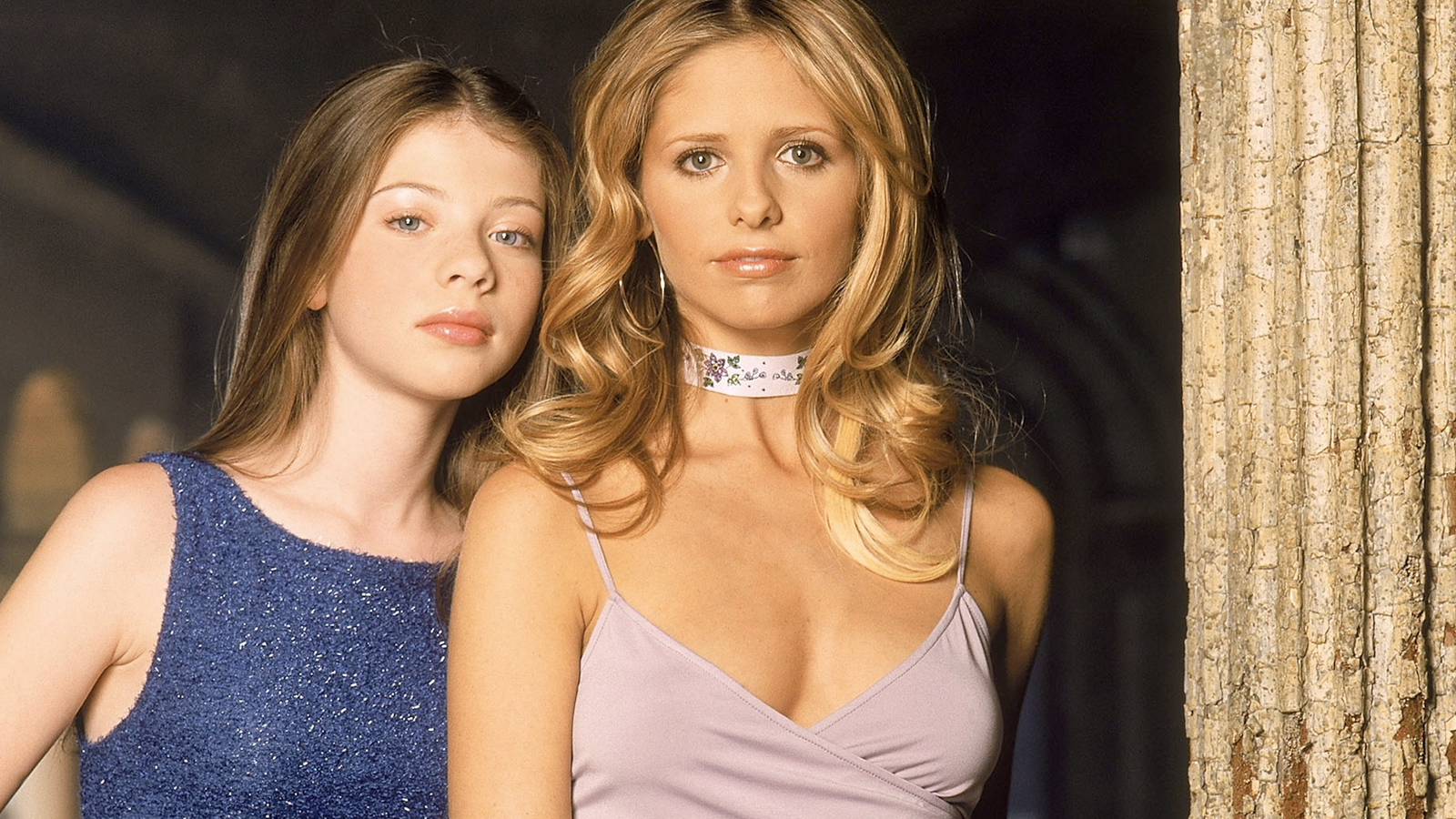
Season 5 stands as one of the most emotionally resonant and structurally bold chapters in the history of Buffy the Vampire Slayer. It committed fully to a dramatic new central dynamic: the complex, evolving relationship between Buffy and her newly arrived sister, Dawn, played by Michelle Trachtenberg.
Series creator Joss Whedon later revealed that introducing Dawn was a deliberate creative choice designed to thrust Buffy into an intense, foundational dynamic that was entirely divorced from romance. After spending four seasons navigating complicated relationships with Angel, Riley Finn, and the early, volatile flirtations with Spike, introducing a sibling dynamic offered a refreshing narrative shift. It forced Buffy to experience a volatile spectrum of anger, protectiveness, joy, and profound responsibility over a radically different type of human connection.
The introduction of Dawn also served as one of the most audacious narrative twists in television history. For the majority of the show’s run, Buffy had been firmly established as an only child. Suddenly, a sister materialized in the narrative, introduced so casually in a throwaway moment that many viewers initially suspected they had accidentally skipped an episode. However, Dawn’s abrupt arrival was never a plot hole or a continuity error. As the season unspooled, the writers deconstructed the mystery, revealing that Dawn was actually "The Key"—an ancient parcel of raw, mystical energy forged into human form by a sect of monks who implanted fabricated memories into the minds of Buffy, her friends, and the entire town.
With Dawn’s sudden integration, Buffy’s era of carefree teenagehood came to an abrupt and permanent close. The fifth season was engineered to force the young Slayer to grow up at an accelerated pace, stripping away almost every pillar of safety and emotional grounding she possessed. The loss of her human boyfriend, Riley, followed by the devastating, natural death of her mother, Joyce, marked the definitive end of the series’ lighter, monster-of-the-week era. From that juncture forward, Buffy the Vampire Slayer could no longer be framed simply as a story about a scrappy group of high schoolers trying to save the world from the shadows. The stakes had become profoundly personal, existential, and irreversible.
What Buffy Leaves Behind
Written and directed by Joss Whedon, the season 5 finale "The Gift" served as a masterclass in narrative closure, neatly tying together complex threads introduced in the show’s earliest episodes. Throughout the season, the relationship between Buffy and Dawn undergoes a profound transformation, shifting from initial friction and sibling rivalry into an unwavering maternal bond. Even after learning early on that Dawn was not her biological sister, Buffy’s perspective remained entirely unchanged. To the Slayer, Dawn was the most vital person in the world and the only family she had left. When institutional allies like Giles even broached the unthinkable possibility of sacrificing Dawn to halt the mystical ritual, Buffy immediately and fiercely shut the conversation down.

The thematic resonance of "The Gift" draws directly from an earlier season 5 episode, "Intervention," during which Buffy undergoes a visionary quest to meet the First Slayer—a prehistoric girl who delivers a chilling pronouncement: “Death is your gift.”
The phrase weaponizes Buffy’s deepest-seated insecurity: the paralyzing fear that she is fundamentally a killing machine, closer in nature to the vampires and demons she stalks than to the vulnerable human world she fights so desperately to protect. Yet, Buffy’s parting words to Dawn completely redefine the meaning of that phrase. For Buffy, being the Slayer was never about wielding physical strength or raw power; it was always about sacrifice. By choosing to die, Buffy tasks her sister with the burden of living, regardless of how difficult or lonely that existence might become. Those exact words would return to haunt Buffy during season 6, plunging her into a period of profound anguish and disorientation after she is abruptly ripped out of heaven and forced back into the mortal world.
While contemporary viewers are well aware that Buffy the Vampire Slayer ultimately survived its network transition and continued for two additional seasons—concluding eventually on the UPN network—the creative team operated under no such guarantees at the time of production. Season 5 was explicitly contracted as the final season to air on The WB.
That palpable uncertainty is precisely why Whedon and the writing staff approached "The Gift" as a definitive series finale. The episode actively engages in a thematic dialogue with "Prophecy Girl," the finale of season 1. In that early episode, a much younger Buffy was depicted as terrified of dying, paralyzed by the mortal stakes of her calling as she faced the Master. In stark contrast, "The Gift" presents a mature Buffy who chooses death with absolute calm and fierce resolve, driven entirely by the imperative to save her sister.
The episode concludes with an indelible, heartbreaking final image. As her grieving friends mourn over the smoking wreckage and Dawn absorbs the heavy weight of her sister’s final instruction, the camera pans across Buffy’s lifeless body resting atop a pile of rubble. The final cut transitions directly to a solemn tombstone etched with a fitting, eternal epitaph: "Buffy Anne Summers. Beloved sister. Devoted friend. She saved the world a lot."